
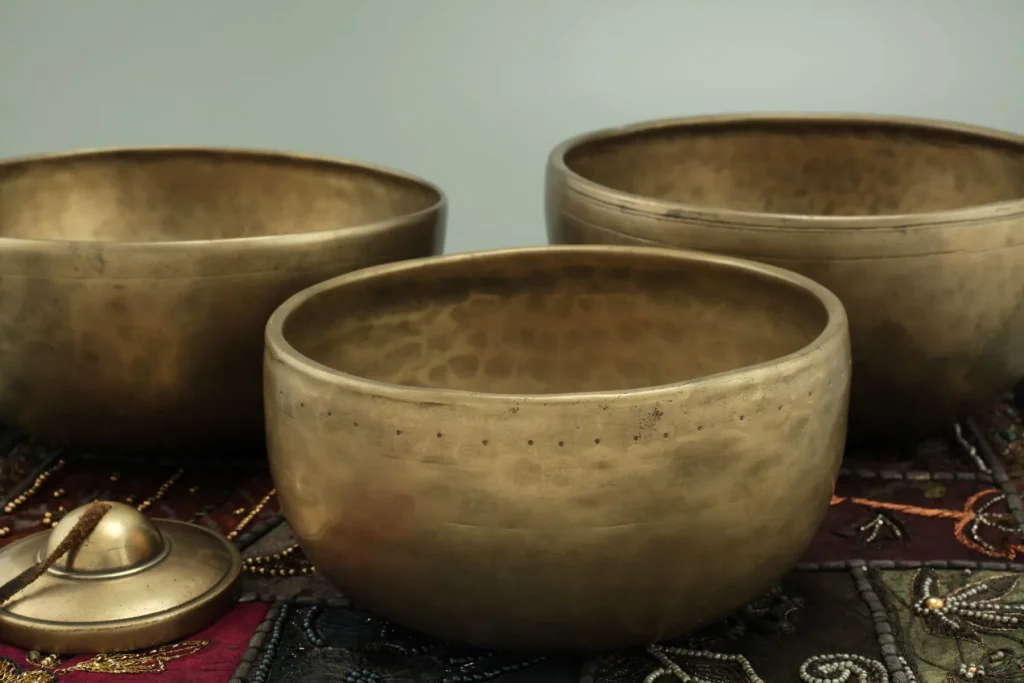
The practice described here explains how sounds can help restore calm and balance.
Sound therapy uses vibrations and harmonics to affect the body and mind. Singing bowls, gongs and tuning forks create sound waves that encourage a parasympathetic response: slower breathing and relaxed muscles.
A Tibetan singing bowl, struck or rubbed with intention and consistency, can be an accessible tool for improving well-being. Metal bowls offer deep tones; crystal bowls produce more delicate sound waves.
Make this practice part of short breaks, an evening ritual or your preparation for meditation to gradually reduce anxiety. Studies have reported measurable effects on cortisol, sleep and pain management.
To learn more about its effects and choose a suitable instrument, read our practical guide to Tibetan singing bowls and stress reduction.
Understanding the approach: music therapy, sound therapy and the mind-body connection
Understanding why sound has an effect means distinguishing structured music from the pure tones produced by dedicated instruments. This distinction helps you choose a practice suited to your personal goals.
Music therapy and sound therapy: what are the differences for anxiety?
Music therapy uses compositions and a therapeutic relationship. Sound therapy focuses on sounds, harmonics and vibrations to encourage self-regulation.
How vibrations and sounds affect the body and mind
Sound waves travel through the body and influence breathing and vagal tone. This process can make it easier to relax and support the body’s capacity for healing.
Origins and traditional practices
From Hindu mantras and Pythagoras to shamanic rituals, the therapeutic use of sound spans the world and many eras. The first bowls may have originated on the Asian steppes and later been refined through metal alloys and Nepalese forging.
- Results vary with individual sensitivity, intention and the quality of the instrument.
- These traditions continue to inform meditation, sound baths and chakra balancing.
Benefits observed today for stress, anxiety and sleep
Several studies suggest that sound therapy and calming music can lower cortisol in some patients. This biological change is often accompanied by deep relaxation and an improved mood after a session.
Regarding sleep, research reports that some people fall asleep faster and perceive their sleep as more restorative. Short evening sessions may help prepare the mind and body for rest.
Listening to sounds and feeling a bowl’s vibrations may also change how pain is perceived. For some people, these effects support recovery and lower blood pressure.
Limitations and differences in results
Results remain mixed: small samples, varied methods and individual sensitivity all contribute to this variation. One session may bring immediate calm, while regular practice may strengthen the benefits over time.
- Key points: lower cortisol, relaxation and better sleep quality.
- Reasons results vary: sound preferences, emotional state and session intensity.
- Precaution: sound therapy complements medical care but does not replace it.

For a broader look at the evidence and methods, read our overview of documented benefits.
Choosing a Tibetan singing bowl: alloy, size, note and quality
To choose an instrument, first understand how its material affects its sound.
Alloy and traditional craftsmanship
The alloy and the quality of the metals determine the richness of the harmonics, how long the bowl resonates and the stability of its vibrations.
Production begins with an alloy disc, which is cast and then hammered while hot by several artisans working together. Polishing refines its distinctive sound, and engravings complete the bowl.
Size, weight and pitch
The larger and heavier an instrument is, the lower and fuller its note tends to be. Small bowls (around 500 g) produce lively high notes; medium and large bowls offer soothing tones.
Testing a bowl and choosing by feel
Each bowl has its own note: listen to how long it resonates, feel the vibration in your body and choose according to your goal (grounding, concentration or versatility).
- Look for handmade quality and a steady tone.
- Check that the mallet suits the bowl and that its weight and diameter feel balanced.
- When buying through an online store, ask for reliable recordings and detailed specifications.
Care: clean gently with soapy water or lemon, rinse, dry and store away from moisture and sunlight.
Music therapy: relieving stress with a Tibetan singing bowl, step by step
Simple preparation helps make a session effective. Choose a quiet place, dim the lights and sit with your back straight and shoulders relaxed.
Prepare the space: quiet, posture, breathing and intention
Practice abdominal breathing for 2 to 3 minutes to bring body and mind into sync. Close your eyes briefly and set a clear intention.

Making the bowl sing: rubbing and striking techniques, movement and rhythm
Rubbing technique: rest the bowl on your open palm, hold the mallet like a pencil and move it in a circle around the rim. Press lightly until the bowl begins to sing; maintain a steady speed to keep the sound from becoming harsh. The sounds and vibrations become clearer when your movement remains steady.
Striking technique: tap gently at regular intervals to create a slow tempo. Use this approach to mark the beginning, a transition or the end of a session.
A short daily ritual: a simple routine
Quick routine (5 to 10 minutes): 1 minute of breathing, 3 to 5 minutes of continuous playing (rubbing or striking the bowl), then 1 to 2 minutes of silence to take in the experience. Finish by expressing gratitude.
- Adapt the session to the person: if they become overly sensitive to the sound, lower the volume and leave more time between strikes.
- Good practice: avoid a session immediately after exposure to loud sound, drink water and note how you feel before and afterward.
- Variation: put a little water in the bowl to soften its sound, or use two mallets to explore other harmonics.
Include this ritual in a longer meditation session or sound therapy session, in the morning to clear your mind or in the evening to regain calm.
Going further: meditation, sound baths and chakra balancing
Listening more closely can turn a simple session into an experience of renewed focus and balance. Consistency matters more than duration; repeated short practices strengthen your ability to stay present.

Singing bowl meditation: concentration, mental clarity and well-being
Giving structure to a meditation encourages mental clarity. Steady your breathing, listen to the resonance and bring your attention to different parts of your body as the bowl sings.
Tip: an opening strike followed by slow rubbing gives your attention a point of reference. This routine helps settle the mind.
Sound baths and sound massage: feeling vibrations in the body
For a sound bath, place Tibetan singing bowls around the mat or near the body so the vibrations can be felt directly.
A sound massage is ideally performed with a trained practitioner to help release tense areas and support healing.
Chakra balancing and other instruments
Bowls are placed on or near areas associated with the chakras to support the flow of energy. Pay attention to the body’s reactions and adjust their position.
For variety, add gongs or shamanic drums: a gong creates a broad, immersive sound, while a drum establishes an internal rhythm that can help you refocus.
| Practice | Goal | Suggested duration |
|---|---|---|
| Meditation (one bowl) | Clarity, concentration | 10 to 15 min, 3 to 5 times a week |
| Sound bath (several bowls) | Deep relaxation | 30 to 60 min, occasionally |
| Sound massage | Targeted tension relief, healing | 45 to 60 min, preferably with a practitioner |
To explore your choice of instruments further, read our practical guide to everything you need to know about singing bowls.
Precautions, contraindications and sensible therapeutic practice
Before using therapeutic sounds, a few simple rules can help protect your health. Assessing individual needs helps tailor the session and avoid unwanted effects.

When to seek advice: hearing conditions, epilepsy and neurological conditions
Consult a healthcare professional if you have tinnitus, sound sensitivity, epilepsy or a neurological condition.
Seek advice before exposing a pregnant person to intense vibrations or if the person has a hearing implant.
Complementary therapy: use the practice without replacing treatment
Sound therapy can complement medical treatment, but it cannot replace it. If you experience discomfort such as dizziness, nausea or a headache, stop the session immediately.
- Practical advice: adjust the volume and duration, choose gentle sounds and take frequent breaks.
- Avoid placing Tibetan singing bowls on an area with acute pain or near an implant.
- For a first experience, consider a guided session with a trained practitioner.
| Risk | Measure | When to seek advice |
|---|---|---|
| Tinnitus or sound sensitivity | Lower the volume and take breaks | Before the first session |
| Epilepsy or neurological conditions | Avoid sudden stimuli | Medical advice is essential |
| High-risk pregnancy or implants | Do not place the bowl on an implant | Consult a professional |
Conclusion
In short, an instrument chosen by feel can become a simple companion for everyday well-being. The quality of the alloy, metals and polishing affects the stability of its tone and how its vibrations feel in the body.
Take it step by step: learn about the bowl, choose one, use it during meditation, then broaden your experience with sound baths or energy-based approaches. Each bowl responds differently; adjust the volume, technique and duration according to how you feel.
Consistency comes first: frequent short practices bring more benefits than an occasional session. To learn more, explore the properties and benefits and find an instrument that fits modern life while drawing on a long tradition.