
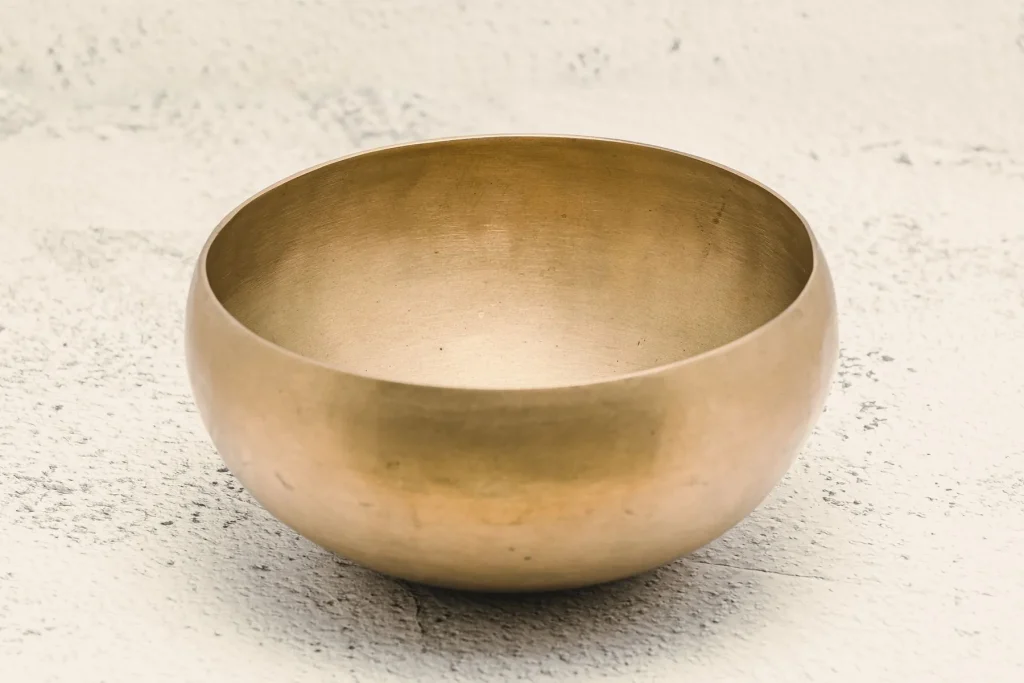
Nearly 40% of people in France report sleep problems. Many turn to natural approaches and to this ancient instrument. This article explains how to make a singing bowl part of your evening routine.
Studies, including one conducted at the University of San Diego in 2016, report reduced stress and greater relaxation after sound meditation sessions. A 2014 analysis also observed a reduction in systolic blood pressure.
The idea is that vibrations and harmonics encourage mental relaxation. We offer a step-by-step guide, advice on preparing your surroundings, and audio alternatives for those who do not own an instrument.
Goal: to offer a simple 10- to 15-minute evening practice that can ease tension and prepare you for sleep, without replacing medical treatment. For more information and practical ideas, read this dedicated article.
Tibetan singing bowls and sleep: a practical guide
Why Tibetan singing bowls are attracting interest as a sleep aid in France
Faced with restless nights, many people in France are looking for gentle approaches. Growing demand has renewed interest in sound practices that are accessible and easy to fit into daily life.
A growing search for natural approaches
Nearly 40% of people have explored approaches that do not involve medication. The instrument appeals because it is simple to use and because of positive reports about reducing stress and anxiety.
From metal alloys to harmonic resonance
Tibetan singing bowls are made from metal alloys (copper, tin, zinc, iron, silver, gold and nickel). Diameter and thickness affect the tone and how long it resonates.
When rubbed or struck gently, the bowl produces a fundamental tone and harmonics. These vibrations create an atmosphere that helps relax the muscles and calm the mind.
“A short session of 12 to 15 minutes may reduce perceived stress.”
The effects may vary with individual sensitivity, the quality of the instrument and how regularly it is used. Scientific studies and short-session protocols nevertheless support these benefits.
Evidence of benefits and key mechanisms for better sleep
Several recent studies show that short sound sessions can produce a measurable reduction in stress.

Reducing stress and anxiety: what the studies show
A study conducted in 2016 at the University of San Diego reported reduced stress and anxiety after a 12- to 15-minute Tibetan singing bowl meditation session.
Another study, conducted in 2014, observed a reduction in systolic blood pressure, indicating a physiological decrease in tension.
Alpha waves and brainwave synchronization
Practitioners often observe an increase in alpha waves, which may help with the transition into sleep.
The vibrations and resonance appear to facilitate brainwave synchronization, bringing neural rhythms into harmony and helping to quiet repetitive thoughts.
Relaxation, circulation and limitations
Alongside the reported feeling of relaxation, some protocols have noted improved blood circulation associated with reduced tension.
Benefits of the bowl: lower stress, a calmer state and a greater sense of harmony between body and mind after short sessions.
“Regular, short sessions may be enough to produce measurable effects in some participants.”
- Suggested use: 12 to 15 minutes per session.
- Limitations: individual responses vary; the bowl’s quality and the method used affect the results.
- Precaution: consult a professional if sleep problems persist.
Sleep: how to use a Tibetan singing bowl to sleep better, step by step
An evening sound routine can mark the transition from daytime activity to rest. Prepare your bedroom with dim lighting, a temperature of around 18 °C, a few minutes of fresh air and fewer distracting noises. If needed, gentle white noise can mask disturbances.
Prepare for the session
Sit steadily on a cushion with your back upright but relaxed. Turn off notifications, and avoid alcohol, nicotine and caffeine before the session. Eat lightly to avoid discomfort at bedtime.
Technique and breathing
Strike the bowl gently to start the resonance, then rub its rim with the mallet to sustain an even tone. Adjust the intensity: keep the volume moderate and use a steady circular motion.
Breathe in through your nose and breathe out more slowly through your mouth. Focus on the vibrations, returning your attention to the sound if your mind wanders.
Duration, progress and common mistakes
Start with 5 to 10 minutes, 2 or 3 times a week. Once you feel comfortable, aim for 10 to 15 minutes in the evening. Avoid playing too loudly, making jerky movements or practicing irregularly.
“Let the sound fade, sit quietly for 1 to 2 minutes, then go to bed without looking at a screen.”
- Make practice regular: keep to a consistent time to establish the ritual.
- Avoid anything stimulating immediately after the session.
Create an environment that supports relaxation and sleep
The right environment signals to your brain that it is time to slow down. A few simple changes can noticeably improve the quality of your rest.
Lighting and sound
Choose warm light bulbs and indirect lighting to support the natural release of melatonin.
Try to keep the room relatively quiet. If that is not possible, gentle white noise can steady your attention and mask disturbances.
Temperature and comfort
Keep the bedroom at around 18 °C: this temperature can reduce brief awakenings caused by heat.
Have a meditation cushion, a light throw and blackout curtains ready for greater comfort.
Evening routine and habits
Repeat the same sequence each evening (settling in, breathing, playing the bowl, turning off screens). This practice helps your brain associate the routine with rest and lowers stress levels.
Avoid: coffee, strong tea, nicotine and alcohol in the evening. Turn off screens at least 60 minutes before the session.
“Planning the next day before your session can clear your mind and make it easier to relax.”

Write down what works in a notebook so you can adjust your routine. To explore meditation for better sleep and make the bowl part of your ritual, consult practical resources suited to your needs.
Listening to Tibetan singing bowl recordings: a practical alternative
Recordings let you try the method without buying anything. You can access them anywhere, making them a simple introduction before investing in an instrument.

Pay attention to the format: a 320 kbps MP3 may attenuate around 40% of frequencies below 100 Hz. These low frequencies contribute to the enveloping effect of the vibrations.
Advantages and technical limitations
Advantages: convenience, little or no cost, and a way to try the method quickly.
Limitations: compression can reduce bass frequencies, and recordings lack the tactile feedback of a singing bowl held in your hand.
Choose recordings and listening equipment
- Favor FLAC files or high-fidelity videos.
- Choose channels and libraries that provide details about the microphones and recording room.
- Use quality over-ear headphones or bone-conduction equipment to perceive low frequencies more clearly.
“Try listening for 10 to 15 minutes as part of your routine, then go to bed without looking at a screen.”
If listening helps, consider playing a bowl yourself. To explore the subject further, read this practical guide.
Choose and care for a Tibetan singing bowl for long-term use
Testing the fundamental note, richness of the harmonics and length of the resonance can help you avoid disappointment when buying a bowl.

Diameter, thickness and alloys: finding the right instrument
Consider a diameter of about 18 to 22 cm: it often provides a comfortable resonance for an evening ritual. The thickness of the bowl’s walls affects the stability of its sound.
Traditional alloys (copper, tin, zinc, iron, silver, gold and nickel) remain popular. They help the note project and sustain.
Test the resonance and avoid imitations
When testing a bowl, look for resonance lasting around 45 seconds or longer. Feel the vibration in your hand and check that there are no unpleasant beats.
Choose sellers who are transparent about their products and look for signs of artisanal craftsmanship. France’s consumer protection authority, the DGCCRF, has warned about non-compliant products: ask where a bowl comes from and how it was made.
Cleaning, care and preserving sound quality
To care for the instrument, dust it with a soft cloth. Occasional cleaning with white vinegar and baking soda may help, provided you dry it completely afterward.
Avoid moisture and extreme temperatures. Set the bowl on a support cushion and protect it from knocks. With proper care, it can retain its distinctive sound for many years.
“A well-balanced instrument takes less effort to play and makes the evening routine easier.”
For more practical details, read about choosing and caring for a bowl.
Conclusion
Conclusion
Taken together, the scientific findings suggest that short sessions may promote relaxation and improve sleep by easing the transition to rest. The 2014 and 2016 studies show reductions in stress and measures of tension, also suggesting improved blood circulation.
A simple 10- to 15-minute ritual combining breathing and singing bowl meditation may help synchronize brainwaves toward alpha activity and bring body and mind into harmony. High-fidelity recordings remain a useful alternative, but playing the instrument yourself provides richer tactile feedback.
Precaution: this approach can complement care, but it does not replace medical advice. Start this evening and note any effects. To explore the subject further, discover the benefits and make an informed choice of instrument.