Our story and our passion
We are the passionate team behind Delicq, dedicated to celebrating the accordion in all its forms. Our varied backgrounds enrich our work: from seasoned musicians to accordion enthusiasts, we explore its history, music, and cultural impact.
Together, we share our love of this fascinating instrument through articles, tutorials, and inspiring interviews.
What are the main musical genres in which the accordion is used?
The accordion is a versatile instrument found in many musical genres around the world. Its ability to express a range of emotions, its distinctive sound, and its versatility make it popular with musicians from many backgrounds. Here is an overview of the main musical genres in which the accordion is widely used:
- Folk music: In many cultures, the accordion is associated with folk music. Whether at popular festivals in Europe, traditional dances in South America, or village celebrations in Asia, the accordion is often at the heart of the music. It accompanies traditional dances and creates a festive atmosphere.
- Musette and French music: In France, the accordion is closely linked to musette, a genre popular in the 1930s and 1940s. Musette music was widely associated with Parisian open-air dance halls and ballroom dancing. Today, the accordion remains an essential part of French music and also influences contemporary genres such as gypsy jazz.
- Argentine tango: The accordion has a prominent place in Argentine tango music. It often accompanies tango orchestras, adding distinct emotional shades to tango’s passionate melodies and complex rhythms. The accordion is considered an essential part of tango’s sound.
- Traditional and popular music: In many parts of the world, the accordion is a mainstay of traditional and popular music. From Eastern Europe to North America, South America, and Africa, it is used in a wide variety of regional musical styles. It often accompanies folk songs, ballads, and traditional tunes.
- Jazz and contemporary music: The accordion has also found a place in jazz and contemporary music. Artists such as Richard Galliano have pushed its boundaries by exploring genres including jazz fusion and contemporary jazz. The accordion has become a versatile instrument capable of adapting to a wide range of musical styles and forms of expression.
Thus, the accordion crosses cultural and musical boundaries and stands as an iconic instrument in many genres around the world. Its ability to evoke deep emotions and captivate listeners makes it a mainstay of the global music scene.

How has the accordion evolved musically and technologically over time?
The accordion, an iconic instrument with a distinctive sound, has evolved significantly in both musical and technological terms over the decades.
Musically, the accordion emerged in the 19th century as an instrument widely used in popular and folk music, especially in Europe. Initially designed as a diatonic instrument, it was modified to include chromatic basses and rows of keys, allowing it to play in different keys and explore more varied repertoires.
The accordion has also found a place in many musical genres, from folk and classical music to jazz and rock. Its versatility has allowed it to fit naturally into orchestras, chamber ensembles, tango orchestras, and jazz groups. Accordion virtuosos such as Astor Piazzolla have pushed the boundaries of the genre by exploring new techniques and blending tango with elements of classical and contemporary music.
Technologically, the accordion has seen several significant advances. The introduction of the electronic accordion in the 1950s opened up new sonic possibilities. These instruments offered a variety of tones and sound effects, allowing musicians to explore previously uncharted musical territory. The MIDI accordion, which appeared in the 1980s, enabled closer integration with digital technology and music software, giving musicians greater control over their sound and performance.
In addition, advances in materials and construction techniques have made accordions lighter, more durable, and more ergonomic, making them easier to play and perform with on stage.
In short, the accordion has evolved into a versatile and innovative musical instrument, incorporating new technologies while preserving its musical richness and cultural heritage. Its journey reflects the adaptability and creativity of musicians who have pushed the limits of this iconic instrument.
What are the different types of accordion and their distinguishing features?
Different types of accordion have distinct sounds, designs, and uses. Here is an overview of the main types and their features:
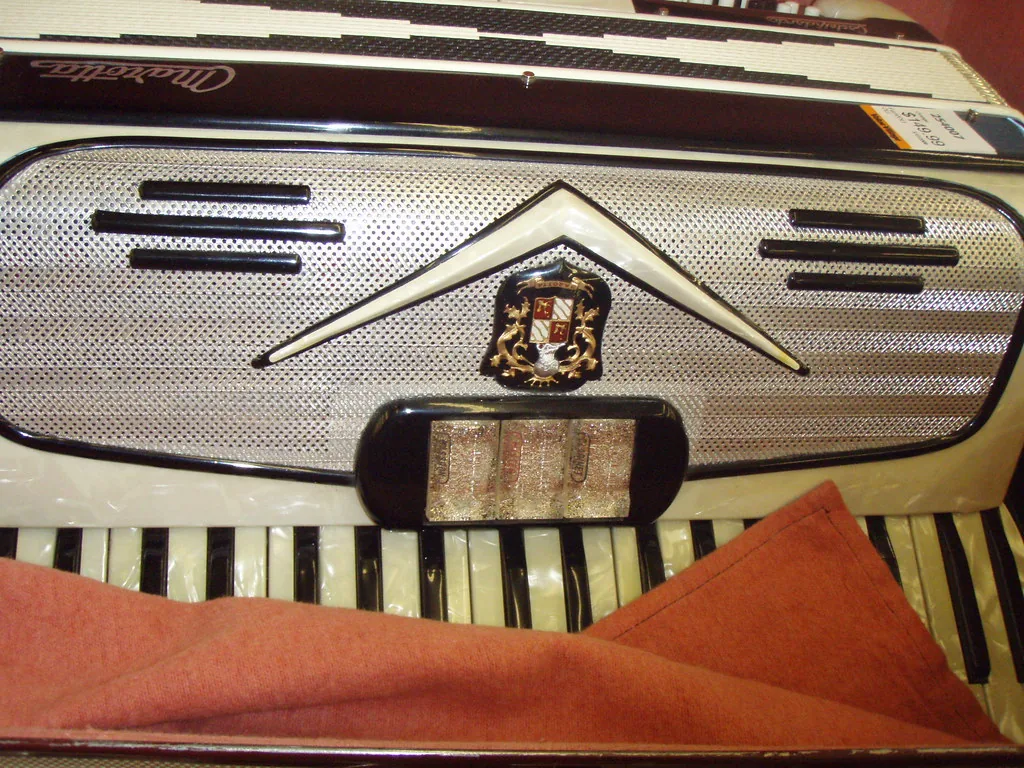
- Piano accordion:
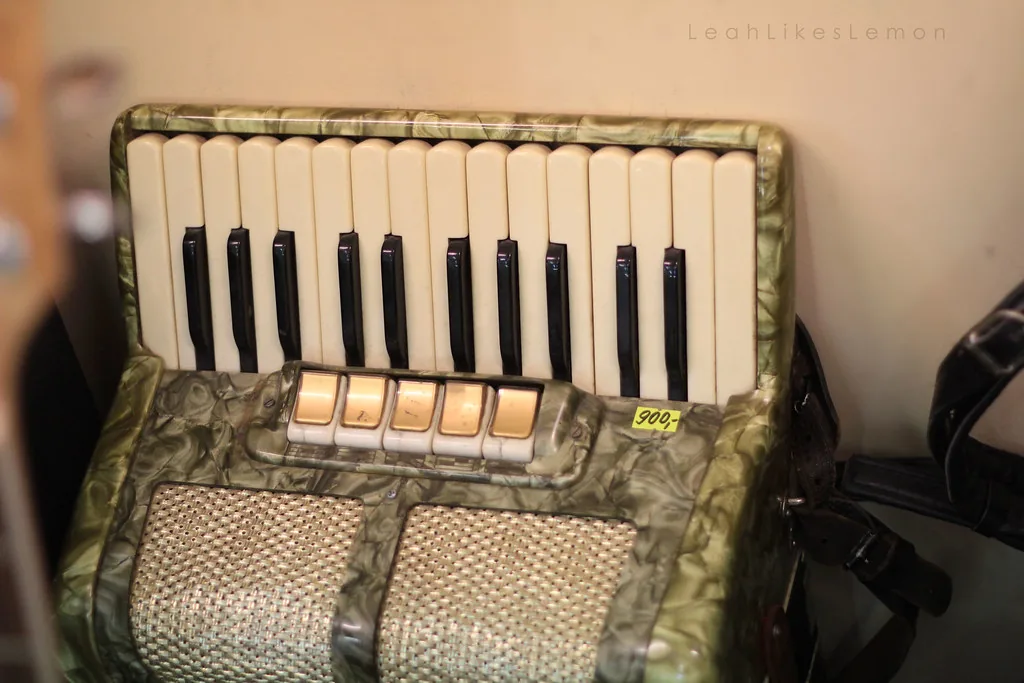
- Also known as a chromatic accordion, it has buttons on both sides of the keyboard.
- It offers a full range of notes, with piano keys on the right and bass buttons on the left.
- It suits a variety of musical styles, from classical music and jazz to folk.
- Diatonic accordion:
- It has a limited diatonic keyboard and is often used in folk and traditional music.
- Its notes are not chromatic, meaning that each button or key produces two different notes depending on whether the bellows are pulled or pushed.
- It is popular in regional folk music, including Celtic, French, and Latin American music.
- Bayan accordion:
- Originating in Russia, the bayan is a type of accordion used in Russian classical and folk music.
- It is distinguished by its chromatic bass system and piano keyboard, offering great musical versatility.
- Button accordion:
- It uses buttons instead of keys to play notes.
- It is often used in traditional and folk music, particularly in regions where the diatonic keyboard is preferred.
- Concertina:
- It is distinguished by its compact size and hexagonal bellows.
- It comes in several configurations, including the Anglo concertina and duet concertina, each with a different arrangement of buttons and notes.
Each type of accordion offers unique sonic and musical possibilities, allowing musicians to explore a wide variety of styles and traditions. The choice often depends on the musician’s preferences, the repertoire they want to explore, and the tradition in which they play.
Who is André Verchuren Junior, son of the famous accordionist?
André Verchuren’s “Amour de valse”: The Story Behind the Piece
La Paloma by André Verchuren: A Version That Became a Cult Classic
Perles de cristal: All About André Verchuren’s Polka
André Verchuren’s “Au plaisir des bois”: History and Secrets