
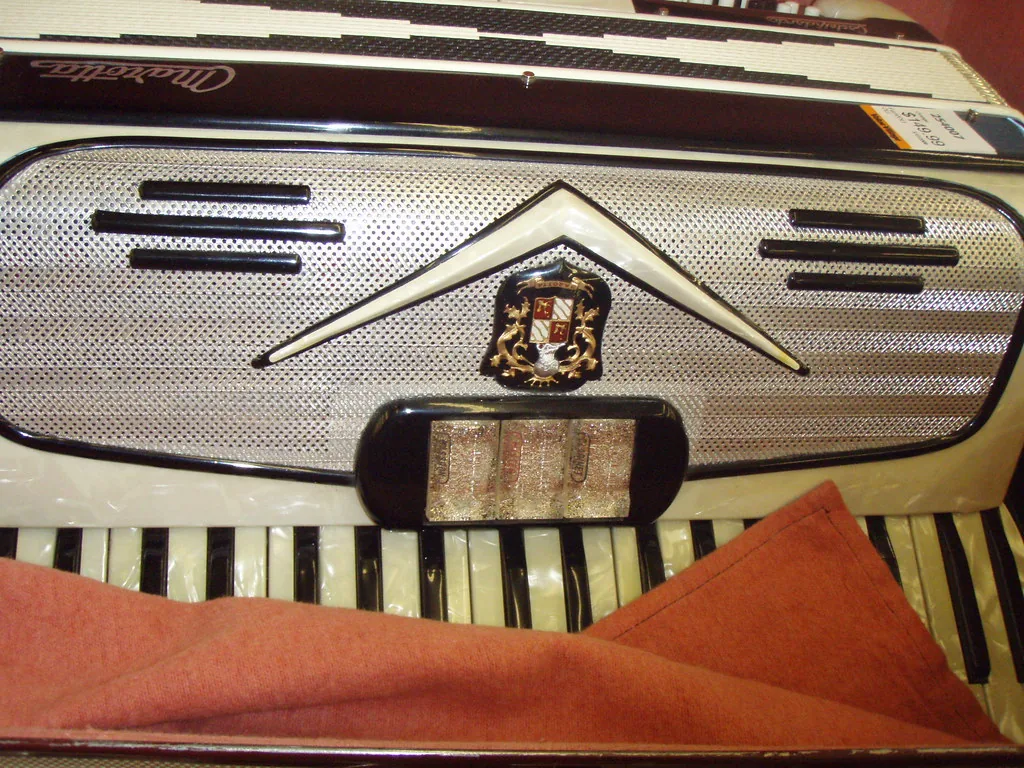
Welcome to our guide to the famous polka performed by one of the great names of French musette music. This signature piece, Perles de cristal, has left its mark on generations of listeners in France and beyond.
In this article, we explore the sound of the musette accordion. We discuss the reputation of this enduring classic and its cultural importance in France’s musical heritage.
We delve into the work’s history, historical setting, musical features, associated artists, discography and cultural impact. Reliable sources support each section, making this a comprehensive resource for lovers of traditional music.
Get ready to discover its connections with other leading accordionists, including Maurice Larcange and Yvette Horner, while revisiting a work available on CD since 2006.
Introduction to “Perles de cristal” and André Verchuren
The polka “Perles de cristal” stands out in André Verchuren’s repertoire. This signature piece captures the festive, joyful spirit of musette music. Its lively rhythm and distinctive expression have captivated generations of listeners.
Born into a family of musicians, André Verchuren began playing the accordion at an early age. His passion for the instrument brought him to the forefront of the French music scene. Over the decades, he became one of the country’s best-known accordionists.
“Perles de cristal” is among his best-known recordings. Included on the 2006 CD catalogued at the Passe-Ouest Media Library under call number 5.64 VER, it has been reissued several times, reflecting its lasting popularity. The disc also includes classics such as “Fleur De Papillon,” “Balajo” and “Ca Gaze.”
André Verchuren’s style is marked by great technical virtuosity and remarkable expression. His career took off in the 1950s and 1960s, making him a popular icon of musette music. His stage performances won over large audiences and secured his place in the hearts of music lovers.
“Perles de cristal” holds a central place in his discography and was regularly reissued through 2010. Other major figures on the musette scene also influenced the music associated with this piece, enriching France’s musical heritage. To learn more about those connections, see additional resources such as this article.
In short, “Perles de cristal” is both a gem of musette music and a reflection of André Verchuren’s rise on the French music scene. The following sections examine its historical setting and musical features in greater detail.
| Year | Event | Album |
|---|---|---|
| 2006 | CD release | Catalogued at the Passe-Ouest Media Library |
| 2010 | Release of the album “Le Dénicheur” | “Perles De Cristal-Le Dénicheur” |
Historical and cultural setting of the polka “Perles de cristal”
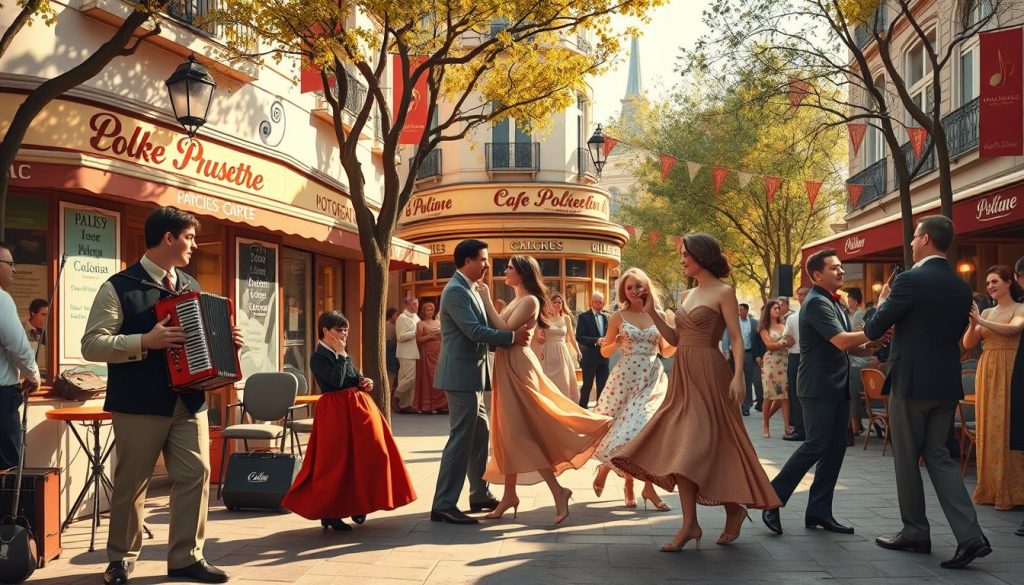
Musette music flourished in the mid-20th century, alongside the growing popularity of the polka. During this lively cultural period, the accordion became the defining instrument of public dances.
In the 1950s and 1960s, musette dances were places to meet and socialize. Their atmosphere was festive, and André Verchuren’s accordion brought crowds onto the dance floor. The music evolved as musicians incorporated a range of influences that broadened its repertoire.
The era and musical style of the 1950s and 1960s
This era saw a revival of French popular song. New musical trends emerged, but the polka remained a mainstay of the musette repertoire. Originating in the Czech lands, the dance was adopted and adapted by French musicians until it became part of the musical landscape.
- A look at the cultural energy of the 1950s and 1960s, a thriving period for French popular music.
- A visit to emblematic venues such as the riverside dance halls along the Marne, where this music could be heard every weekend.
- An examination of the influences that shaped musette music: Auvergnat, Italian and Manouche traditions.
- The music’s social role in bringing generations together.
The polka’s place in French musette music
The polka found a place alongside the musette waltz and the tango. The 2006 CD, for example, includes tracks such as “Simple Tango” and “Valse Des Montagnes,” showing the range of this musical genre.
These varied influences allowed the polka to develop while retaining its character. Musicians of the period played a key role by incorporating elements from other musical traditions, as illustrated by “Mambo Chinois” on the same disc.
In short, the polka is both a popular dance and a symbol of French culture that brings generations together through music. The next section takes a closer look at the musical features of this piece.
Musical analysis of “Perles de cristal: All About André Verchuren’s Polka”
The polka is a rich musical genre, and “Perles de cristal” is a fine example. The piece stands out for its quick duple rhythm in 2/4 time, creating a lively, festive atmosphere. Its brisk tempo is instantly recognizable and invites people to dance.
Characteristic structure and rhythm
The rhythmic structure is central to this polka’s appeal. Its 2/4 meter gives it a buoyant, joyful feel. This style is characteristic of André Verchuren’s compositions, in which every note seems to pulse with enthusiasm.
Melodic variations throughout the piece hold the listener’s attention. These developments create an engaging atmosphere and make each hearing enjoyable. That is how “Perles de cristal” stays in the memory.
Instrumentation and the accordion’s role
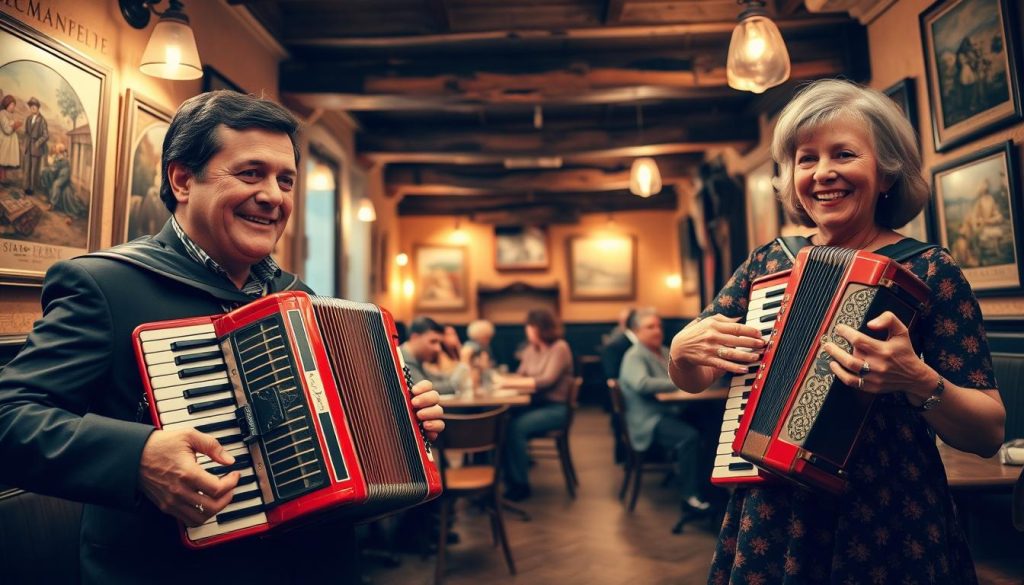
The accordion, the central instrument of musette music, plays the leading role in this work. In André Verchuren’s hands, it provides both the melody and the harmonic accompaniment. His bass playing and use of the bellows are especially prominent.
Tracks such as “Ca Gaze” and “Tra-La-La Musette” on the 2006 CD illustrate the technical skill this repertoire requires. The 2010 album also includes polkas such as “Rose-Marie” and “Oiseau Volage,” demonstrating the variety of the style.
In short, the balance between technical virtuosity and approachable melodies contributes to this composition’s success. The nuances of André Verchuren’s performance give it a distinctive quality that sets it apart from other recordings.
To learn more about the work’s impact, explore resources such as this one.
Artists associated with “Perles de cristal”: Maurice Larcange and Yvette Horner
Some artists stand out in the world of musette for their talent and influence. Maurice Larcange and Yvette Horner helped bring the genre to wider audiences. Their contributions enriched its repertoire and expanded its following.
Maurice Larcange’s contributions to musette music
Maurice Larcange was a renowned French accordionist known for his distinctive style. Memorable pieces such as “Musette en mineur valse” and “Un dimanche à la guinguette” made an impression. His talent also led him to work with other musicians, including Marc Pascal, adding to the musical landscape of his time.
One of his notable albums, “The French Touch”, reflects his international reach. Larcange brought a personal touch to musette music while remaining faithful to his roots.
Yvette Horner’s role in bringing the polka to wider audiences
Yvette Horner, an iconic figure of French accordion music, also played a crucial role in spreading the polka. With memorable titles such as “Reine de musette” and “Mon p’tit paradis”, she captivated audiences and helped popularize musette music.
Her virtuosity and stage presence made her an essential performer. Yvette Horner inspired many musicians and left a lasting impression on music lovers.
Alongside André Verchuren, these two artists formed a legendary trio of musette figures who encouraged musical creativity. Their artistic rivalry helped the genre renew itself and adapt as times changed.
| Artist | Signature pieces | Collaborations |
|---|---|---|
| Maurice Larcange | Musette en mineur valse, Un dimanche à la guinguette | Marc Pascal |
| Yvette Horner | Reine de musette, Mon p’tit paradis | — |
Catalogue and discography of “Perles de cristal”
The range of albums and singles associated with this signature work is impressive. Each recording offers another perspective on the piece and adds to its musical legacy. Let us explore the versions and editions released over the years.
Albums and singles: versions and related tracks
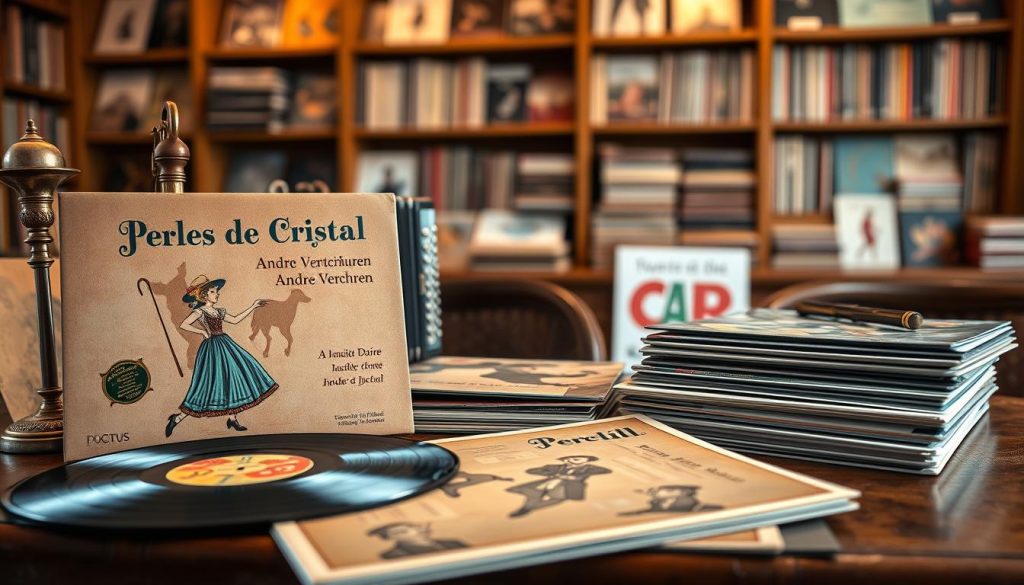
The 2006 CD “Perles de cristal / André Verchuren” is an important reference. Issued by Intense music with EAN 4011222236166 and catalogue number 223616-205, it contains 20 selected tracks:
- Perles De Cristal
- Fleur De Papillon
- Balajo
- Mambo Chinois
- Nuit Blanche
- Regina Polka
- Simple Tango
- Tra-La-La Musette
- Ca Gaze
- Tango Pour Madame
- Première Valse
- La Fête Du Tabac
- Divine Musette
- Mes Mains
- Espoirs Perdus
- Valse Des Montagnes
- Rhapsodie Suédoise
- Le Petit Train
- Valse Militaire Belge
- Gai Murmure
This CD is especially valued for its selection of signature tracks, including “Fleur De Papillon” and “Divine Musette.” These pieces capture the essence of musette music.
The importance of the 2006 CD and later editions
In 2010, “Perles De Cristal-Le Dénicheur” appeared as a double album with 40 tracks. This expanded edition includes classics such as:
- Le Denicheur (Java)
- Escamillo (Paso Doble)
- La Veuve Joyeuse (Valse Viennoise)
- Indifference (Valse Musette)
- Le Retour Des Hirondelles (Valse)
- Migliavica (Valse)
- Tourterelle (Valse)
- Viens A Nogent (Marche)
- Insaisissable (Tango)
- Nuits De Napoli (Bolero)
- Reproche
- Musette Tyrolienne (Valse)
- Mariage De Poupees (Valse)
This range of styles, including polkas, waltzes, tangos and javas, shows the breadth of musette music. Reissues play a crucial role in preserving this musical heritage.
EAN codes and library call numbers are useful when looking for physical copies. They help collectors and music lovers find these recordings more easily.
In short, the catalogue surrounding this leading work illustrates its impact and longevity. The next section considers how rights in these recordings are managed.
Copyright and the management of musical works
Protecting musical works is an important matter for artists and composers. André Verchuren’s creations are protected under French copyright law, so their use is subject to specific rules.
SACEM, the French society for authors, composers and music publishers, plays a key role in managing composers’ rights. It works to uphold those rights and ensure that rights holders are paid fairly when their works are used.
The legal status of André Verchuren’s compositions
André Verchuren’s works are protected by copyright. Reproducing or distributing them therefore requires prior permission. The 2006 CD with EAN 4011222236166 is an example of a protected recording.
Rights management for broadcasts and new performances
Permission is needed to play “Perles de cristal” in a public or commercial setting. Mechanical reproduction rights also apply to recordings on CD and digital media. These rules protect rights holders against unauthorized use.
- Related rights protect performers and producers of the original recordings.
- Synchronization rights are required to use the music in audiovisual productions.
- The terms for other artists’ performances and adaptations of the works must be clarified.
- EAN codes and publisher references make rights easier to trace.
- It is important to guard against infringement and unauthorized use.
Respect for copyright helps sustain musical creation and compensate rights holders. It also helps preserve works by artists such as André Verchuren for future generations.
| Type of right | Description | Requirement |
|---|---|---|
| Copyright | Protection of musical compositions | Prior permission for reproduction |
| Related rights | Protection of performers and producers | Payment for use of the work |
| Synchronization rights | Use in audiovisual productions | Permission required |
The impact of “Perles de cristal” on French music and culture
Since its release, this work has been warmly received by French audiences. Its lively melodies and joyful rhythms made it a favorite at musette dances. Nostalgia for the dances of earlier years persists, reflecting the affection several generations have for this polka.
André Verchuren has been honored in commemorative videos and recordings. Available online, these resources testify to the lasting impact of his work. For example, a 1955 André Verchuren medley received 44 views on video platforms, illustrating continued interest in his music.
Artists such as Yvette Horner also helped keep the musette tradition alive. With pieces such as “Reine de musette” and “Mon p’tit paradis”, she delighted audiences and inspired new generations. Musicians including Maurice Larcange, Jo Privat and Aimable have also performed “Perles de cristal” at concerts and festivals, carrying on its legacy.
The piece regularly appears on radio and television programs devoted to French music. It is also often included in accordion competitions, where contestants perform enduring classics.
The heritage value of “Perles de cristal” is undeniable. Regarded as a classic, it continues to influence contemporary accordionists seeking to capture the essence of musette music. To explore this musical world further, see additional resources such as this one.
Further resources and references
Several resources can help you explore the music of André Verchuren and his contemporaries. These references offer access to archives and recordings that deepen your understanding of musette music.
Media libraries and accessible archives
The Passe-Ouest Media Library holds the CD “Perles de cristal / André Verchuren” under call number 5.64 VER. The disc is available in the Music and Cinema section on the first floor. Visitors can consult it alongside other valuable recordings from France’s musical heritage.
Memorable videos and recordings
Tribute videos featuring performances by Maurice Larcange are available online. Notable examples include:
- Musette en mineur valse (42 views)
- Tintin et la Toison d’or (37 views)
- Flèche D’or (37 views)
- Ah ! Si j’étais (35 views)
- Désormais (40 views)
- Ça Serait Beau (41 views)
- Mambo Mambo (45 views)
- Les amoureux du Havre (45 views)
- Un dimanche à la guinguette (45 views)
- The French Touch (45 views)
- Tic tic tac (43 views)
- Route de nuit (42 views)
- Reviens, reviens-moi (42 views)
- Gina (43 views)
- Nouvelle Vague (44 views)
- Du Soleil (44 views)
These videos bring back the energy of musette music and showcase the artists’ talent.
To learn more about Maurice Larcange’s career, you can also explore The French Touch and his collaborations with Marc Pascal. These works highlight Larcange’s influence on the music scene.
The audiovisual archives of the INA also preserve historical performances by André Verchuren. These recordings are valuable for understanding how musette music evolved over the decades.
Researchers and enthusiasts can consult original sheet music and period documents to deepen their knowledge and explore the music’s roots.
Several current festivals and events also celebrate musette music. They offer opportunities to experience the tradition live and meet other enthusiasts.
For more information about resources and events related to this music, follow this link.
| Resource type | Description | Access |
|---|---|---|
| Passe-Ouest Media Library | “Perles de cristal / André Verchuren” CD | Call number 5.64 VER, Music and Cinema section |
| Online videos | Maurice Larcange performances | Video platforms |
| INA archives | Historical André Verchuren performances | INA website |
Conclusion
André Verchuren’s enduring melodies reflect his lasting influence on musette music. His legacy lives on through recordings, including the 2006 CD and the 2010 album. Artists such as Maurice Larcange, with their many contributions to the musette repertoire, continue to inspire new generations of accordionists.
This work remains a symbol of France’s rich musical culture. Listening again to “Perles de cristal” reveals its enduring beauty. Explore more French musette music through the other titles mentioned in this guide.
Thank you for your interest in this part of France’s musical heritage. Continue exploring the accordion and traditional French popular song.