
Context: Many people today experience distress linked to depression and anxiety. The search for practical, accessible tools leads many readers to sound practices.
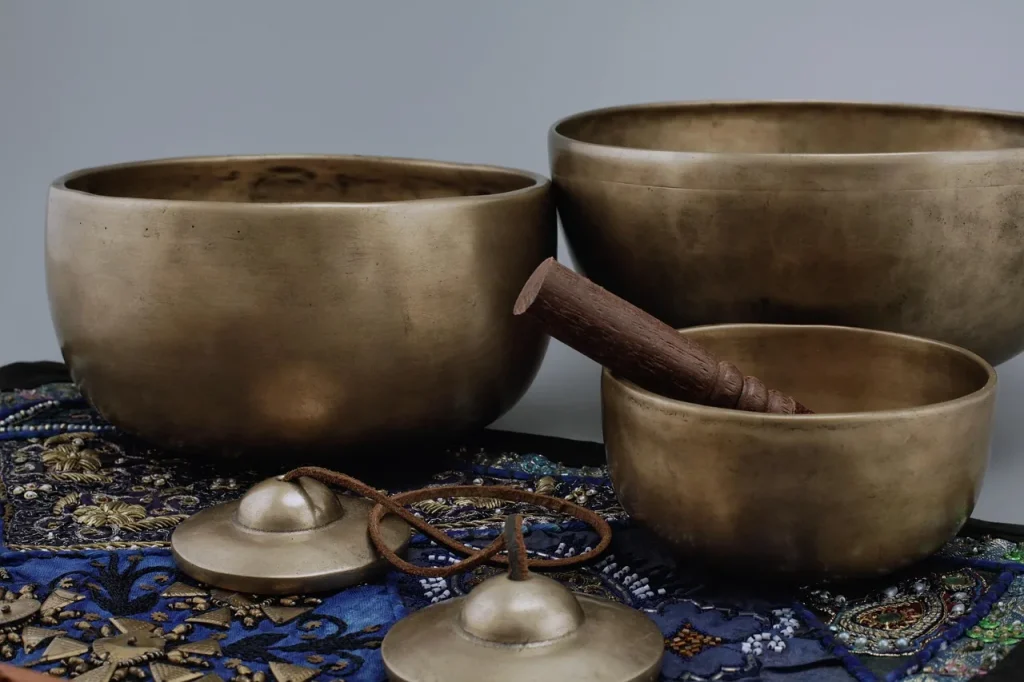
What are singing bowls? These instruments, hand-forged from metal alloys, produce sounds rich in overtones. Studies (San Diego, 2016; comparative study, 2014) suggest positive effects on tension, relaxation, and stress.
This article has a simple aim: to understand how a Tibetan singing bowl can complement medical care and support well-being. We will cover its origins, how it works, the scientific evidence, and practical ways to use it every day.
To learn more about the studies and personal accounts, read the dedicated analysis.
Why consider singing bowls for managing stress today?
As stress becomes more widespread, sound practices are attracting increasing attention.
Originating in the Himalayas, singing bowls have found a place in contemporary wellness practices. They offer a simple option that can fit into daily life and encourage relaxation.
A bowl produces sustained sounds and overtones that help focus attention. For many people, this sensory experience makes it easier to regulate emotions.
These instruments work well in a personal routine or a guided session. You can use one at home, alongside breathing exercises, mindfulness, or gentle movement.
“Many people report better sleep and less perceived tension after a few regular sessions.”
A bowl can be relatively affordable, and the basic techniques are simple to learn. The available evidence and personal accounts suggest it may be worth trying as part of a structured routine.
| Feature | Expected effect | Use |
|---|---|---|
| Harmonic sound | Focused attention | Short daily session |
| Easy to incorporate | Quick relaxation | At home or in a group |
| Low cost | Accessibility | Alongside breathing exercises |
To explore sound practices and their applications further, visit the world of sound for resources and guided sessions.
Depression, anxiety, and stress: understanding the vicious cycle
The connection between prolonged tension and a loss of energy can create a cycle that is difficult to break without targeted support.
Definitions, symptoms, and effects on body and mind
Depression involves a persistent state of sadness, loss of interest, and slowed movement and thinking.
It can affect sleep, energy, and motivation. Physical symptoms, such as fatigue and pain, are also common.
How stress feeds depression—and vice versa
Anxiety involves prolonged activation of the body’s alarm system, which can bring rumination, tension, and changes in heart rate.
Stress triggers the release of adrenaline and cortisol. Over several years, persistently elevated cortisol may disrupt emotional balance and contribute to depression.
Depression can reduce social engagement and activity, increasing exposure to stress. In this cycle, addressing either condition may affect the other.
For example, a brief morning routine combining steady sounds with deep breathing may begin to reduce perceived stress over time.

Origins and workings of Tibetan singing bowls
From ancient ritual practices to modern relaxation tools, singing bowls have followed a distinctive path.
These instruments have roots in Himalayan cultures. Associated with shamans in the Bön tradition, they were later incorporated into Buddhist rituals. Their use has since spread to modern wellness spaces.
Handcrafting: artisans often use an alloy of several metals, traditionally seven. They hammer and adjust each piece by hand to achieve good sound quality.
Vibrations, overtones, and singing tones
Rubbing the rim or striking it with a mallet creates sustained vibrations. The resulting sounds are rich in overtones and vary with the bowl’s size, thickness, and composition.
- A larger bowl produces a deeper, steadier sound.
- Greater thickness extends the sound’s sustain.
- The mix of metals influences the tone.
To begin, rest the bowl on your palm, hold the mallet at a slight angle, and apply steady pressure. These simple movements can improve its singing tone and support chakra-balancing practices.
For more information, see the complete guide to singing bowls.
Depression and anxiety: the role of Tibetan singing bowls
A bowl’s sustained sounds can provide a sensory bridge between body and mind.
Sound and vibration therapy: resonance in the body and chakras
In sound therapy, a bowl’s vibrations can create a sense of resonance in the body.
This experience may help relax muscles and create a local sensation of healing.
Practitioners also describe working with the chakras using selected frequencies.

The physiology of relaxation: brain waves, frequency, and cortisol
Slow, steady sounds may slow brain-wave activity.
This may be accompanied by a reduction in cortisol, a stress hormone.
Such a physiological response may help ease general tension.
Reported effects on mood, stress, and anxiety
After a session, some people report a steadier mood and less nervousness.
Personal accounts and studies (2014, 2016) point to improved well-being and reduced perceived tension.
Supporting sleep and everyday quality of life
Regular use of sound may help some people fall asleep sooner and wake less often during the night.
These possible benefits can complement medical care for depression and anxiety, but should not replace it.
For more information, read our singing bowl study.
What studies and personal experiences tell us
Recent research and personal accounts offer practical insight into the effects of sound practices.
The 2016 San Diego study
A study conducted in San Diego in 2016 brought together 62 participants from varied backgrounds. It involved a sound meditation session using a singing bowl.
Result: highly significant changes in tension, relaxation, and perceived stress after one session.
Comparative results (2014)
In 2014, a comparative study involving 51 people compared sessions with a bowl against sessions without one.
Sessions with a singing bowl showed a greater reduction in tension and perceived stress.

What users report
Many personal accounts describe regularly listening to or playing a bowl.
For example, users report falling asleep sooner, feeling less anxious, and experiencing a general sense of well-being.
Limitations and future directions
The authors emphasize that studies are scarce and their samples are relatively small.
Methodological limitations: small samples, possible expectation effects, and inconsistent outcome measures.
Future directions include strengthening study methods, conducting more controlled trials, and tracking changes over several years.
“The results are promising, but more rigorous research is needed to confirm and clarify these benefits.”
For a more detailed scientific perspective, consult this scientific review.
Key practices: singing bowl meditation and sound massage
To make sound part of a calming routine, a quiet room and a clear intention may be enough.
Prepare your space, intention, and body
Settle into a quiet place, adopt a steady posture, and breathe deeply. Set a simple intention before meditating.
A sound mantra technique
Place a bowl on your hand or a cushion. Strike it gently, then rub its rim to make it sing.
Repeat a steady pattern. Close your eyes or soften your gaze. Listen to the vibrations and focus on your breathing.
Sound massage: what happens in a session
The practitioner places one or more bowls near the body or on selected areas. The person receiving the session remains still and receptive while breathing slowly.
A session usually lasts 30 to 60 minutes, depending on the practice. Many people describe deep relaxation that helps them cope with stress.
Frequency, duration, and precautions
Start with several short sessions each week, then gradually increase their length. Lower the volume if the sound feels too loud.
Stop the session if you feel uncomfortable. If you have a particular medical condition, seek medical advice before engaging in extended practice.
Choosing and playing a Tibetan singing bowl
To find a bowl that suits you, start by noticing how it sounds and feels.
How to choose a quality bowl
Consider a bowl handmade by an experienced artisan for better sound quality.
Try several models in your hands: listen for the richness of their sounds, the stability of the overtones, and the sustain of the singing tone.
Examine the mix of metals, the size, and the thickness. These factors affect sound projection and vibration.
For practical advice, read the guide to using a Tibetan singing bowl.

Essential playing techniques
Rest the bowl on your palm, maintain steady pressure with the mallet, and move it around the rim in even circles.
Adjust the speed and angle to stabilize the singing tone and avoid unwanted vibrations.
Start gently and steady your movement. Then add light strikes between periods of rubbing the rim to vary your practice.
The music made by this instrument works well with other bowls or gentle instruments while keeping your attention on the bowl.
Conclusion
Listening closely to the bowl reveals its potential to support well-being.
In brief: the studies (San Diego, 2016; comparative study, 2014) and many personal accounts report a reduction in tension, better sleep, and a steadier mood after short, regular sessions.
Suggested practice: 2 to 3 weekly meditation sessions with a singing bowl, at home or with a sound therapy practitioner. Choosing a quality bowl can improve its vibrations and the music it produces.
The evidence remains limited. When mental health is involved, use this approach alongside professional care. To learn more, read about the effects of Tibetan singing bowls.