
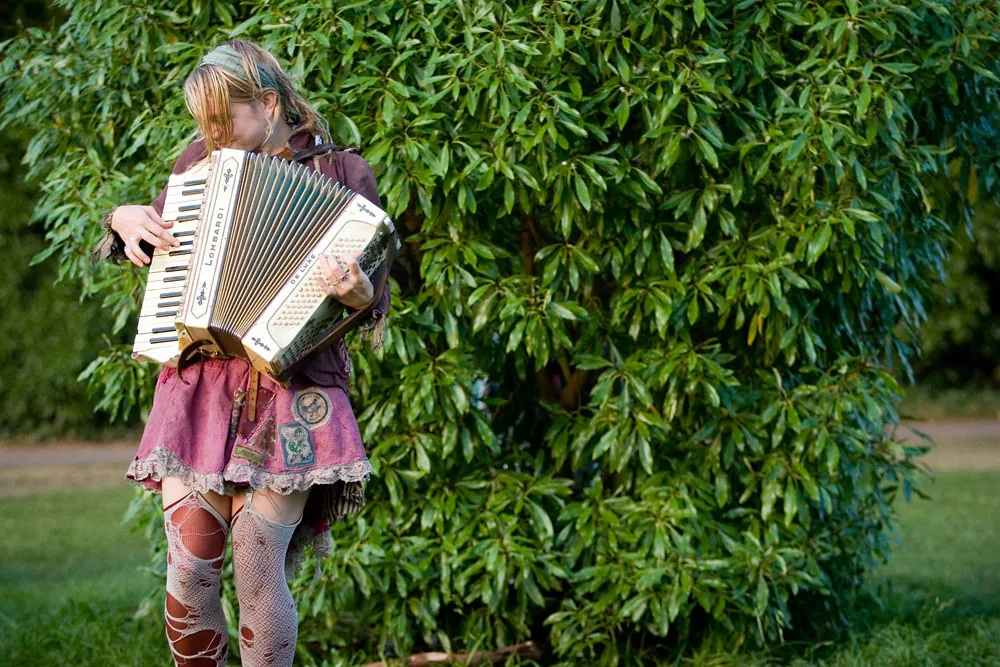
André Verchuren Junior, son of the famous musician, carries on the legacy of a family deeply rooted in music. He is the younger of two children; his older brother, Harry Williams, is a well-known music producer. His brother was named in honor of a paratrooper their father helped during the war.
André Junior’s life was marked by tragedy. In April 1974, a car accident in Normandy killed his mother, Micheline Butot, and seriously injured him. The event deeply affected his family and led his father to suspend his musical activities for a time.
After André Senior’s death in 2013, André Junior took up the task of preserving his father’s memory and the accordion tradition. His musical journey reflects a family legacy rich in emotion and music.
Introducing André Verchuren Junior and his family legacy
In the world of music, passing traditions down through a family plays an essential role. André Verchuren Junior’s story is part of a lineage of accordionists. His journey reflects a passion passed from one generation to the next.
Family background and artistic roots
The family’s musical roots go back to André’s great-grandfather, Petrus Verschuere, a Belgian accordionist. He left Knesselare to work in the mines of Pas-de-Calais. His son, Raymond, continued the musical tradition after settling in Neuilly-sous-Clermont. There he founded a renowned accordion school that welcomed as many as 180 students.
Music was ever-present in André’s life. He began playing the accordion at age 4 under his father’s watchful eye. At 6, he received his first performance fee at a dance in Ponchon, accompanied by his mother on drums. That experience marked the beginning of his musical career.
Early influences and musical education
Growing up in a family of artists, young André encountered a wide range of sounds and musical styles. By 12, he was already teaching at his father’s accordion school, continuing a tradition of music education. This early immersion in the world of the accordion shaped his artistic identity.
His father and grandfather trained generations of musicians. André Junior learned by watching these masters and inherited their expertise. The musical education he received played an essential role in his career and enabled him to carry on the family tradition.
André Junior’s role in continuing and preserving the family’s work
André Verchuren Junior continues this lineage of accordionists. He works to keep his father’s memory and repertoire alive. His passion for the accordion and commitment to music reflect this precious heritage.
Family plays a central role in passing on this passion. André Junior inherited his father’s music, along with the responsibility of preserving the tradition. His life and career pay tribute to the accordion and the music surrounding it.
Biography of André Verchuren, the father: a giant of French musette
André Verchuren, born on December 28, 1920, in Neuilly-sous-Clermont, left his mark on music history through his talent. His roots in Picardy played a fundamental role in his artistic development. From an early age, he grew up in a rich musical environment that shaped his path.
Family origins and childhood in Picardy
The Oise region, where he grew up, nurtured his earliest musical inspirations. At just 4, he began playing the accordion, guided by his music-loving parents. By 6, he was already performing at local dances and captivating audiences with his precocious talent.
Early beginnings and first international successes
In 1936, at age 16, he won the international accordion competition in Soignies. The victory brought him to the attention of audiences beyond France. Playing the overture to Les Saltimbanques while standing, he challenged the conventions of the time and received the trophy from King Leopold III of Belgium.
That victory opened the door to other competitions, including one at the Moulin de la Galette in Paris, where he finished eighth. His early success helped him reach millions of music lovers around the world.
Resistance, deportation and return to music
During the Second World War, André Verchuren joined the Resistance and helped Allied airmen hide. In June 1944, however, he was denounced and arrested by the Gestapo. He was then taken to Dachau concentration camp on the “Death Train,” No. 7909.
On July 14, 1944, he performed a heroic act by leading his fellow prisoners in singing La Marseillaise, defying the SS. After 13 months in captivity, he was liberated in August 1945. He showed remarkable resilience on returning to music, although it took years to regain the dexterity he needed to play the accordion.
Recognized for his courage, he received a certificate of recognition from President Eisenhower and became a naturalized French citizen on April 5, 1957. His musical career then flourished: he gave around 10,000 performances and sold 60 million records, becoming a giant of musette.
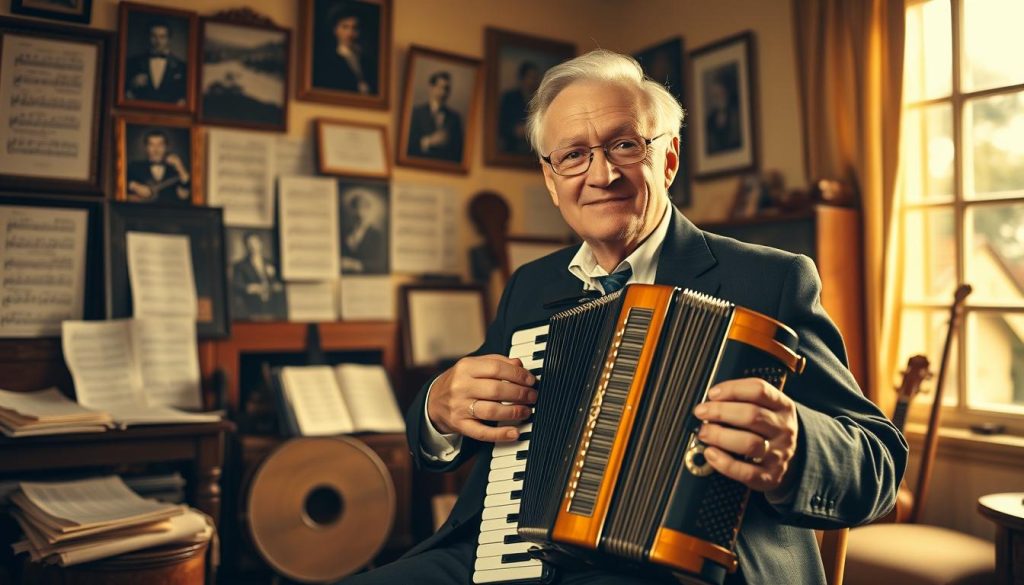
André Verchuren Senior’s musical and artistic career
André Verchuren’s musical career was marked by several turning points. In 1950, he made his national debut thanks to the program Swing versus Musette on Radio Luxembourg. Entered by his friend Tony Murena, he found himself at the Moulin-Rouge, competing against a jazz orchestra before 10 million listeners. He won the memorable contest, which launched his career in the spotlight.
His success opened doors at record labels, notably Decca and Festival. Through these collaborations, he recorded his first 78 rpm and 45 rpm records, beginning his recording career. In October 1956, he became the first accordionist to perform at the Olympia in Paris for three weeks, further establishing his reputation.
André Verchuren also excelled on the radio. He hosted programs on RTL for 17 years and on Europe 1 for 13 years. His voice became familiar in French homes as he entertained millions at dances and shows across the country. In 1961, he achieved worldwide success with Les Fiancés d’Auvergne, which sold more than 10 million copies and remained number one on the charts for 11 months.
His career figures are staggering: more than 70 million albums sold, 777 albums recorded and over 10,000 shows performed before a total audience of 40 million. He also invented the concept of the “bal-music-hall”, combining dancing with stage entertainment, transforming popular dances and attracting all generations.
André Verchuren received numerous honors. He won the Charles Cros Academy Award and the Sacem Grand Prize for instrumental popular music. He was made an Officer of the Legion of Honor on May 5, 1986, then promoted to Commander of the National Order of Merit on November 17, 2006. His influence on musette music is undeniable: he got all of France dancing and sold more records than any other accordionist in history.
Who is André Verchuren Junior, son of the famous accordionist? His journey and legacy
André Verchuren Junior, the younger son of an accordion legend, has made his family’s musical legacy his life’s mission. He grew up in the shadow of a giant but found his own path in music.
On April 24, 1974, tragedy struck his family. A car accident in Normandy killed his mother, Micheline, and injured André. The event left an indelible mark on his life and career. His mother’s death was a turning point that prompted him to devote himself more deeply to music.
Commitment to music and passing on the tradition
André Verchuren Junior is dedicated to passing on his family’s musical tradition. He continues the teaching and spirit of the accordion school founded by his grandfather, Raymond. This connection to the past helps him safeguard the family’s musical legacy.
After his father’s death in July 2013, he took up the mantle. His father, who died at 92, left an impressive legacy: more than 70 million albums sold and over 10,000 shows performed. André Junior works to keep that music alive, celebrating every success and every album.
Artistic initiatives and stewardship of his father’s legacy
André Junior has undertaken numerous projects. He manages the archives and digitizes his father’s 777 albums to make this valuable collection accessible around the world. His passion for music also shows in the events and dances he organizes, reviving the spirit of the grand evenings of the past.
He also maintains the official website dedicated to his father, where he shares memories of the dances and radio programs that defined an era. These efforts help preserve a musical legacy and pass this culture on to new generations.
Influence on new generations and preservation of musical memory
André Junior introduces young people to his father’s story, including how he earned his first performance fee at age 6. He tells them about his father’s dances and successes, helping the music reach a new audience.
The family home in Chantilly, purchased with royalties from “Les Fiancés d’Auvergne,” is full of memories. André Junior looks after this legacy and keeps musette music alive in his region and beyond. He organizes events that bring together longtime admirers and new fans.
André Verchuren Junior is proud to carry his father’s name. He pays tribute to the man who got millions of people dancing and whose music continues to resonate on stages around the world.
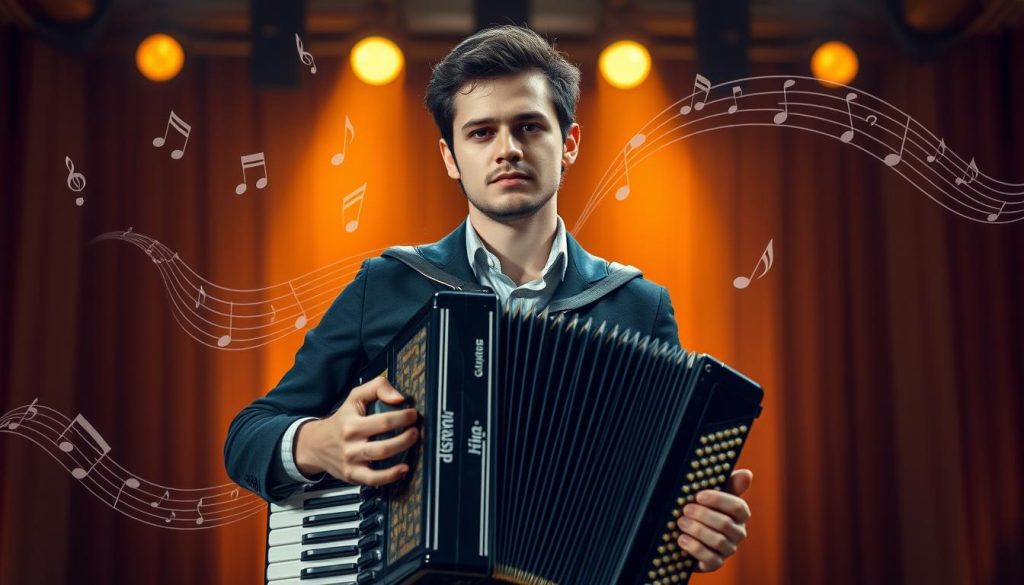
Conclusion
This family’s musical legacy is deeply rooted in the history of the accordion. André Verchuren’s extraordinary journey, from earning his first performance fee at age 6 to his triumphs at the Olympia in Paris, speaks to his passion and resilience. Despite the hardships he faced, he sold more than 70 million records and reached millions of people around the world.
His son, André Verchuren Junior, is determined to keep his memory alive. By preserving the 777 albums and organizing events, he ensures that musette music continues to be heard. The family home in Chantilly remains a living symbol of this tradition.
André Verchuren died on July 10, 2013, at age 92, but his music lives on. Thanks to his son’s dedication, Verchuren’s accordion music will continue to stir hearts for years to come.