
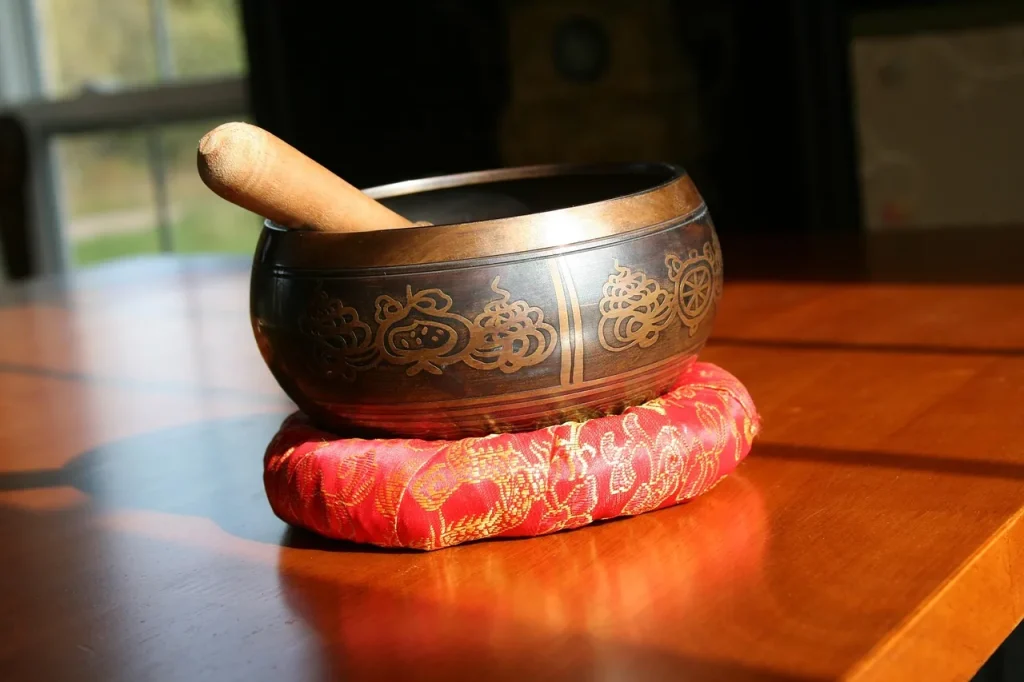
Discover a selection designed to help you get the best from your singing bowl. These products enhance vibration, stabilize the note and preserve sound quality.
Ideal for meditation, yoga and sound therapy, each item—stick, mallet or cushion—is made from durable materials. The range includes handcrafted options from Nepal, carved with Buddha, Elephant or Namaste motifs.
We offer around 41 items, from simple sticks to felt-covered mallets, at prices ranging from approximately €3.00 to €40.00. The products are purified and energized before delivery for a harmonious experience as soon as they arrive.
To learn more about mallets suited to the size of your instrument, consult our mallet guide. If you need care advice, also read our care recommendations.
Choose accessories suited to the size of your bowls for clear resonance, a precise strike and optimal stability on their supports.
Tibetan singing bowl accessories: cushions, mallets and care
A well-matched set improves resonance and makes meditation and sound therapy easier to practice.
Essentials: our range brings together sticks, beaters, mallets and supports to form a complete kit. A mallet helps build sound gradually and produces a strong vibration. A beater with a felt-covered head softens the attack and produces warm bass tones.
A good cushion isolates the instrument from the floor. It prevents energy loss and keeps the note from becoming saturated. The note therefore remains stable and the sound continues evenly, which is useful in yoga and guided sessions alike.
Enhance your sound experience in meditation, yoga and sound therapy
Mindful selection: each piece is made from durable materials, then purified and energized before delivery. This care is intended to provide a harmonious experience from the moment it arrives.
- A durable choice for frequent use.
- A balance of support, stick and mallet for consistent resonance.
- Careful delivery so you can easily assemble a complete kit.
Whether you are a beginner or a practitioner, matching singing bowl accessories to your needs improves the depth of the sound. Later, we explain which combinations work best for different bowl sizes and tools.
Cushions and support rings for Tibetan singing bowls
Your choice of support directly affects the purity of the sound and the life of the instrument.

Ring cushions or flat velvet cushions: isolation and a pure note
A ring cushion raises the instrument to reduce its contact with the surface. It preserves resonance and limits energy loss.
A flat velvet cushion provides a soft, attractive base. It stabilizes the instrument on a table and protects its underside from minor knocks.
Available sizes and how to choose
Common sizes: velvet cushions in 7, 11 and 16 cm; rings in 8, 10, 12, 14, 16, 18, 20 and 24 cm.
Practical size matches: 8 cm → a 10 to 12 cm bowl; 10 cm → 12 to 14 cm; 12 cm → 14 to 16 cm; 14 cm → 16 to 18 cm; 16 cm → 18 to 20 cm; 18 cm → 20 to 24 cm; 20 cm → 22 to 26 cm; 24 cm → 26 cm and above.
Materials, finishes and colors
Velvet or 100% cotton finishes are available in red, blue and other variations. The products are made in Nepal and selected with care.
All are purified and energized before delivery so they are ready to use on arrival.
Practical benefits
Stability, protection and even vibrations: a good support prevents saturation and allows the sound to continue longer.
“A properly sized cushion keeps the note pure and extends the life of the instrument.”
| Type | Size (cm) | Recommended use |
|---|---|---|
| Velvet (flat) | 7, 11, 16 | Simple presentation, protection for the underside |
| Ring | 8, 10, 12, 14, 16, 18, 20, 24 | Optimal isolation, better resonance |
| Materials | Velvet, 100% cotton | Comfort, stability and appearance (red, blue and other colors) |
- Quick tip: choose a support slightly wider than the diameter of the bowl’s base to ensure stability and sound projection.
- Rings support an even strike and prevent slipping.
Mallets, beaters and wooden sticks for singing bowls
The size and material of the stick directly affect the power and character of the sound.
Classic and carved wooden sticks: simple models measuring 12 to 17 cm and carved variations (14 cm Elephant, Buddha and Namaste designs; a 23 cm Stupa design). A wooden stick provides a balanced grip and steady contact with the rim.
Felt-covered beaters and sizes
Felt-covered beaters are available in 30, 33 and 34 cm lengths. Medium to extra-large heads produce deep bass tones. For large instruments, choose a 33 or 34 cm model.
Materials and sound
Bare wood produces a distinct attack. Leather rounds out the strike. Felt enriches the bass and softens the attack.
Practical use
Move the stick around the rim to make the bowl sing. Strike it gently with a suitable beater for a distinct attack.
“A good stick-and-beater combination lets you sustain the bowl’s vibration and strike it for a distinct attack.”
| Type | Size (cm) | Recommended use |
|---|---|---|
| Classic wooden stick | 12, 13, 14, 15, 17 | Precision, medium-sized bowls |
| Carved stick (Elephant, Buddha, Namaste) | 14 | Ritual appearance, steady grip |
| Stupa / Ringer | 23 / 18 × 4 | Projection, sustained resonance |
| Felt-covered beater | 30, 33, 34 | Deep bass, gongs and large bowls |
Conclusion
A well-matched kit of support, stick and beater improves sound quality from the first use.
Remember the essentials: a good flat cushion or ring isolates the Tibetan singing bowl from the surface beneath it and keeps the note pure. The stick makes the bowl sing continuously; the beater determines the attack and register.
Choose the support size to match the diameter of the bowl’s base. Look for 100% cotton or velvet models—blue is a calming option. Choose durable Nepali products that are purified and energized before delivery.
To refine your selection, consult our mallet guide and put together a coordinated set that supports your practice, from the first strike to a sustained tone.