
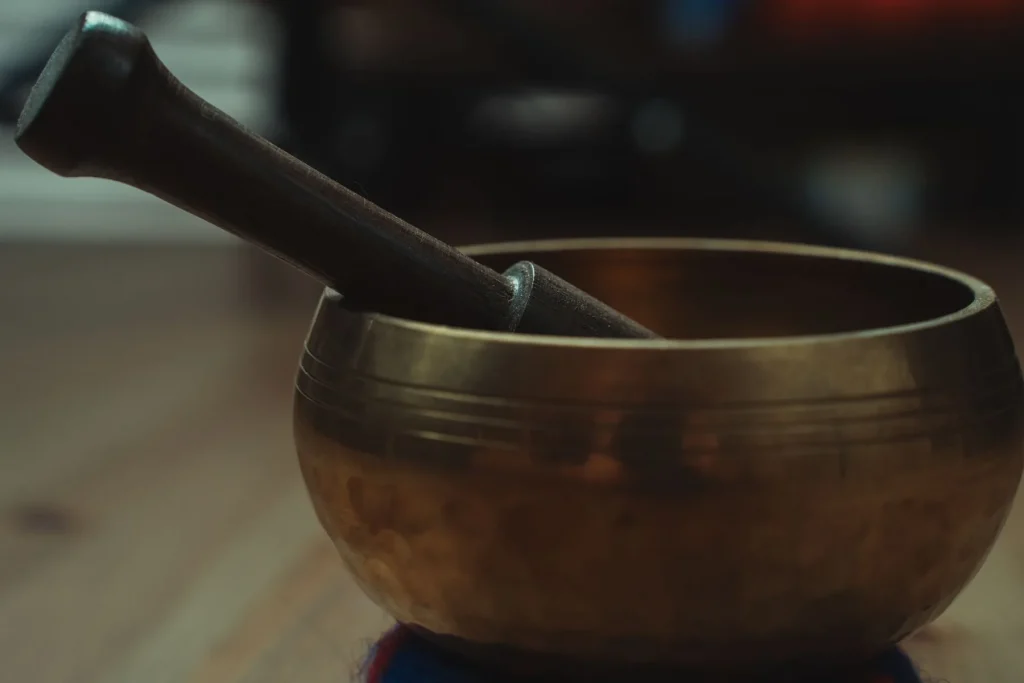
Purpose: this article offers a simple, practical way to check whether your bowl is authentic. It is useful both to buyers and to people who already own one.
Approach: authenticity depends on several clues taken together: how the bowl was made, its origin, composition, design, wear, sound and price. No single criterion is enough.
The market includes both handmade pieces and factory-made products. The challenge is to distinguish a traditional instrument from a mass-produced decorative object.
In the sections below, you will learn about hammering and casting, visual clues, materials and alloys, warning signs in the price and wear, sound tests, and good buying practices in France.
Practical guidance: this article uses checklists, concrete examples and expert advice. You will learn to recognize rich harmonics, hammer marks and a consistent patina.
Whether you are a beginner or an experienced player, you will have a practical framework for checking the bowl’s quality and the seller’s transparency.
Introduction and what you need to know
Before buying, distinguish an instrument you can use from a purely decorative object.
Purpose: you want to identify a singing bowl for meditation or well-being without making a mistake.
The market includes handmade creations and products made for tourists. More than half the pieces sold are mass-produced objects that make noise without providing useful harmonics.
Common uses: striking the bowl, making it sing and practising sound-based self-massage. Using it properly reveals the true richness of its sound.
Diameter affects the depth of the sound: a diameter greater than 20 cm produces stronger vibrations. Choose a size that suits how and where you will use it.
| Criterion | Effect | Practical advice |
|---|---|---|
| Diameter | Depth and power | Choose > 20 cm for deeper tones |
| Manufacture | Harmonics or a hollow sound | Check for hammer marks and uniformity |
| Use | Meditation, relaxation, concentration | Strike and rub the bowl to test it |
This article offers concrete help: prioritized criteria, simple tests and questions to ask the seller. Listen to and handle several bowls. Authenticity can be felt in their sound and in the way they handle.
How to tell whether my Tibetan singing bowl is authentic
A focused inspection often reveals whether a piece was handmade or mass-produced.
A quick authenticity checklist
- Visible hand hammering: marks and slight irregularities.
- Walls that vary slightly in thickness and thin rims, without excessive bulk.
- A restrained design without modern acid-etched decoration.
- A traditional alloy: bronze (copper and tin) rather than golden-colored brass.
- Verifiable Himalayan origin (Tibet, Nepal, Bhutan or India).
- A sound rich in harmonics rather than a single flat tone.
- A price consistent with handmade work: an unusually low price is suspicious.
- A natural patina without signs of chemical aging.

Common mistakes
Do not rely on just one feature. Hearing a beautiful sound once does not prove quality.
Marketing claims about “seven metals” and rows of identical bowls can be misleading. Document the piece: take close-up photos and a recording of its sound so you can reconsider the evidence later.
To go further, compare several examples, look for a detailed and transparent seller listing, and learn how to recognize a genuine bowl.
Examine how it was made: hand hammering and casting
The way a piece was made leaves marks you can see and feel. Examining its manufacture can help you determine whether artisans hammered a heated metal disc or the object came from an industrial mold.
Signs of traditional hammering
Process: several artisans strike a heated bronze disc while it is rotated. This creates tiny irregularities.
- Small dents and visible hammer marks on the surface.
- Slightly wavy walls and thin rims.
- Marks you can feel with your fingers.
Signs of a cast bowl
Cast bowls are perfectly regular. Their rims are often thick and their surfaces very smooth.
A shiny finish, a lack of varied hammer marks and uniformly thick walls suggest mass production.
Watch out for imitation hammer marks
Imitated effects show repeated patterns or stamped impressions. They lack natural variation.
“Hand hammering encourages rich harmonics; the manufacturing method affects how long the sound lasts.”
| Criterion | Hand-hammered | Cast or factory-made |
|---|---|---|
| Surface | Tiny irregularities, rough feel | Very smooth and uniform |
| Rims | Thin, with slight variations | Thick and identical |
| Sound | Rich harmonics, long sustain | Hollow, single-tone sound |
| Material | Bronze alloy (copper and tin), sometimes with iron | Cast or coated metals |
Simple inspection: examine the bowl in light coming from the side, run a finger over its surface, and inspect its base and rim. Compare a hammered bowl and a cast bowl side by side.
Ask the seller for close-up photos and a recording of the bowl being struck to check its quality and manufacturing method.
Himalayan origin and design: what appearance can reveal
An instrument’s geographic origin and style often tell its story. Look for a verifiable Himalayan origin: Tibet (a region of China), Nepal, Bhutan or India. These regions are associated with the tradition of using singing bowls.
Traceability: ask for the name of the workshop or artisan, or photos showing where the bowl was sourced. Basic documentation strengthens the seller’s credibility and your confidence in the piece.
Engravings and mantras
Older pieces tend to be understated. Small inscriptions or simple mantras are possible.
Acid-etched decorations are often modern. They add visual appeal but do not establish a long history.
Identical pieces: a warning sign
Watch for repeated patterns: the same shape or design across several sizes suggests industrial production. Handmade work produces distinctive features; two completely identical examples are unlikely.
- Check for consistency: the patina, wear and style should fit the stated origin.
- Avoid sellers offering large batches of bowls on marketplaces without a clear origin.
For more information on checking a bowl and buying with confidence, read a detailed guide to everything you need to know about singing bowls.
“The overall appearance—origin, patina and design—often reveals more than any single pattern.”
Metal composition and color: bronze, brass and the seven-metal myth
The material and its patina offer valuable clues about origin and manufacture.
Traditional composition: classic bronze is an alloy of copper and tin, sometimes with a small amount of iron. This combination helps explain its brownish color and the weight you feel when you pick it up.
Brass, by contrast, is an alloy of copper and zinc. It is yellower and may look golden or silvery depending on the polish. An excessively shiny finish often suggests a modern material rather than the historical composition of Tibetan bowls.

Acoustic effect: composition and thickness affect how long the harmonics last. A well-balanced bronze alloy supports rich resonance; a lightweight material or coating can produce a hollower sound.
The “seven metals” myth is mainly symbolic. Silver and other metals are sometimes added, but usually only in tiny amounts.
In practice, examine the color in natural light, weigh the piece and ask the seller about its composition. For a closer look, consult a detailed guide to recognizing a genuine bowl.
Conclusion: composition is a strong clue when considered alongside manufacture and origin. Color, weight and sound should tell a consistent story.
Price, age and wear: clues that should agree
The asking price and visible wear often provide a useful combination of clues. A very low price often points to a cast bowl with limited sound quality. In practice, an entry-level bowl costing around €30 is rarely hand-hammered.

Price ranges: why a very low price is suspicious
Be cautious if a seller offers several identical pieces at a low price. Older bowls are becoming scarcer, which raises their prices. Paying more may reflect a bowl’s uniqueness, musicality and history, rather than just its appearance.
Patina, tiny cracks and signs of use: telling old from artificially aged
Signs of age: an even patina, consistent wear inside and out, and small internal hairline cracks that do not compromise the bowl.
- Avoid surfaces dulled by acid baths or forced oxidation.
- Ask for close-up photos and recordings of the sound to check claims about origin.
- Inspect the base and rim: the wear should be consistent.
| Criterion | Sign of genuine age | Suspicious sign | Recommended action |
|---|---|---|---|
| Price | High or consistent with the object’s history | Very low (around €30 or less) | Compare prices and ask about origin |
| Patina | Even and natural | Artificially dulled appearance | Close-up photos and inspection by touch |
| Wear | Plausible, consistent marks | Selective or repeated wear | Check the rim and interior |
“No single organization certifies a bowl’s age; establishing it requires comparing evidence and drawing on experience.”
Keep the photos and recordings. Listen to several instruments from the same seller to judge how consistent their quality is. If in doubt, seek an independent opinion.
Test the sound and buy with confidence: practical methods and warning signs
Testing an instrument’s voice often reveals its true sound.
Simple listening method: begin with a light strike on the rim, then make the bowl sing by moving the striker slowly and steadily around the rim while keeping it parallel to the rim.
A good singing bowl has a clear initial tone, long sustain and rich harmonics. You can feel its vibrations in your palm and the hollow of your hand.
Bowls made for tourists often sound hollow and monotonous: they have short sustain, one dominant note and few harmonics.
The effect of diameter and thickness
A larger diameter produces lower frequencies and more enveloping vibrations. Consistent wall thickness provides stability and helps the sound last longer.
Practical test: compare three to five bowls in succession, using the same movement and mallet. Note how long each sound lasts and how rich it seems.

Choose a reliable seller in France
Favor sellers who state where their bowls come from, offer individual pieces, and are willing to show an unedited recording of the bowl being struck and made to sing, along with detailed photos.
- Ask for evidence of how the bowl was made and close-up photos of its rim and base.
- Avoid identical batches and unverifiable promises about “seven metals.”
- If you are sensitive to sound, increase the volume and listening time gradually to avoid headaches or dizziness.
“After comparing bowls, choose the instrument that resonates with you, rather than one that merely looks appealing on display.”
| Criterion | Positive sign | Warning sign |
|---|---|---|
| Sound | Long sustain and harmonics | Short, single-tone sound |
| Origin | Verifiable information | Identical batch, unclear origin |
| Documentation | Unedited recordings and close-up photos | Edited recordings, generic images |
Conclusion
Make your decision by considering manufacture, material, origin, price and sound together.
Practical summary: compare evidence of hand manufacture, composition (bronze, copper and other alloying metals), restrained design, patina and origin to reach a reliable judgment.
Do not mistake the symbolism of metals or the moon for proof. “Seven metals” is often a cultural myth, not a certificate.
The price should be consistent with handmade work. Be wary of unusually cheap offers and identical batches.
In practice, document each piece (photos, recordings and stated composition) and listen to the instrument. Its vibrations and the benefits you feel during meditation can help you decide.
Responsible buying: favor a transparent seller in France, a clear origin and a distinctive piece. Return to this article as a guide while you train your ear and eye.