
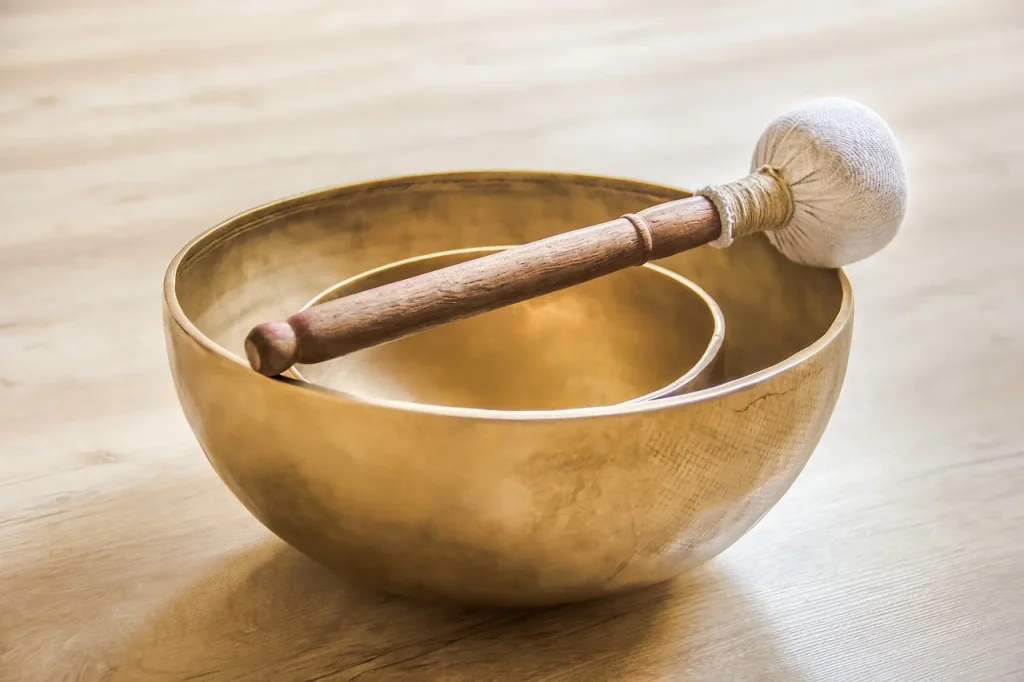
Looking for a clear, up-to-date directory of places and practitioners offering Tibetan singing bowls? This introduction will guide you. It explains how to identify a reliable place for a session or a purchase with confidence.
We explain how singing bowls can fit into a well-being practice. You will find simple criteria: clear prices, session formats, reviews and practical information. These pointers will help you book a group class, an individual session or a suitable sound massage.
The following sections offer practical information by city, a comparison of session formats and guidance on where to try bowls, how to assess their quality and how to prepare for a session. A dedicated section covers precautions to consider before booking.
Our aim: to help you avoid guesswork with verifiable information focused on your needs, so you can have a comfortable, worthwhile experience.
A quick guide to finding singing bowls and sessions near you
First, decide what you want to experience: sound immersion, a one-to-one introduction or a specific treatment.
Choice and accessibility: prioritize nearby places you can reach by public transport. Check opening hours to make the most of your time and avoid unnecessary trips.
Formats and practitioners: check whether the venue offers group relaxation focused on sound or a more personalized individual massage. Read sound therapy practitioners’ profiles for their training, years of experience and client feedback.
- Booking: check cancellation terms and payment methods.
- Equipment: bring a mat and blanket if needed.
- Prices: compare group and individual sessions, and look for introductory sessions.
| Criterion | Why it matters | How to check |
|---|---|---|
| Transport | Time savings and convenience | Map, travel time, session frequency |
| Practitioner profile | Safety and quality | Training, testimonials, equipment used |
| Session format | Fit with your expectations | Description of the session and its duration |
Tip: for a first visit, choose a venue that explains what will happen and what you should bring. You will know what to expect and can settle in comfortably.
Tibetan singing bowls in Paris, Lyon and Toulouse: useful addresses
Start with wellness studios, meditation spaces and specialist shops that publish their prices and session formats. Choose professionals who clearly state session lengths and availability.

In a shop, strike the bowl with a mallet, then run the mallet around its rim. A good bowl produces stable tones, long resonance and even vibrations.
Test it on your open palm: the sensation should be distinct and pleasant, without discomfort. Look at its condition and finish: handmade pieces may have small visual irregularities yet reveal rich harmonics when played.
Quick tips for choosing a practitioner
- Ask to listen briefly and have a conversation about the origin of the metal alloys.
- Check that the session page explains the setting, goals and number of participants.
- Avoid high-pressure offers: a measured approach is a sign of professionalism.
Places and sessions in Lyon: sound relaxation and gong baths
Discover where to enjoy an authentic sound relaxation experience at two welcoming venues in the metropolitan area. Both offer attentive guidance and a safe setting in which to experience the vibrations.
RelaKs Lyon (Montchat) and Narayan Yoga (Lyon 9) — venues and atmosphere
RelaKs Lyon (4, place Louise, 69003) has a welcoming atmosphere and accommodates no more than eight people. Its intimate sessions provide space to unwind.
Narayan Yoga (4 bis, rue de la Conciergerie) hosts larger events for 15 to 20 people, creating an immersive setting well suited to gong baths.
Available formats
Formats include a one-hour group session for people aged 16 and over, a traditional gong bath and adult-child sessions on some Wednesdays. Workshops for children aged 6 to 15 are also scheduled.
Prices and booking
Group rate: €20 per person for one hour. Book online, by phone or by email. Pay on site by check or cash. Loyalty card: a surprise gift at the fifth and tenth sessions.
At-home sessions around Lyon
Options: Solo for €40, Duo for €75 and €20 per additional person. Allow around 8 m² of clear floor space for mats and equipment. Travel outside the metropolitan area is possible, with a mileage charge. Outdoor sessions are possible if the surroundings are quiet.
- Arrive 15 minutes before the session, wearing comfortable clothes and bringing a mat, blanket, cushion and eye mask.
- Places are limited: book ahead for a more personalized experience.
- Conversation and a shared drink at the end of the session help you reflect on the experience.
Near Toulouse: Tibetan singing bowl sound massage and sound therapy
A practice near Toulouse offers a sound massage focused on harmony between body and mind. It is easy to reach from northeastern Toulouse and welcomes clients by appointment at 6, cours Goudouli, 31330 Quint-Fonsegrives.
Quint-Fonsegrives practice — address and access
6, cours Goudouli, 31330 Quint-Fonsegrives. Accessible by car from Balma, Pin-Balma, Montrabé, L’Union, Saint-Jean, Flourens, Drémil-Lafage, Lanta and Saint-Pierre-de-Lages.
What happens during an individual session
The session lasts one hour. An initial conversation of about 10 minutes helps identify expectations and difficulties.
The client remains clothed and lies down while the practitioner places bowls on and around the body to produce targeted vibrations.
Time to absorb the experience and a brief final conversation of about 10 minutes provide an opportunity to discuss sensations and aftercare advice.
Expected benefits for body and mind
This sound massage may promote muscular and nervous relaxation, a calmer mind and deeper sleep.
Increased blood circulation, immune support and a gradual rebalancing of energy are also reported.
Practical details, prices and precautions
Price: one hour — €80. Dedicated treatment space and personalized welcome. These are non-therapeutic wellness sessions.
| Item | Details | Notes |
|---|---|---|
| Duration | One hour | Includes conversations before and after |
| Price | €80 | Booking recommended |
| Areas served | Balma, L’Union, Montrabé, etc. | Travel may be possible by arrangement |
| Contraindications | Pregnancy | Consult a doctor if in doubt |
To book or ask questions: 06 23 43 65 41 or sandrinebeaulieu@gmail.com. To find other practitioners or more information, see this practitioner directory.
Choosing a bowl and practitioner: essential criteria for a good experience
Choosing the right bowl and practitioner helps ensure a safe, absorbing sound experience.

Vibrations and tones: recognizing a harmonious instrument
Look for steady vibration, rich harmonics and long resonance.
Strike the bowl and run the mallet around its rim: its tone should remain clear, without buzzing.
Sound therapist and setting: listening, conversation and safety
Choose a trained practitioner who explains their methods clearly. Look for someone who specifies the available formats (individual or group sessions, sophrology, meditation, MBSR) and allows time to talk before and after the session.
“A session begins by listening to your needs and ends with time to absorb the experience.”
Formats to suit your needs
An individual session allows focused support (sound massage, grounding). A group session encourages immersion (sound journey, gong bath, mindfulness, MBSR).
- Ask for a demonstration before buying.
- Check that the equipment is maintained and the room is safe.
- Read client feedback and check that the information provided is clear.
| Criterion | What it offers | How to check |
|---|---|---|
| Resonance | Depth of sound | Listen in a shop or during a session |
| Practitioner training | Safety and quality | Qualifications, certifications, session descriptions |
| Format | Fit with your needs | Description, duration, number of participants |
| Setting | Comfort and confidence | Room, equipment, instructions |
To find qualified presenters and exhibitors, browse the detailed exhibitor list.
Session types and benefits: relaxation, sound massage and meditation
Depending on your expectations, a sound experience can focus on letting go in a group or on targeted individual support.
Group sound relaxation sessions and gong baths generally last one hour. They are open to people aged 16 and over. Arriving 15 minutes early and allowing time for a friendly conversation afterward can help you absorb the experience.

Group or individual: states of consciousness, letting go and calm
In a group, shared sounds create an immersive setting for exploring altered states of consciousness, always under the practitioner’s guidance.
Individually, sound massage or a grounding session offers tailored support. The aim is to work on stress management and low energy, and to cope better with pain.
Wellness goals: releasing tension, sleeping better and managing stress
The main reported benefits are better sleep, a calmer mind and physical relaxation.
Regular practice may strengthen these effects and help reduce everyday tension. Mindfulness meditation and sound-based sophrology relaxation can complement individual sessions.
- Group: immersion, letting go, conversation afterward.
- Individual: focused support, progression, personalized approach.
- Tip for beginners: start with a relaxation session before trying a gong bath.
| Format | Duration | Highlights |
|---|---|---|
| Group relaxation or gong bath | One hour | Immersion, exploration of consciousness, conversation afterward |
| Individual sound massage | About one hour | Focused support, tension relief, grounding |
| Grounding session with a large bowl | 45 to 60 minutes | Energy stabilization, stress management, improved sleep |
Contraindications and precautions before a sound session
Before any sound session, check for contraindications to protect participants’ health.
Do not take part if you are in early pregnancy (less than three months), have a pacemaker or implanted medical device, or have epilepsy or a severe neurological condition.

Also avoid taking part if you have a serious psychiatric condition (such as schizophrenia or psychosis), or have recently had thrombosis or phlebitis.
Advice: if in doubt, ask a healthcare professional before the session. A conversation beforehand can help the practitioner adapt or postpone it.
- Tell the practitioner about relevant medical history so they can adjust the intensity and placement of the bowls around your body.
- Allow time to reflect on how you feel, rehydrate and ease back into your activities.
- Remember that this is a wellness practice and does not replace medical care.
A cautious approach improves the quality and safety of the session, especially for a first experience intended to ease stress or when you have a health concern.
Conclusion
In short, choose a clearly described option that suits your body and mind. Look for venues that explain prices, formats and duration before booking a session.
There are several formats: group relaxation, gong baths, sound massage and individual massage. They suit different people, and group sessions are often open to those aged 16 and over.
The sounds and vibrations of the bowls may help release tension, ease stress and improve sleep quality. To build on these benefits, consider regular practice and allow time to absorb the experience afterward.
Try several singing bowls before buying, and talk with the practitioner about your needs. Choose your city and a date, and enjoy a sound experience that supports your well-being and peace of mind.