
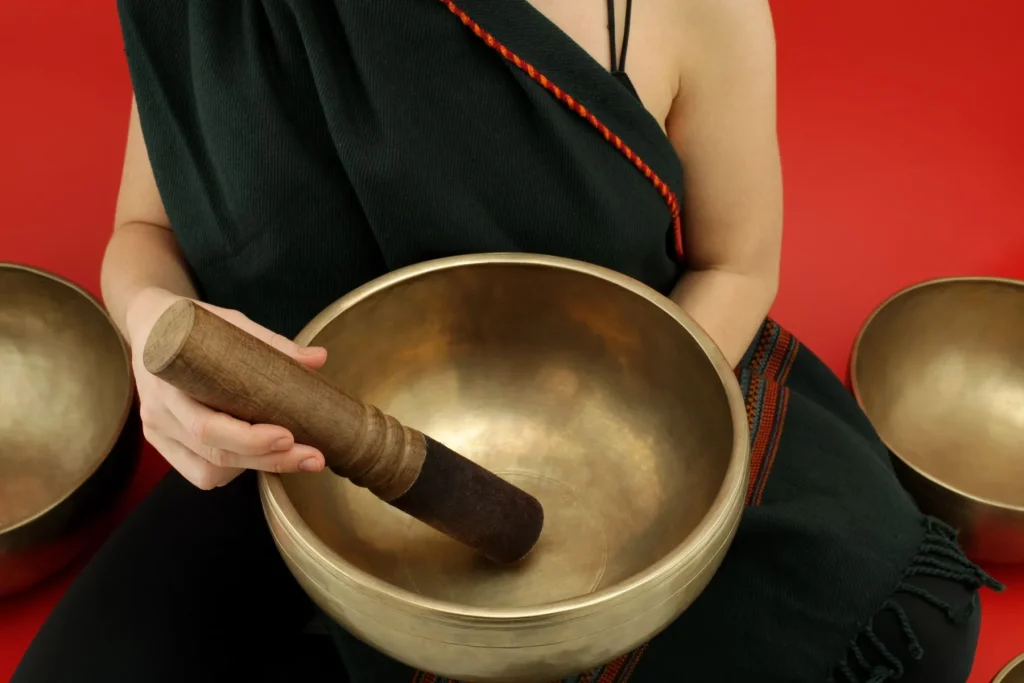
Goal: offer a simple, practical method for reducing stress in a few minutes. This guide combines the sound of a Tibetan singing bowl with structured breathing to produce tangible effects on the body and mental state.
Himalayan instruments, made from an alloy of seven metals, produce a long resonance that guides the rhythm of breathing. The practice follows a clear sequence: settle in, breathe with the sound, then close the session.
Cardiac coherence is a validated technique that supports balance in the autonomic nervous system and provides benefits for 4 to 6 hours after each session. It fits easily into a daily schedule and suits beginners and experienced practitioners alike.
This short guide covers the equipment, the step-by-step protocol, care for your hearing, and tips for making the bowl sing. To learn more about the benefits and the science behind these tools, read this article.
Why combine a Tibetan singing bowl with cardiac coherence to reduce stress now?
A regular auditory cue makes it easier to align your breathing with your heart rhythm.
Cardiac coherence (the 3-6-5 rule) restores balance in the nervous system and slows the heart rate. Its effects appear during the session and last for 4 to 6 hours afterward. This practice helps reduce stress and anxiety quickly.
The bowl’s steady sound acts as a sensory metronome. It supports concentration, calms the mind and body, and reduces distractions. A few seconds are enough to begin the sequence: settle in, strike the bowl gently, then follow the sound as you breathe.
For example, pilots or emergency teams use the method in demanding situations, demonstrating its practical value. Keeping the volume moderate protects hearing comfort and avoids overstimulation.
- Simple: 5 minutes, one instrument, one quiet space.
- Measurable: cortisol may decrease and attention may improve.
- Accessible: no prerequisites; useful in daily life.
| Phase | Immediate effects | Effects after 4 to 6 hours |
|---|---|---|
| During the session (5 min) | Relaxation, slower rhythm | Improved attention |
| After the session | Mental clarity, less restlessness | Reduced anxiety |
| Practical tip | Moderate volume, regular breathing | Repeat 3 times a day if needed |
What to know before you begin
The quality of the tone and the regularity of your breathing determine the calming effect on the mind. Bowls, rooted in a tradition spanning thousands of years, produce sustained overtones that draw your attention and ease mental strain.
The sound of a Tibetan singing bowl and its effects on body and mind
Vibration creates overtones that calm the mind and body. Striking the bowl 1 or 2 cm below the rim at an angle of 45° to 60° helps produce a clear tone.
Try different striking strengths to find a balance between an audible sound and physical comfort.
Cardiac coherence: slow breathing, rhythm, and heart rate
Adopt a regular breathing pattern (6 cycles per minute) to slow your heart rate and synchronize your breath with heart rate variability.
Balance between the sympathetic and parasympathetic nervous systems
Inhaling activates the sympathetic system; exhaling strengthens parasympathetic activity. This alternation helps balance the nervous system and manage emotions more effectively.

- Posture: keep your back straight to make breathing easier.
- Rhythm: use the sound as a cue to return to the present moment.
- Learning: understanding these basics makes the practice easier to learn and sustain.
Equipment and session preparation
Preparing the space and instrument well makes it easier to begin within minutes. First, set an intention for the session to bring your posture, breathing, and sound together.
Choosing and holding the instrument: choose a Tibetan singing bowl made from a seven-metal alloy, measuring 15 to 22 cm, for a deep, balanced resonance. Strike it 1 or 2 cm below the rim for a clear tone. Try several mallets: wood for a crisp sound, leather for a rounder sound, and felt for a softer sound.
Hold the bowl in your palm or place it on a cushion suited to its diameter. This stability lets the bowl vibrate freely and helps it sing from the first strike.
Preparing the space and adopting good posture: sit on a 10 to 15 cm floor cushion or on a chair, keeping your back straight. Choose a quiet place with soft lighting and a temperature of 19 to 23 °C to help you focus on breathing.
Quick adjustments: keep the volume moderate, leave time between strikes, and maintain enough distance between the bowl and your ear for hearing comfort. Test the sound for a few seconds to adjust its level and position. Use a discreet timer to structure the session without breaking your concentration.
To explore the effects of sound and the practice further, read this resource on sound therapy.
Tibetan singing bowl and cardiac coherence: a quick protocol
Begin by aligning your posture with your intention: 30 seconds are enough to prepare your body and mind.
Get settled in 30 seconds
Sit with your back straight and your feet on the floor. Place the bowl on a cushion and strike it lightly to check the volume.
Take two calm breaths to focus your attention and set an intention for the session.
3-6-5 breathing cycle for 5 minutes
Apply the 3-6-5 method: 6 breaths per minute for 5 minutes. Inhale and exhale at a steady pace to reach 6 breaths per minute.
Use a discreet timer or an app (RespiRelax+, CardioZen, Cohérence) to track the duration without looking at a screen.

Sound cues: a gentle strike, then rubbing the rim
Begin with a light strike 1 or 2 cm below the rim to create an auditory cue.
Continue by rubbing the rim steadily, maintaining constant pressure and speed, just enough to guide the rhythm of your breathing without masking it.
Closing and recentering after each session
Finish with one last gentle strike, another slow breath, then a few seconds of listening to the silence.
This technique brings immediate calm, with effects that persist for 4 to 6 hours after each session.
- Suggested sequence: 30 seconds to settle in → 5 minutes of breathing → a short pause.
- Tip: feel the rhythm of your breathing rather than counting seconds.
- Precaution: make the bowl sing sparingly: a quiet sound is enough to reduce stress and support the practice.
How to make the bowl sing without disrupting your breathing rhythm
A clean, controlled movement makes the difference. Aim for a point 1 or 2 cm below the outer rim, approaching at an angle of 45° to 60°. Let the mallet rebound quickly to avoid a metallic sound.
Strike with restraint: one precise movement, then a pause. Give the bowl a few seconds to develop its resonance before the next strike.
Choosing a mallet: wood gives a clear attack, leather a warmer sound, and felt softens the sound in sensitive settings.
To rub the rim, begin with a spiral motion, then settle into 2 or 3 circuits per minute. Maintain even pressure for a steady resonance that does not interfere with your breathing.
Holding the instrument in an open palm or placing it on a cushion allows it to vibrate freely. Timing a strike to a transition between breaths helps keep your breathing smooth.

| Action | Position | Rhythm |
|---|---|---|
| Precise strike | 1 or 2 cm below the rim, 45° to 60° | Pause for 2 to 4 seconds between strikes |
| Mallet choice | Wood, leather, or felt | According to the desired attack |
| Rubbing the rim | Start with a spiral motion | 2 or 3 circuits per minute, constant pressure |
Keep it subtle: a quiet sound is enough to support your breathing. Experiment with where you strike and note how each sound feels to refine your technique.
Duration, frequency, and expected effects
Regularity matters more than intensity. A short session, well placed in your day, produces cumulative benefits that are easy to measure.
How many minutes and how many times a day for lasting effects?
Optimal duration: 5 minutes of structured breathing (6 breaths per minute) are enough.
Recommended frequency: 3 times a day — morning, midday, and late afternoon — to maintain the effect.
The period after a session (4 to 6 hours) and anxiety reduction
After each session, expect a 4-to-6-hour period of effect. During this time, heart rate variability stabilizes and the nervous system regains better balance.
- Lower cortisol and a relative increase in DHEA.
- Improved attention and body recovery.
- A reduction in anxiety that may be noticeable from the first week with regular practice.

| Parameter | Value | Expected effect |
|---|---|---|
| Duration | 5 minutes | Easy to fit in, effective |
| Frequency | 3 times a day | Cumulative effect |
| Period of effect | 4 to 6 hours after each session | Extended support |
Improve your practice and avoid common mistakes
Good posture and a suitable sound level help prevent common mistakes. They make the session more effective and safer.
Comfortable seating and abdominal breathing through the nose
Back straight: sit steadily with your weight evenly distributed and your knees at a natural angle. Good support frees the chest to move.
Breathing: inhale through your nose and exhale in a controlled way. Prioritize regularity over depth to stabilize your rhythm.
Helpful tools: apps and visual timers
Use RespiRelax+, CardioZen, Cohérence, or Zenspire to guide the cycles without looking at a screen. Visual or vibrating timers keep your attention on your breathing.
A well-chosen device removes the need to count seconds and reduces interruptions during practice.
Precautions and possible side effects
Adjust the volume to avoid hearing discomfort. Test it for a few seconds before beginning the session.
Side effects: mild fatigue or hearing discomfort if the sound is too loud. Take breaks and lower the intensity if needed.
For hearing care, keep the bowl at a comfortable distance, avoid forceful strikes, and use a cushion suited to its diameter to stabilize the resonance.
| Aspect | Recommendation | Why |
|---|---|---|
| Posture | Stable seat, straight back | Allows abdominal breathing and reduces tension |
| Tools | RespiRelax+, CardioZen, Zenspire | Light or sound cues to maintain the rhythm |
| Volume | Test for a few seconds before the session | Helps prevent side effects and protects hearing |
Keep it simple: gently rubbing the rim is enough. If you want to learn more about sound, explore the sound of a Tibetan singing bowl to improve your practice.
Make this method part of your well-being routine
Planning three short sessions builds consistency and increases the benefits. Choose the morning (when cortisol peaks), before lunch, and late afternoon to maintain a calm state throughout the day.
Key times of day
Anchor the practice three times a day: on waking, before a meal, and in late afternoon. These chosen times spread the effects through the day and improve emotional recovery.
Useful combinations
Begin each session with a gentle strike of the bowl to focus your attention.
Once your breathing is steady, add a simple mantra (OM, SO HUM) or meditative walking to extend the experience without making it overwhelming.
“Keeping a sensory journal helps you track how the experience changes over the weeks.”
- Reminder: use an app or a light-based breathing guide so you do not forget a session.
- Journal: note how you feel, the quality of your breathing, and small improvements.
- Adjustments: shorten sessions if needed, but practice regularly throughout the year to maximize the benefits.
Conclusion
Regular practice turns short sessions into lasting benefits. By focusing on stress reduction, this approach makes daily emotion management more accessible.
This method calls for 5 minutes at 6 breaths per minute, three times a day. The sound of the bowl provides a cue to hold your attention and support cardiac coherence.
Benefits include an immediate calming effect, greater mental clarity, and a more balanced nervous system. Keep the volume moderate, your posture stable, and your progress gradual to limit side effects.
Adapt the experience to your sensitivity, note your progress, then share the approach with others. Over time, regularity maximizes the overall effect on mind and body.