
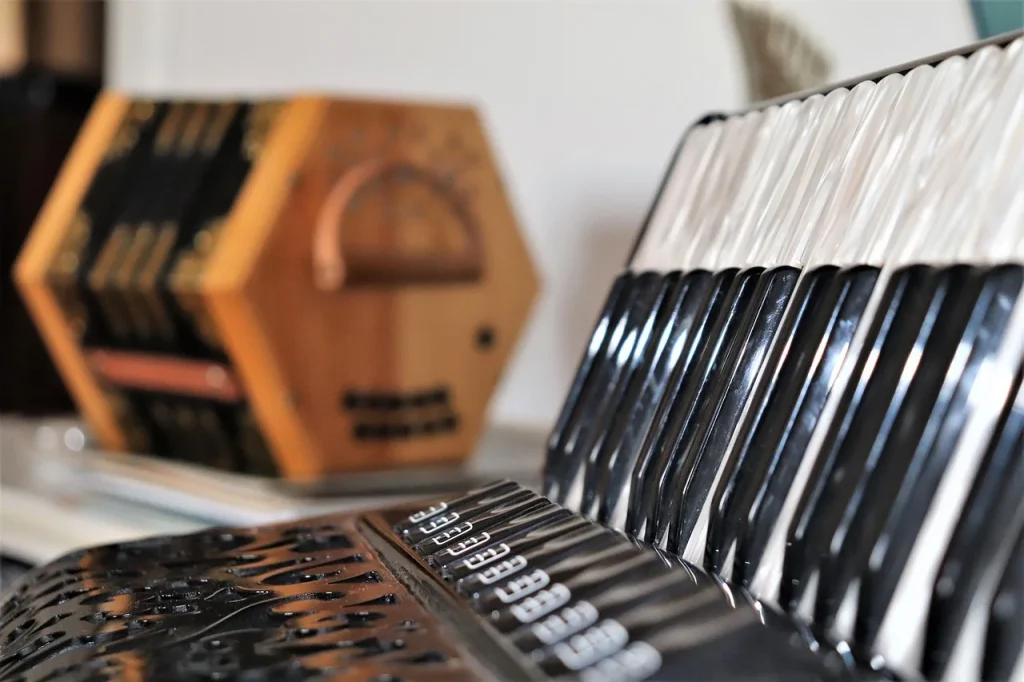
The accordion, an iconic musical instrument, has a rich history with roots stretching back to antiquity. It has evolved over the centuries and plays an essential role in many musical genres.
Let us travel back in time to explore the origins of the accordion, from the free-reed instruments that emerged in Asia, such as the sheng in China. However, the accordion as we know it today was born thanks to the invention of Cyrill Demian, an instrument maker in Vienna, in 1829.
Throughout its evolution, the accordion has won the hearts of musicians and listeners around the world. Famous accordionists have left their mark on their eras through their virtuosity and contributions to the instrument’s development.
From folk music to classical music, the accordion has adapted to different musical styles, leaving its mark on genres such as musette and jazz. Its versatility and distinctive timbre continue to fascinate listeners today.
The diatonic accordion and the chromatic accordion are two of the most common types of this instrument. Each has characteristics that suit different musical settings.
Beyond music itself, the accordion is an integral part of musical heritage and helps preserve traditions and cultural identities. It accompanies the melodies of folk music and continues to connect generations over time.
Join us on a journey through the history of the accordion and discover how this instrument has remained a mainstay of music, continually evolving alongside generations of artists and music lovers.
The origins of the accordion reach back to antiquity and the emergence of free-reed instruments in Asia, particularly the sheng in China. These ancient free-reed instruments laid the groundwork for the development of the accordion as we know it today. The accordion is a wind instrument in the woodwind family whose free reeds vibrate when the musician supplies air.
The Chinese sheng is considered one of the earliest free-reed instruments. It consisted of several bamboo pipes, each fitted with a free reed at one end. By playing different notes and manipulating the pipes, musicians could produce a wide variety of sounds.
| Instrument | Country of origin | Characteristics |
|---|---|---|
| Sheng | China | A free-reed instrument consisting of several bamboo pipes fitted with free reeds. |
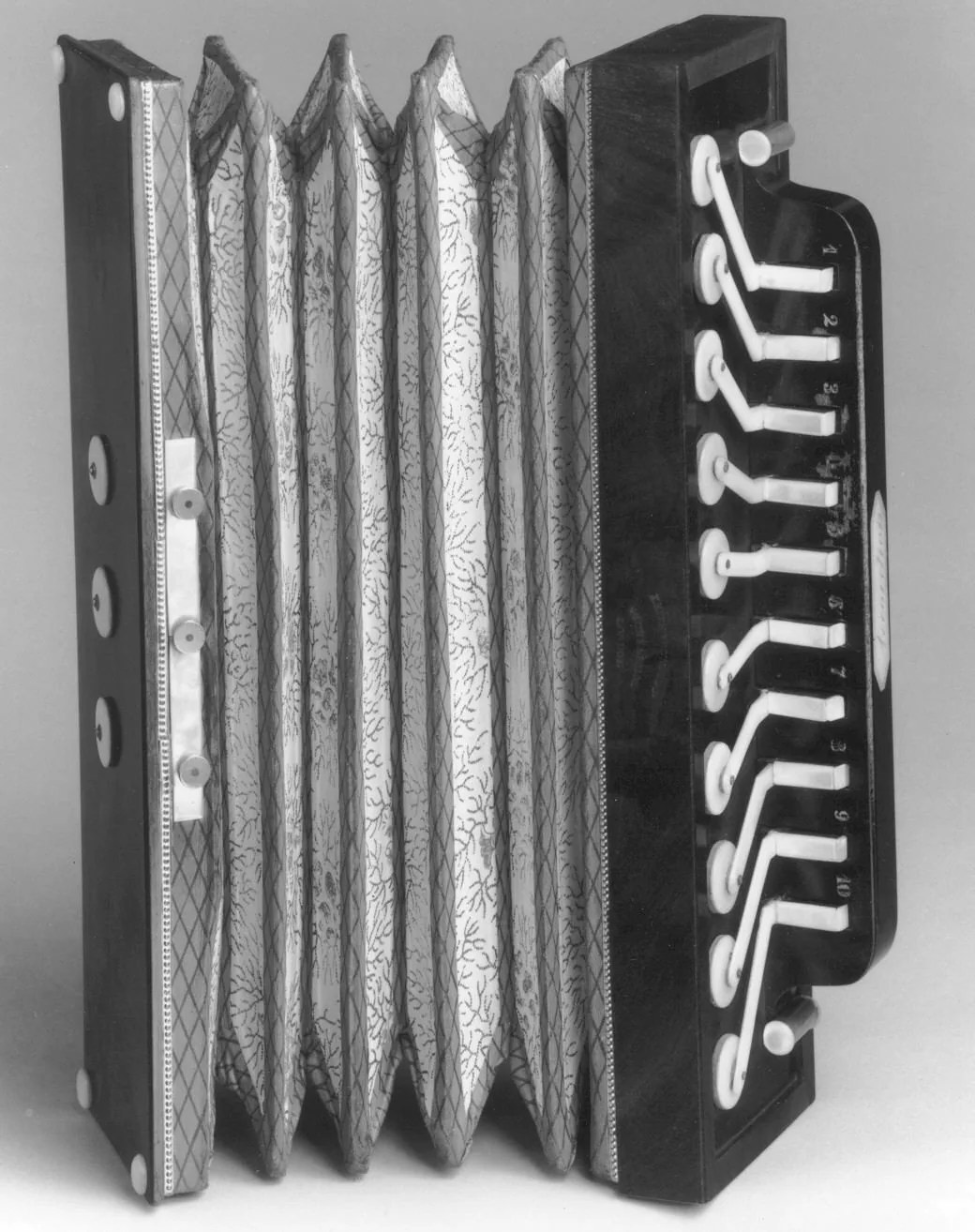
The modern accordion was invented in 1829 by Cyrill Demian, a musical instrument maker based in Vienna. He was the first to use the term “accordion” for this revolutionary instrument. Demian’s accordion had brass free reeds and folding bellows that allowed the musician to control the airflow and produce sounds by pressing the keys.
“The accordion is a truly fascinating instrument that combines mechanics and musical art. Its ingenious design and evolution over time make it a versatile instrument appreciated in many musical genres.” — Philippe Krümm, accordion expert.

- Invention of the accordion by Cyrill Demian in Vienna in 1829.
- Introduction of the accordion into traditional French music, particularly the musette style.
- Development of new playing techniques and musical ornamentation for the accordion.
- Introduction of the accordion into other musical genres, such as jazz and classical music.
- Continued evolution of the accordion and its use in different musical styles across generations.
The invention of the accordion
The accordion as we know it today was invented in 1829 by Cyrill Demian, an instrument maker in Vienna. This revolutionary instrument marked an important step in the evolution of music. The modern accordion is the result of many technical improvements and modifications over time.
Demian originally designed the accordion to bridge the gap between the piano and the organ, hoping to create a versatile, compact instrument. His invention combined features of the Chinese sheng and other free-reed instruments of the period to produce a unique and captivating sound. Thanks to its ingenious design, the accordion quickly gained popularity in Europe and around the world.
Today, the accordion is used in a variety of musical genres, from folk music to contemporary music. It is valued for its warm sound and its ability to express a wide range of emotions. Demian’s invention opened up new musical possibilities and helped enrich our cultural heritage.
The evolution of the accordion
The accordion has undergone many technical developments over time, allowing it to adapt to various musical genres, including traditional French music, jazz, and even classical music. This versatile instrument has won the hearts of musicians and music lovers around the world.
In traditional French music, the accordion has played a leading role. It became a mainstay of the celebrated musette style, which reached its height in the 1930s and 1940s. Its lively rhythms filled popular dance halls and the streets of Paris, creating a festive, joyful atmosphere.
The accordion has also found a place in other musical genres. In jazz, it has brought a distinctive melodic and rhythmic dimension to musicians’ improvisations. In classical music, renowned composers such as Astor Piazzolla have incorporated the accordion into their works, establishing its place in a genre often associated with the symphony orchestra.
| Evolution of the accordion | Musical genres |
|---|---|
| Accordion techniques | Traditional French music |
| Musette style | Jazz |
| Use in classical music |
The accordion has reinvented itself over the decades, exploring new sounds and pushing the boundaries of its musical expression. Its warm timbre and ability to move listeners make it a unique and timeless instrument.
Different types of accordion
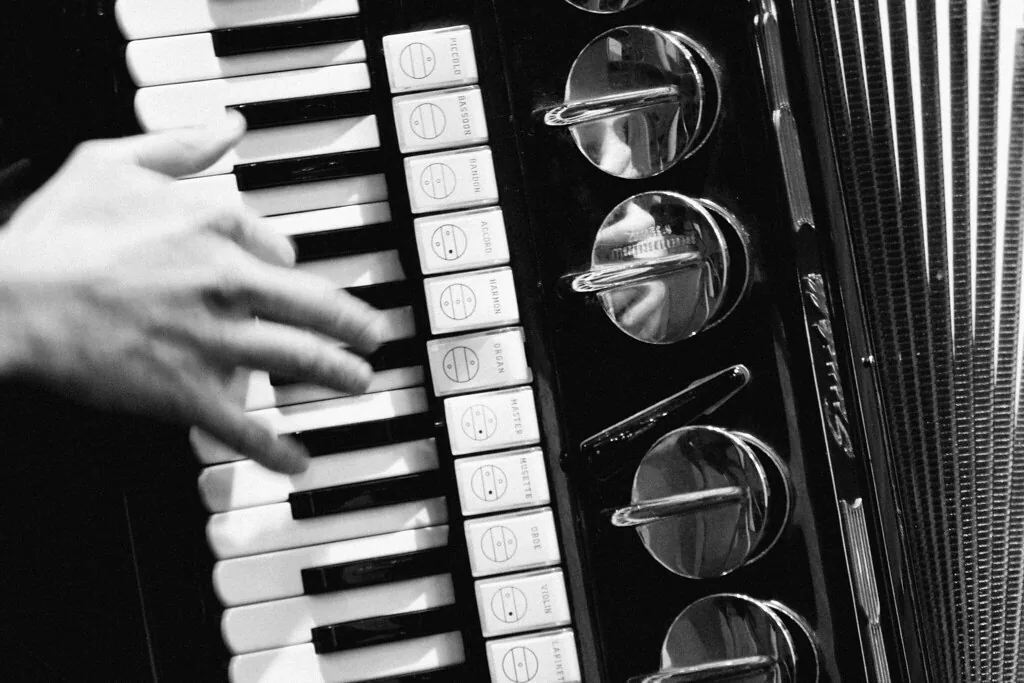
There are several types of accordion, including the diatonic and chromatic accordion, each offering distinct musical possibilities. The diatonic accordion is often associated with folk and traditional music. Its diatonic keyboard allows melodies to be played in a particular key. It is widely used in genres such as Celtic music, folk, and blues.
The chromatic accordion, by contrast, offers a wider range of notes and can be used in a variety of musical styles. Its chromatic keyboard allows musicians to play every note of the Western musical scale, giving them greater flexibility and more expressive possibilities.
The diatonic accordion is commonly used in traditional Irish music, to which it brings a distinctive, lively sound. The chromatic accordion is often used in genres such as jazz, classical music, and contemporary popular music, offering musicians great versatility.
| Type of accordion | Characteristics | Musical uses |
|---|---|---|
| Diatonic accordion | Diatonic keyboard, particular key | Folk music, traditional music |
| Chromatic accordion | Chromatic keyboard, full range of notes | Jazz, classical music, popular music |
Whether you are drawn to the lively melodies of folk music or eager to explore different musical styles, there is an accordion to suit your needs. You might choose the diatonic accordion for its charm and authenticity, or the chromatic accordion for its versatility and range of notes. Either way, this instrument remains a mainstay of traditional and contemporary music.
The accordion in musical heritage
The accordion has long been embedded in musical heritage and plays an essential role in preserving folk music traditions and cultural identities. This versatile instrument has won hearts around the world through its distinctive sounds and its ability to express a wide range of emotions. At village festivals, traditional celebrations, and popular dances, the accordion has accompanied musicians and dancers for generations.
With its warm timbre and ability to create lively melodies, the accordion has become an essential part of folk music. It embodies the spirit of cultures and regions, reflecting a people’s stories, traditions, and customs. In Celtic music, Austrian waltzes, or Latin American popular songs, the accordion brings a touch of authenticity and nostalgia to every performance.
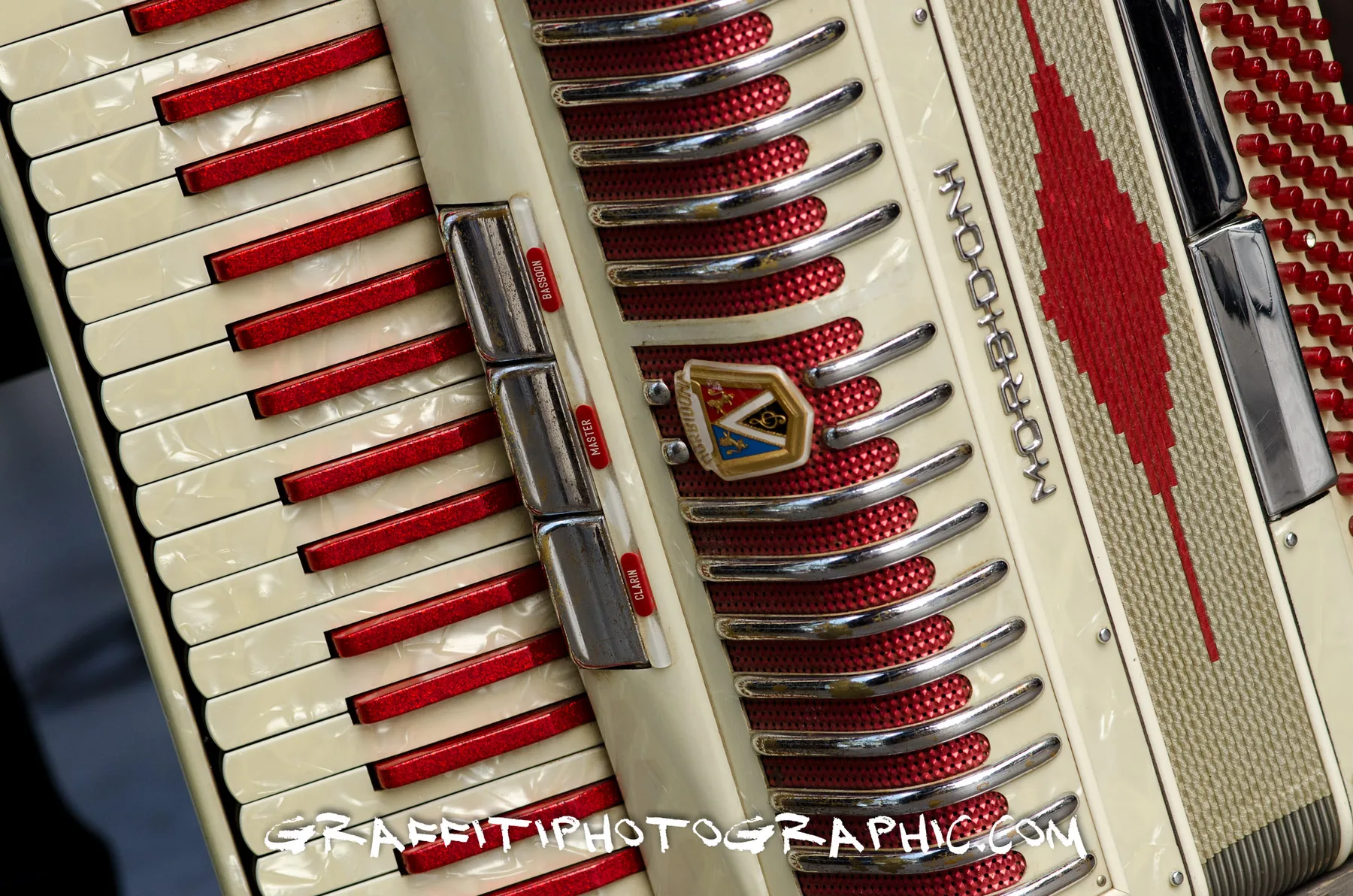
Argentine tango illustrates the accordion’s importance in musical heritage. From its humble beginnings in the working-class neighborhoods of Buenos Aires, tango has evolved into a symbol of Argentine identity. At the heart of this passionate music is the accordion, evoking the love, melancholy, and passion of this sensual dance.
A true treasure of musical heritage, the accordion continues to delight listeners around the world with its distinctive sound and timeless character. Its presence at festivals, traditional events, and on folk music albums shows its essential place in preserving cultures and musical traditions. This iconic instrument reminds us of our history and the power of music in our society.
The accordion across generations
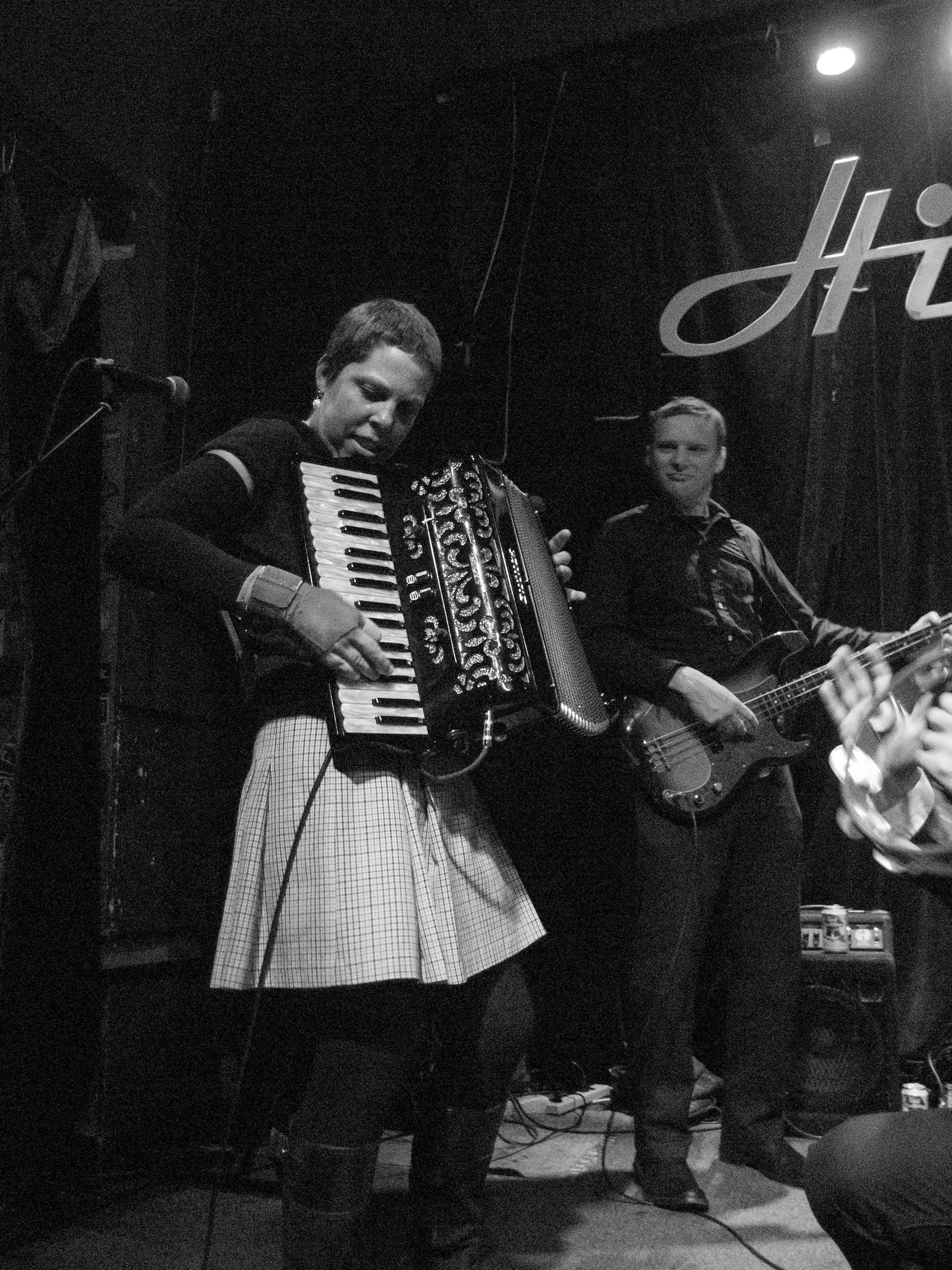
The accordion has evolved across generations, adapting to new musical styles and continually attracting new players. This iconic instrument has renewed itself to remain at the heart of the music scene. In traditional music, jazz, and even electronic music, it has found its place and brought a distinctive touch to many genres.
From its modest beginnings as a popular instrument at festivals and dances, the accordion has reached stages around the world. Its warm timbre and versatility have made it an essential instrument in many cultures. Today’s accordionists explore new techniques and push the instrument’s boundaries, allowing it to adapt to contemporary musical trends.
“The accordion is a true musical chameleon. It can be romantic and melancholy in a piece of classical music, rhythmic and lively in jazz, or energetic and festive in traditional music. Its versatility continues to fascinate musicians and listeners.” — Philippe Krümm, author of “L’accordéon Quelle histoire !”
Whether you love traditional music or jazz, or are simply curious to discover new musical genres, the accordion offers a unique and captivating experience. Its ability to create an intimate, authentic atmosphere, together with its technical possibilities, makes it a particularly cherished instrument.
In this way, the accordion has evolved over time, crossed generations, and retained its place as a symbol of musical passion. Its rich history and presence in many musical styles make it an essential part of the world’s cultural heritage. It continues to captivate musicians and music lovers, showing its lasting relevance and timeless charm.
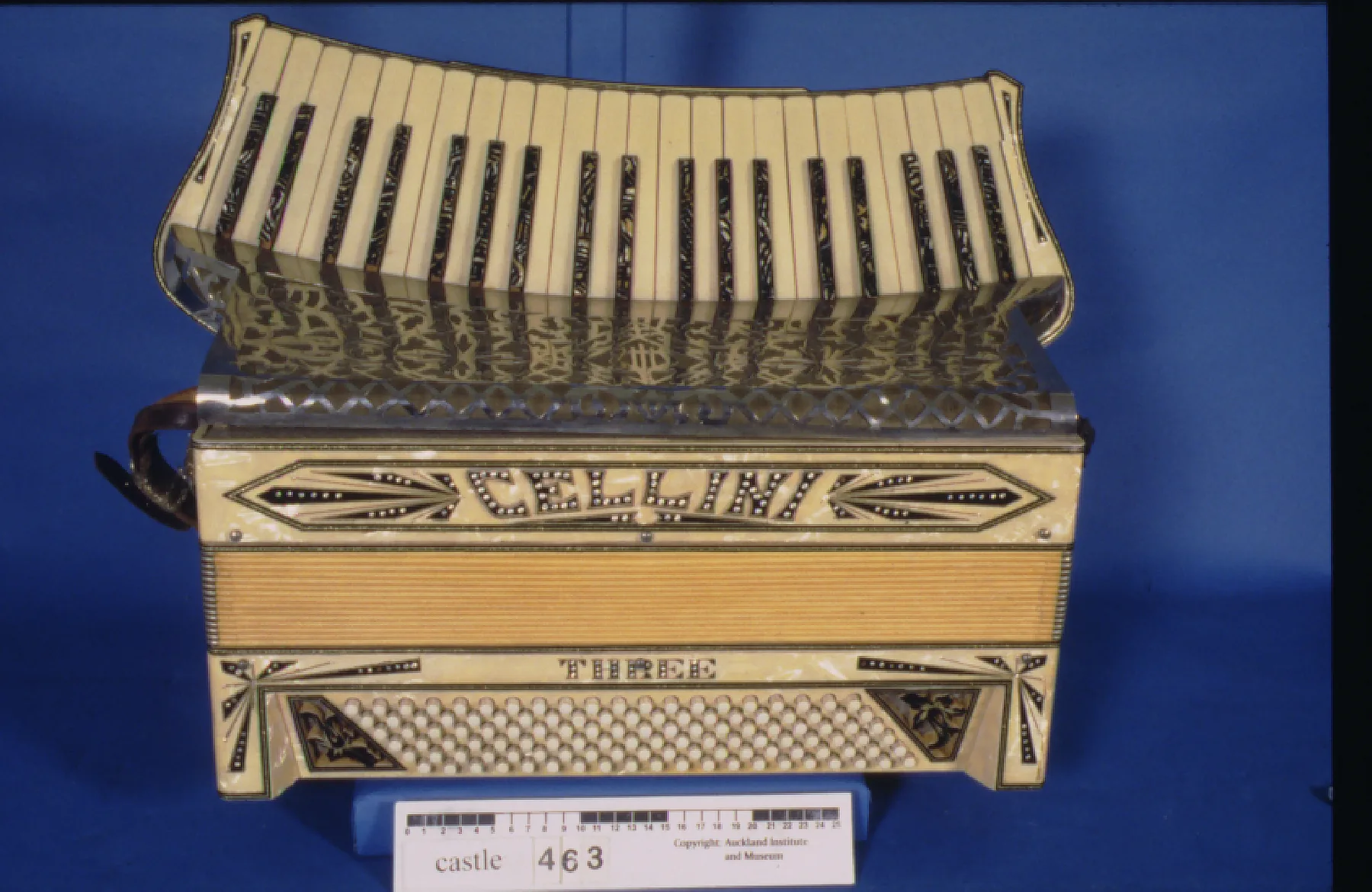
In conclusion, the history of the accordion is fascinating and shows the instrument’s enduring cultural and artistic importance in the world of music. While its Asian predecessors, such as the Chinese sheng, date back to antiquity, the modern accordion as we know it was invented by Cyrill Demian, an instrument maker in Vienna, in 1829. Since then, the accordion has undergone many technical developments. It has become a mainstay of traditional French music in the musette style and has also flourished in other genres, such as jazz and classical music.
Today, the accordion continues to evolve and adapt to different musical styles, finding its place in contemporary compositions. This iconic instrument remains appreciated around the world for its distinctive timbre and ability to evoke deep emotions. Its versatility allows it to play an essential role in preserving cultural traditions and musical heritage.
Over the centuries, the accordion has won the hearts of music lovers and musicians around the world. Its history, told by experts such as Philippe Krümm in his book “L’accordéon Quelle histoire !”, attests to its popularity and exceptional musical legacy. At folk festivals, jazz concerts, and classical concert halls, the accordion continues to captivate listeners and stir emotions.
In short, the accordion is much more than a musical instrument. It embodies the spirit and diversity of music and remains a symbol of passion, creativity, and tradition. As musicians and listeners, we continue to travel through the ages with the accordion, which invites us to explore the boundaries of art and culture. Its rich history and cultural legacy make it a musical treasure to cherish and celebrate for generations to come.
FAQ
Where did the accordion originate?
The accordion has its roots in ancient free-reed instruments, such as the sheng in China.
Who invented the accordion?
Cyrill Demian, an instrument maker in Vienna, is considered the inventor of the accordion in 1829.
How has the accordion evolved over time?
The accordion has undergone many technical developments and found a place in different musical genres, including jazz, classical music, and traditional French music.
What are the different types of accordion?
There are different types of accordion, including the diatonic and chromatic accordion, each with its own characteristics and musical possibilities.
Why is the accordion important to musical heritage?
The accordion plays an important role in musical heritage, particularly in folk music. It helps preserve cultural traditions and reflect cultural identities.
How does the accordion continue to evolve in contemporary music?
The accordion continues to evolve and be used in different musical styles. It has a place in contemporary music and remains popular across generations.