
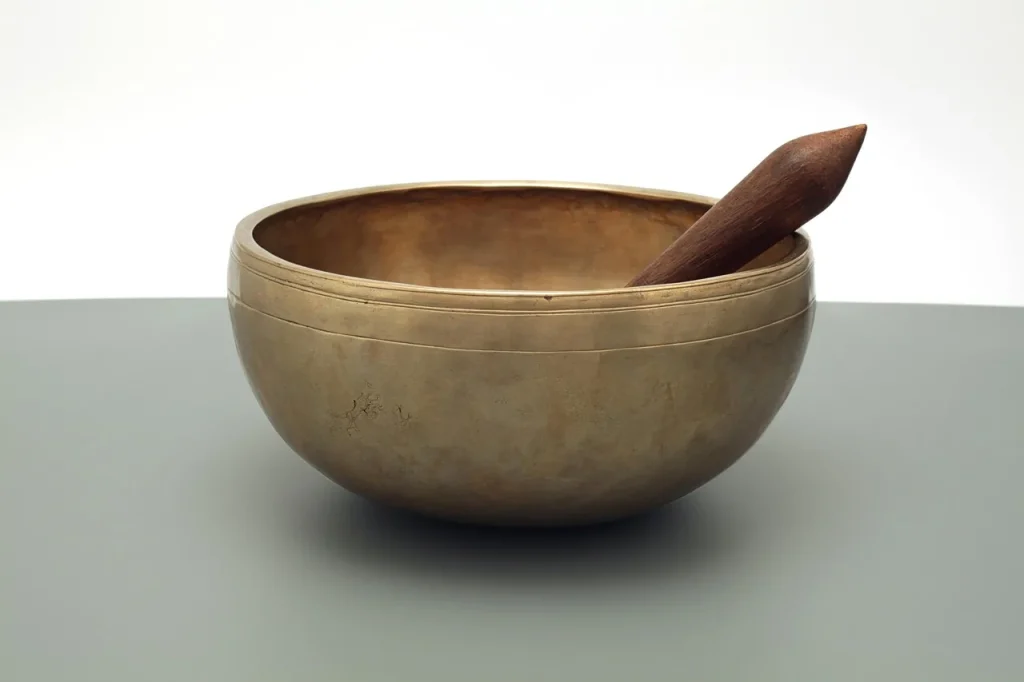
Practical and accessible, this guide explains step by step how to prepare a space, choose a posture and master two essential techniques: striking near the rim for a clear tone and rubbing the rim to produce a continuous sound.
Origins and characteristics. This Himalayan musical instrument, often made from an alloy of several metals, produces rich sounds and vibrations that can support focus and well-being.
A 2016 study conducted in San Diego found measurable reductions in stress, depression and pain during sound meditations. The findings encourage regular, guided practice.
To begin, choose a quiet place, sit comfortably and rest the bowl on your open palm or a doughnut-shaped cushion. Pay attention to how long the sound resonates and to the subtle vibrations you feel in your body.
This guide also covers alloys, sizes, common mistakes and how often to practice. To explore the practice further, read this guide to singing bowls and their uses: methods and tips.
Goal: by the end of this guide, you will know how to strike and make your instrument sing safely for a simple, deep meditation.
Why meditate with a Tibetan singing bowl today?
The deep sounds of Himalayan instruments provide an effective point of focus for calming the mind.
The steady tone helps bring your attention back when your thoughts wander. It acts as an external sound mantra and makes it easier to stay present. This simplicity appeals to busy people: a few minutes can be enough to regain focus.
Research conducted in San Diego in 2016 found measurable reductions in stress, pain and depression among 62 participants exposed to singing bowls. These findings support the benefits participants reported: relaxation, emotional calm and improved concentration.
Physiologically, low sounds may help the mind settle into a slower, calmer state. Culturally, these handcrafted objects, traditionally associated with seven-metal alloys, have an aesthetic and history that can enrich the practice.
“Sound supports meditation by giving the attention a steady point of reference.”
| Effect | Observations | Suggested use |
|---|---|---|
| Relaxation | Reduced stress and tension | 10 to 20 minutes in the morning or evening |
| Concentration | Improved attention during tasks | Short sessions before work |
| Well-being | Reported improvement in overall well-being | Individual or group practice, according to preference |
| Limitations | Subjective effects vary; this is not medical treatment | A supplement to regular practice |
- Accessibility: all you need is an instrument, a quiet place and an intention.
- Flexibility: practice each day, on waking or to unwind in the evening.
- Try it: attend several guided sessions before deciding how often to practice.
Choosing the right Tibetan singing bowl for meditation
The bowl’s quality makes a difference. Examine its material, craftsmanship and size before buying. Traditional models are hand-forged by artisans from the Tibetan region.

Alloy and craftsmanship
The seven metals (gold, silver, iron, mercury, tin, copper and lead) are traditionally said to form an alloy with a rich harmonic spectrum and long resonance.
Choosing a hand-hammered instrument can give you delicate overtones and authentic hammer marks.
Size, note and chakras
Large bowls produce enveloping low tones. These can support a feeling of grounding and are associated with the root and sacral chakras.
Small bowls produce clear, high tones associated with the third eye and crown chakras. Each dominant note, from C to B, is associated with a different effect: C grounds, while B uplifts.
Small, medium and large
Practical tip: start with a medium-sized bowl with a clear tone. It combines easy handling with sonic depth.
| Size | Main effect | Suggested use |
|---|---|---|
| Small | Mental clarity, high tones | Short sessions, alertness |
| Medium | Versatility, balance | Regular meditation |
| Large | Bodily vibrations, low tones | Grounding exercises, long sessions |
Choose according to the resonance you feel in your palm and the weight you can comfortably hold.
Preparing your session: space, posture and how to hold the bowl
Before making the first sound, set up a quiet place. Turn off notifications, close the windows and adjust the lighting. A simple setting supports concentration and relaxation.
Creating a quiet space in mainland France
Breathe slowly: inhale through your nose, then exhale through your mouth while breathing into your abdomen. Two minutes is enough preparation for a twenty-minute session.
Comfortable postures
Try sitting cross-legged, in a half-lotus position or on a chair. Keep your back aligned and your neck long.
Avoid the full lotus position if it causes tension. The aim is to maintain your attention without discomfort.
Holding or resting the bowl
Place the bowl on your fully open palm without letting your fingers touch its side. Even slight contact can dampen the resonance.
A doughnut-shaped cushion is ideal: it allows the base to resonate and preserves the sound. Never place the instrument directly on a hard surface.
| Element | Advice | Why |
|---|---|---|
| Accessories | Remove rings and bracelets | Prevents rattling |
| Support | Rest your forearm on your leg | Reduces fatigue |
| Beginning | Breathe and make a gentle first sound | Marks the start of meditation |
“Preparation creates the conditions for attentive listening.”
How to use a Tibetan singing bowl for meditation
Start the session with two minutes of abdominal breathing. Inhale deeply, let your belly expand, then exhale slowly. This establishes a steady foundation for your attention.
Breathing, intention and the first movement
Set a simple intention — for example, to calm your mind or feel your body. State it silently before striking the bowl.
Tap gently near the rim to produce a clear, sustained tone. Listen as it fades into silence before striking again.
Focusing on resonance and how it spreads through the body
Follow the sound as it changes and notice its subtle variations. Observe where you feel vibrations: in your chest, abdomen or head.
Alternate techniques to suit your needs: strike regularly when your mind is restless, or rub the rim for longer when your attention is steady. Match your breathing to the sound: inhale as it rises and exhale as it fades.

“One final tone, followed by a few silent breaths, helps the body absorb the experience.”
- Flexibility: adjust the number of tones to how you feel that day.
- Gentleness: focus on the quality of the sound rather than its volume.
- Journal: write down how you felt in one sentence to refine your practice.
Playing techniques: striking and making the bowl sing
A few adjustments of the hand can bring out rich, steady overtones. This section describes two key techniques: striking the bowl to make it ring and rubbing it to make it sing.

Striking technique
Hold the mallet like a pen. Aim for the upper part of the bowl, near the rim. Let the mallet rebound instead of holding it against the side.
Intensity: several gentle strikes are better than one hard hit. Wait for the sound to fade before striking again.
Rubbing technique
Use the felt- or leather-covered part of the striker. Tilt it about 20 to 30°. Apply steady pressure and move at a moderate speed.
Move clockwise or counterclockwise, whichever feels more comfortable. If the sound rattles, slow down or increase the pressure slightly.
Starting the sound and sustaining it
An initial strike helps start the singing tone. With experience, it becomes optional.
Tip: match the tool to the bowl’s diameter: choose wood for a crisp attack and felt for enveloping low tones.
| Technique | Key action | Expected result |
|---|---|---|
| Striking | Hold the mallet like a pen; aim high, near the rim | Clear sound, controlled resonance |
| Rubbing | Tilt the striker 20–30°; maintain steady pressure | Continuous, stable tone |
| Stabilizing | Strike once to start if needed; adjust your speed | Clear overtones without rattling |
“Patience and careful listening make the movement feel natural.”
Strikers, mallets and sound variations
Your choice of tool directly affects the sound’s character and projection. Depending on the material, the tone can become brighter or rounder. This choice can shape the session’s purpose: alertness, grounding or sound massage.

Wood, suede and felt: yang or yin energy
Wooden strikers offer a crisp attack and bright overtones. They make the sound more distinct and let you strike the bowl precisely.
Felt- or suede-covered mallets produce a more enveloping effect. They bring out the low tones and help you feel the vibrations in your body.
Matching the tool to the diameter
Hold the tool near its end for more control and momentum. When striking, aim for the upper part of the bowl to reduce unwanted noise.
A large bowl calls for a broad, dense mallet head. A small bowl responds better to a slim striker. Trying several combinations remains the best approach.
“Alternating between wood and felt lets you vary the sounds without changing bowls.”
- Wood: attack and clarity; felt: roundness and longer resonance.
- Choose the mallet head according to your aim: grounding, attention or relaxation.
- Two or three tools are enough for most uses.
Other approaches to deepen meditation
Adding different sound textures opens up new ways to cultivate presence and attention. These variations let you explore other tones and sharpen your sensitivity to sound.
Singing bowl and water
Partially filling the bowl with water and then gently rubbing its rim creates visible ripples and a subtle crackling sound. These effects capture attention and offer a different sensory experience.
Precaution: do not leave water against the metal for long. Dry the bowl immediately afterward to help prevent corrosion.
Quartz crystal singing bowls
Quartz bowls offer crystalline clarity and project sound differently from metal Tibetan bowls. They broaden the range of sounds and are often chosen for crystal healing practices.
Alternating between metal and crystal can help you compare how their vibrations feel in your body and mind.
Guided meditation and passive listening
With a practitioner’s guidance, you can remain lying down while they play singing bowls around you. They may speak, suggest mental images and vary the soundscape.
This approach is particularly suitable if you find it difficult to keep playing the instrument: simply receiving the sounds can make it easier to enter a meditative state.
“Exploring these options while listening to yourself can enrich your practice without making it complicated.”
- Try each option gradually and note how you feel.
- Respect consent: ask permission before approaching or touching another person’s body.
- Choose what genuinely helps you stay present without accumulating accessories.
Common mistakes and solutions for making the bowl sing
Often, adjusting your speed is enough to reveal hidden overtones. This section explains which movements prevent the sound from developing and how to correct them.
Grip, speed and pressure
Look for obstacles: fingers touching the side, a cupped palm, rubbing too quickly or uneven pressure. These can cause rattling or prevent a tone from developing.
Correct your grip: keep your palm flat, fingers spread and wrist relaxed. Work around the outer rim rather than the inside.
Steady your movement: slow down, even out the pressure and begin with a gentle strike. Keep rubbing at a consistent pace.
When the bowl makes no sound
Change the tool: a striker that is too hard or a mallet that is too small may prevent the bowl from singing. Choose one suited to its diameter.
- If the sound becomes distorted or buzzes, use less force or replace the wooden tool with a suede-covered one.
- Check the quality: an uneven shape or poor-quality alloy may produce only a short resonance.
- Consider the acoustics: adjust the bowl’s position and volume to suit the room.
“If you become frustrated, take a break: calmness helps the sound emerge.”
Master the bowl’s use: practicing for a few minutes each day helps you develop the right movement. If you still cannot produce a good tone, a manufacturing defect in the Tibetan bowl may be the cause.
Frequency and duration: building a practice over several days
Planning your practice over several days makes it easier to develop a rewarding habit. Start with short sound sessions and let the routine take shape without pressure.
Typical session lengths
10 to 20 minutes can be enough to feel relaxed after a busy day. This length suits most meditation and relaxation sessions.
20 to 60 minutes can be set aside for care or healing sessions. Adjust the length to your energy and the time you have that day.
For a personal daily practice, 5 to 15 minutes can help you maintain momentum without overloading your schedule.
Consistency without pressure
A few minutes each day can be more useful than one long weekly session. Consistency may have cumulative benefits for well-being.
Choose the time when you feel most receptive: morning to clear your mind or evening to release stress. Pay attention to how you feel and do not force yourself.
- Start with a short session and gradually lengthen it if you settle into meditation.
- Focus on sound quality: strike less often but with greater care.
- Finish when you feel content; briefly note any benefits you noticed.
| Setting | Suggested duration | Goal |
|---|---|---|
| Short meditation | 5 to 15 minutes | Maintaining a daily routine |
| Relaxation | 10 to 20 minutes | Releasing stress |
| Care or longer session | 20 to 60 minutes | Deeper work, healing |
| Cleansing a space | A few minutes per room | Creating harmony at home |
“Consistency matters more than duration: develop a practice that suits you.”
Care, safety and respect for the instrument
Protecting the instrument extends its life and preserves its sound. A few simple steps help maintain the bowl’s resonance and appearance.
Cleaning, patina and water
Wipe the bowl with a slightly damp cloth, then dry it immediately. Avoid prolonged immersion: metals such as copper and iron can corrode.
To remove a stubborn deposit, test a mild mixture containing white vinegar or lemon juice on a small area, then rinse and dry it promptly.
Accept the patina: it shows the bowl has been used and does not necessarily affect its sound.
Gentle handling and safety
Handle the instrument with a relaxed hand. Avoid squeezing its side or placing it upside down on someone’s head, for reasons of safety and respect.
During a sound massage, always ask for the person’s consent and adjust the volume and position for their comfort.
- Protect the bowl: handle it above a soft surface; a fall can crack it and change its tone.
- Store it carefully: use a cushion or cover, and do not stack it with objects that could scratch its surface.
- Play it regularly: making a few sounds each day can help you stay familiar with its response.
- Check it regularly: an unusual noise may indicate dirt, moisture or previous impact damage.
| Risk | Sign | Action |
|---|---|---|
| Corrosion | Stains or roughness | Clean the affected area with vinegar, then dry immediately |
| Impact | Discordant sound, crack | Stop using it; consider repair or return |
| Wear | Patina and slight loss of shine | Accept the patina; play regularly |
“Handling the instrument carefully protects the bowl and preserves the listening experience.”
To learn more about caring for this musical instrument and its history, read our dedicated guide: everything you need to know about singing bowls.
Conclusion
, with a measured movement and attentive listening, each session becomes an invitation to calm.
Choosing a handcrafted Tibetan bowl, selecting a suitable note and keeping your hand open are enough to make the instrument sing during a peaceful meditation.
Strike near the rim with a mallet or rub the rim with a striker, listen to the resonance and feel the vibrations in your body: these are the key actions.
Begin with simple sounds, practice for a few minutes each day and care for the bowl: clean it gently, dry it after any contact with water and protect it from impacts.
In summary: a quality instrument, careful technique and patient listening support the benefits you seek. Whether you want to feel grounded, uplifted or simply more focused, the singing bowl offers an accessible path to presence.