
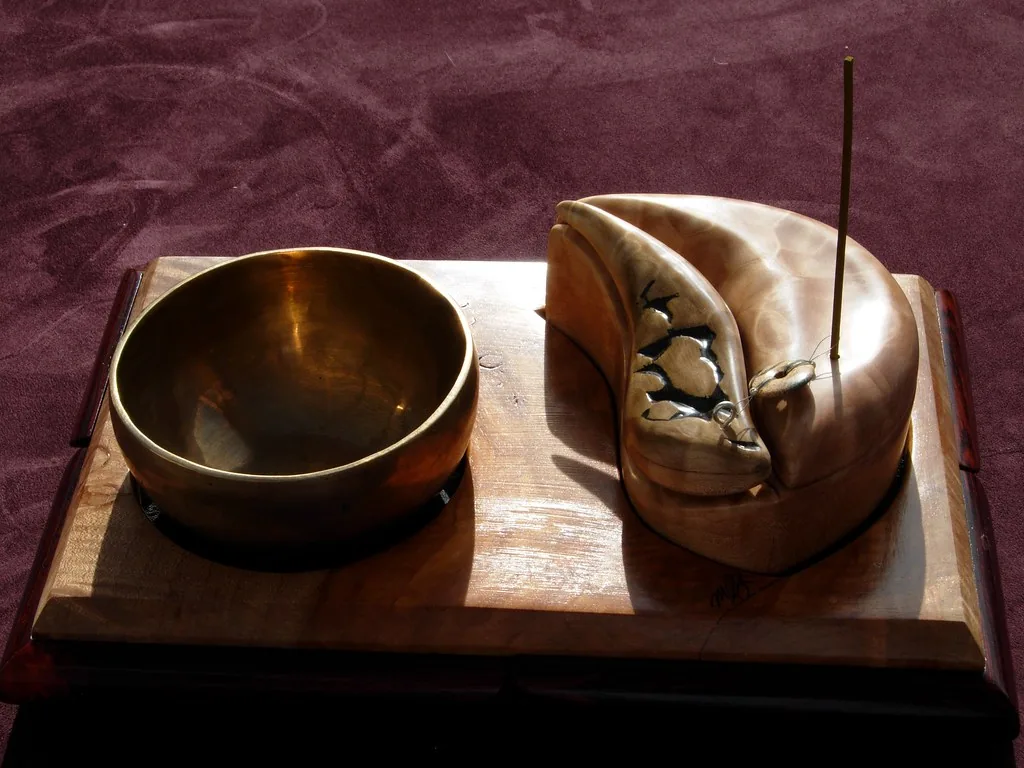
This article offers a clear, practical comparison to help you decide where to buy a singing bowl in France. We compare the range of products, prices and customer ratings. You will find concrete examples, from a bestselling set at €29.90 to a large hand-hammered model at €399.00.
The page also looks at star ratings and review counts to help you judge how reliable the scores are: for example, 4.5/5 from 1,964 reviews or 4.8/5 from 12 ratings. We explain claims about handmade production, accessories (cushion, mallet, Lokta box) and how they affect the experience.
By the end of this comparison, you will have guidance for your needs (beginner, yogi or therapist) and quick recommendations based on the diameter, weight and tone you want. This guide aims to make buying a singing bowl simple, safe and suited to your use.
Why compare Amazon, Cultura and Thomann for a Tibetan singing bowl?
Comparing a major online marketplace, an in-store musical instrument department and a professional catalogue helps you define what you actually need. The aim is simple: decide on your budget, preferred tone and necessary accessories before choosing a product.
Useful details to keep in mind:
- There is a wide range of products, including complete sets (cushion, wooden or felt mallet, Lokta box), with prices from €26.49 to €399.00.
- Displayed ratings range from 4.0/5 to 4.8/5: consider both the number of reviews and the star rating.
- Buying in a store lets you try the bowls and get advice from staff, helping you assess their tone.
- Professional catalogues provide specifications (diameter, weight and intended use) that help you choose a bowl with a consistent sound.
Learning more about accessories and specifications can spare you additional purchases. This comparison also helps you understand what accounts for a higher price: handmade production, diameter or finish. Read on to learn which criteria suit your experience level.
Amazon: range, prices and up-to-date reviews
Product pages display current prices, star ratings and more customer comments, making it easier to choose quickly between sets and larger bowls.
Examples identified include the 450 g Zenamaste set, 11.5 cm in diameter (handmade in Nepal), at €29.90 (4.5/5, 1,964 reviews); the carved Gandhanra at €59.99 (4.4/5, 212 reviews); the 7 Metals set at €49.99 (4.2/5, 416 reviews); and the 40.6 cm hammered NHH at €399.00 (4.8/5, 12 reviews).
Listings often give the item weight, diameter and composition. Complete sets include a cushion, a wooden or felt mallet, a Lokta box, a bag and sometimes an e-book. You can therefore use them as soon as they arrive.

Price range: from €26.49 for a chakra kit to €399.00 for a large hammered bowl. Star-rating filters help you sort products by their scores and customer reviews.
Cultura: musical instrument department and in-store shopping
The musical instrument department lets you try bowls before buying. You can hold, strike and listen to several models to judge their tone and how long the note lasts.
For beginners, this hands-on experience is reassuring. A salesperson can show you how to hold the mallet and adjust the pressure to produce a steady resonance.
In-store advice helps you choose a diameter and thickness suited to meditation, yoga or relaxation. It can reduce mistakes based on price or your choice of product.
Why trying a bowl in store makes a difference
- Comparing several singing bowls in person lets you hear differences in hammering and hand finishing.
- You can check how steady the note sounds with different mallets and assess the packaging if the bowl is a gift.
- In-store after-sales service makes an exchange easier if the bowl does not meet your expectations in use.
Learn more: if you value advice and the chance to try a bowl in person, this approach can reduce the risk of a return and help you choose a suitable bowl.
Thomann: professional music catalogue and quality standards
For musicians and practitioners, a consistent sound and clear specifications matter especially. The platform often offers standardized models, such as a universal bowl measuring 21.5 cm in diameter and weighing 950 g, designed for massage and sound therapy.

Descriptions specify the diameter, weight and intended use, helping you anticipate the fundamental note and richness of the harmonics. This level of detail helps you choose a product for professional or semi-professional use.
Who is this range for?
- Practitioners and studios that want to standardize their set for consistent sessions.
- People looking for clear specifications and reliably available models.
- Customers willing to pay more for a consistent selection and specialist musical instrument service.
Reviews (for example, 4.4/5 from 55 ratings for a model priced at €153.52) offer an indication of perceived quality. The availability of spare parts and compatible accessories is an advantage for maintaining the Tibetan singing bowl and extending its useful life.
Quick comparison of products and included accessories
This comparison looks at sets, finishes and accessories side by side to help you choose according to your needs.
Handmade singing bowls: most come from Nepal and are often made from a 7-metal alloy, with an antique finish and motifs such as the flower of life.
Sizes range from small 10 cm models (around 400 g) to medium-sized 16 cm models, which produce different tones.

Included accessories
- A wooden mallet and a second felt or leather mallet to vary the attack.
- A ring cushion to stabilize the bowl while it vibrates and extend its resonance.
- A Lokta paper box, a bag and sometimes an instructional e-book.
Concrete examples include the 7 Metals set with an e-book and Lokta box at €49.99 (4.2/5, 416 reviews), a 16 cm set with two mallets (4.3/5, 273 reviews), and a small 10 cm, 400 g model (4.5/5, 104 reviews).
View more images in this comparison to inspect the hammering and thickness.
Star ratings are useful, but consider each score alongside its review count.
For value, choose a set if you want equipment that is ready to use; for a stable sound, check the diameter and weight.
Lower price or dependable quality: how to assess value for money
A few figures and practical criteria can help you assess value for money. Start by defining your intended use: meditation, professional sessions or simply trying a bowl for the first time.
For a lower price, favor highly rated complete sets. For example, the XL set at €39.90 has a 4.6/5 rating from 1,771 reviews. These sets often include a mallet, cushion and packaging, so you can use them immediately.
When to choose a low price and when to pay more
If a stable note and rich harmonics matter to you, consider paying more. A 21.5 cm, 950 g model at €153.52 and large hammered bowls at €399.00 are aimed at practitioners.
Also look at the star rating and customer reviews: a large number of reviews offers a broader picture than an isolated score. Compare what comes with the product (mallet, cushion, box), rather than price alone, to judge its value.
In short, a set around €49.99 is a reasonable starting point. For professional use, consider a heavier, more expensive bowl. Choose an appropriate size so you do not pay extra for a tone you will not use.
Ratings, stars and reviews: interpreting 5.0 stars, 4.8, 4.6 and more
Ratings are useful, but they do not tell the whole story. You should also consider how many people contributed to the average.

Concrete examples: 4.8/5 (12 ratings) for the 40.6 cm NHH; 4.6/5 (1,771) for the handmade XL; 4.5/5 (1,964) for the Zenamaste; and 4.2/5 (416) for the 7 Metals set with an e-book.
A score close to 5.0 stars catches the eye, but 12 reviews carry less weight than a 4.5 rating based on 1,964 responses. Also look at the distribution of four-, three- and two-star ratings to understand the overall picture.
- 4.6/5 (1,771): a sign of consistent satisfaction and good value for money.
- 4.2/5 (416): a frequently reviewed product that may suit a first purchase.
- 4.6/5 (21): a highly rated product, but based on a small sample.
Detailed comments often tell you more than brief reviews. Check how ratings have changed over the years since the listing went live, and favor reviews from verified buyers that include photos or sound samples.
Finally, compare comments on the stability of the note, ease of use and quality of the mallets. To judge the value of Tibetan singing bowls, always consider average star ratings alongside price and accessories.
Legal conformity guarantee, hidden defects and returns: what you need to know
Consumer rights protect buyers in France when a product does not match its description. The statutory guarantee covers defects present at delivery at no cost to the buyer.
Statutory guarantee and hidden defects: rights in France
The legal guarantee of conformity applies independently of any commercial warranty. It covers, for example, a tuning problem or an undisclosed crack.
The guarantee against hidden defects allows you to take action if a serious defect makes the product unfit for use, even if it appears years after purchase.
Returns after purchase, time limits, shipping costs and exchanges
Return terms vary by seller. Check the deadlines and any shipping costs before placing your order.
“Keep your invoice and correspondence: they will make it easier to request a repair or refund.”
Spare parts and service: what to check with each seller
Make sure spare parts (mallet, cushion) and support are available if you want to develop your practice.
| Criterion | What is covered | What to check on the listing |
|---|---|---|
| Legal guarantee | Defect present at delivery | Duration, procedure, after-sales contact details |
| Hidden defects | Major defect discovered after use | Required evidence (photos, video), legal time limit |
| Returns and costs | Exchange, refund, shipping costs | Return label, whether costs are covered |
Practical tip: document the product’s condition as soon as you receive it (photos, videos), and review this information before completing your purchase to avoid unpleasant surprises.
Handmade in Nepal: recognizing an artisan singing bowl
A few simple, reliable clues can help you recognize a handmade instrument. Claims on the product listing are useful, but visual inspection and listening are decisive.
Signs of a handmade bowl
Hammer marks and slight irregularities on the surface indicate handwork. These imperfections do not reduce quality; they often come with a rich tone.
Test how long the bowl resonates by rubbing its rim and striking it. Long resonance and stable harmonics suggest good craftsmanship. Check the rim too: an even rim promotes uniform vibration.
Claims to examine on product listings
Claims such as “Handmade in Nepal,” “7 Metals” and “antique finish” are common. They should be accompanied by practical information.
- The item weight and diameter tell you about its density and thickness. For example: 10 cm and around 400 g, or 21.5 cm in diameter and around 950 g.
- Favor products whose listings state their origin, materials and compatible accessories.
- Detailed reviews mentioning a “warm tone,” “long resonance” or a bowl that is “easy to make sing” are useful indicators.
Tip: compare several recordings and read detailed comments to check the sound’s consistency before choosing.
Amazon, Cultura or Thomann: where to buy a Tibetan singing bowl
Here is a quick guide to matching your buyer profile to the right offer. This summary helps you choose using clear criteria.
Buyer profiles
- Beginner: choose ready-to-use sets at a lower price with plenty of reviews (for example, €29.90 and 4.5/5). They make it easier to get started.
- Yogi: choose a stable, portable set (for example, €39.90 and 4.6/5), with a cushion and mallet for regular use.
- Sound therapist: favor standardized models with detailed specifications (for example, 21.5 cm in diameter, 950 g and €153.52) to obtain a consistent sound.
- Gift buyer: consider buying in a store so you can test the tone and choose attractive packaging.
Quick recommendations by budget
- For a lower price: sets costing €40–€60 offer a good balance of accessories and quality.
- For a fuller tone: choose a larger model at a higher price.
- Compare star ratings and the distribution of four-star, three-star and two-star scores to judge the consistency of customer feedback.
- Check shipping costs and return terms: they can affect your final choice.
“This article helps you choose quickly according to your budget and intended use.”
To explore recommended models and sets, see our detailed selection.
Concrete examples of worthwhile sets
To help you choose, here are some specific examples and their strengths. Each suits a different purpose: discovery, regular practice, visual appeal or guided learning.
Zenamaste — 450 g set, 11.5 cm in diameter
Features: handmade in Bhaktapur, with a cushion and wooden mallet included.
Price: €29.90; rating: 4.5/5 from 1,964 reviews. This complete set is an excellent starting point, backed by a large number of ratings.
Carved Gandhanra — five Buddhas and mantras
A handmade decorative and musical piece. Price: €59.99; rating: 4.4/5 from 212 reviews.
Strength: its carefully crafted appearance makes it an upscale gift or a decorative piece for a meditation space.
7 Metals set with e-book and Lokta box — “ready to meditate”
An instructional set at €49.99 with a guide included. Rating: 4.2/5 from 416 reviews.
The combination of accessories and guide makes it easier to learn and practice at home without buying anything else.
XL and large 20 cm Full Moon — broad tonal range
A 20 cm model for a full resonance. Examples: Full Moon at €151.00 (4.6/5 from 21 reviews) and handmade XL at €39.90 (4.6/5 from 1,771 reviews).
The item’s weight and dimensions help you choose a register: a more substantial bowl often resonates for longer.
- Quick tip: look at more user photos and videos to hear the actual tone before ordering.
- Reading detailed reviews also helps you judge how consistent the product’s quality is over time.
- On Amazon, this selection illustrates different priorities: budget, appearance, learning and sound performance.
| Model | Price | Accessories | Rating |
|---|---|---|---|
| Zenamaste, 450 g, 11.5 cm in diameter | €29.90 | Wooden mallet, cushion, presentation box | 4.5/5 (1,964 reviews) |
| Carved Gandhanra | €59.99 | No complete set (decorative model) | 4.4/5 (212 reviews) |
| 7 Metals with e-book and Lokta box | €49.99 | E-book, Lokta box, mallet | 4.2/5 (416 reviews) |
| XL and 20 cm Full Moon | €39.90–€151.00 | Varies by model | 4.6/5 (1,771 or 21 reviews) |
“Always check the bowl’s weight and size to choose a register that suits your practice.”
Conclusion
In summary, this article helps you choose according to your budget, intended use and sound preferences. The market offers reviewed models from €29.90 to €399.00, with ratings from 4.0 to 4.8/5 and a range of accessories.
For your first purchase, look for a well-rated singing bowl costing around €30–€60, with a cushion and mallet. If you want a consistent, precise sound, consider a higher-end model and check its weight and diameter.
Examine the star rating and review count, then read more customer comments to understand differences in use. Account for shipping costs and return terms: they may outweigh a small difference in price.
The legal guarantee of conformity, your rights concerning legal conformity and the guarantee against hidden defects protect you; keep your proof of purchase so you can take action even years after buying. Check the availability of spare parts to extend the product’s useful life.
For more information, consult the detailed listings and sound recordings provided on this page. This article is a practical guide to buying with confidence and getting the best value for money.