
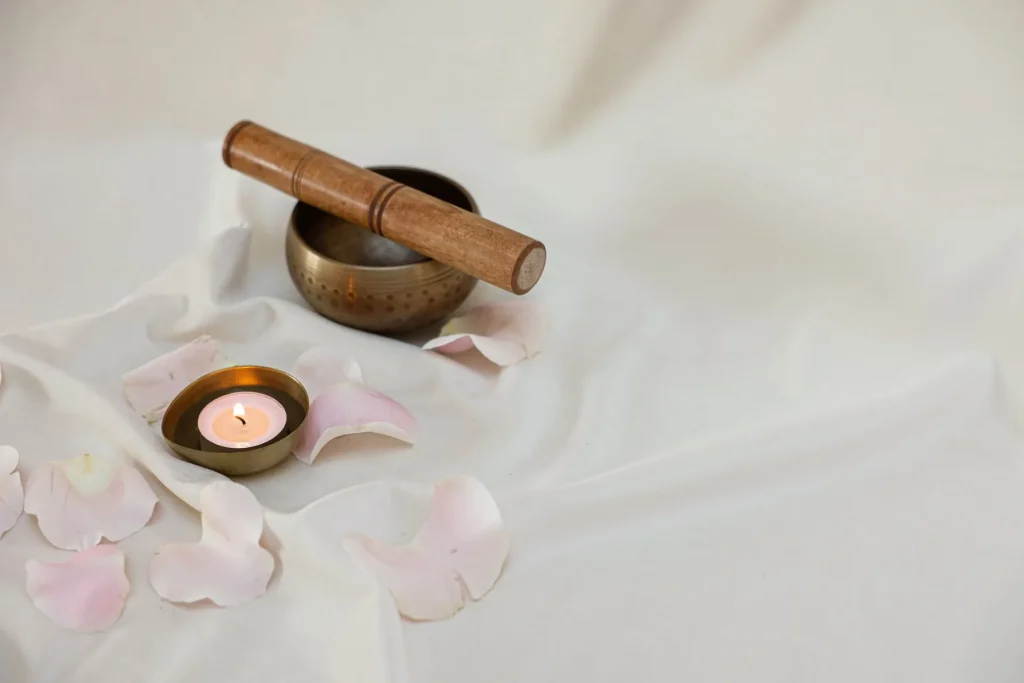
A complete guide for readers in France, offering a clear, simple overview of a sound practice. This short article sets out its framework and aims. It also explains the benefits associated with meditation and relaxation.
You will find the essential steps here, from preparing the space to closing the session. The guidance helps beginners and regular practitioners build confidence.
We describe how the body responds to resonance and why it encourages letting go. The guide explains the role of Tibetan singing bowls, accessories, and techniques to master.
To learn more, explore an example of a sound bath and how it unfolds in this article about a sound bath. It will help you prepare the space, your posture, and your breathing before each session.
Why have a Tibetan singing bowl session today? Aims, benefits, and setting
Tibetan singing bowls have been used for more than 2,500 years. Today, they are mainly used to encourage relaxation, support meditation, and harmonize the energy of body and mind.
Common aims: reduce stress, calm the nervous system, improve breathing, and offer a focused sound treatment. Before each session, a brief conversation helps establish the goal and any areas needing attention.
In sound therapy, a simple space, soft lighting, and attentive listening are preferred. These elements improve the quality of the experience without increasing its cost.
“The benefit comes as much from listening inwardly as from the vibration itself.”
| Duration | Purpose | Expected effect | Indicative price |
|---|---|---|---|
| 20 min | Grounding, breathing | Quick relief | €30–50 |
| 45–60 min | Deep meditation, treatment | Letting go, harmonization | €50–90 |
| Package | Regular support | Lasting progress | Varies with quality |
For a practical overview and an example of a sound bath, read this article about a sound bath. It offers useful guidance on preparing the space, managing sound levels, and integrating the experience afterward.
How Tibetan singing bowls vibrate and their therapeutic effects
Understanding what happens when you listen closely helps you play and listen more effectively. Resonance connects the instrument and the body and helps explain the depth of the sensations.

The singing bowl’s vibration and the role of water in the body
The singing bowl produces a vibration that travels through the body, which is mostly made of water. This interaction heightens tactile and internal sensations.
Understanding how vibration is transmitted helps you adjust your technique to support gentle relaxation.
Frequencies, harmonics, and effects on the nervous system, brain waves, and breathing
Fundamental frequencies often range from 110 to 660 Hz and are accompanied by higher harmonics. This richness shapes the sounds and vibrations you perceive.
These sound profiles are often associated with a shift toward alpha and theta brain waves, slower breathing, and relaxation of the nervous system.
- Thickness and size: these affect the bowl’s acoustic behavior and pitch.
- Alloy and metals: each bowl has its own vibrational character.
- Technique: adjust volume and duration to produce steady, effective resonance.
“Listening to subtle changes in the bowl’s sound helps bring your movements into harmony with the body’s response.”
Preparing your equipment: choosing a bowl, assessing the alloy, and selecting accessories
A good instrument first feels comfortable in the hand and has a clear tone. Start by examining the key criteria: size, weight, and timbre. For beginners, a Tibetan singing bowl 15 to 20 cm in diameter is versatile and easy to handle.
Assess quality by listening and holding the bowl. Strike it gently: the note should last at least 30 seconds. Rub the rim to check that the sound continues smoothly.
The alloy affects the tone. The traditional seven-metal alloy (copper, tin, iron, gold, silver, mercury, and lead) is said to produce rich harmonics and deep resonance.
Strikers and mallets: how they affect the initial sound
A striker produces a crisp, pronounced attack. A mallet produces a softer sound. Match the tool to the technique and result you want.
- Tests before buying: a gentle strike, continuous rubbing, and a vibration you can feel in your palm.
- Finish: an even rim and consistent thickness improve handling and tone.
- Price and quality: online shopping offers variety and a range of prices; shopping in person lets you try a bowl firsthand.
| Criterion | Practical guidance | Why it matters |
|---|---|---|
| Size | 15 to 20 cm for beginners | Versatility and ease of playing |
| Weight | Proportionate to size | Stable resonance |
| Alloy | Seven metals recommended | Rich harmonics and a distinctive sound |
| Accessories | Striker and mallet | A variety of attacks and sound textures |
“Always try a bowl before buying: trust your ears and hands.”
A typical Tibetan singing bowl session: step by step
A peaceful environment helps a person become receptive to vibrations and relaxation. A session generally lasts 45 to 60 minutes: centering, gradually introducing sounds, alternating sound and silence, then allowing time to integrate the experience.

Preparing the space
Provide a stable surface, a mat, cushions, and a blanket. Reduce background noise and dim the lights. Check the temperature to keep everyone comfortable throughout.
Settling in and centering through breathing
Begin with a short meditation. A few deep breaths help establish awareness and prepare the body.
Introducing the sounds
Begin with a gentle strike using a striker or mallet. Alternate sounds and silences, pacing them with the breath to encourage gradual relaxation.
Placing bowls around the body and on the back
Arrange the Tibetan singing bowls around the body as space allows. If you place a bowl on someone’s back, choose a moderate weight and a stable base. Observe each bowl and adjust its position according to its size and intended purpose.
Closing and integration
Finish with a longer silence, a return to natural breathing, and a reminder to hydrate. For a practical example, read this article about a sound bath.
“Adapt the pace and method to the needs identified at the start of the session.”
Essential techniques for playing singing bowls
Mastering a few simple movements transforms a singing bowl’s tone and sustain. Below are the key methods for producing steady, expressive vibrations.

Striking method
Start the sound with a light, clean, well-aimed strike. Striking too hard shortens the sound’s duration.
Keep the strike controlled to preserve the vibration. Strike the middle of the rim for a clear attack.
Rubbing method (stick-slip)
Begin with a gentle strike, then rub the outside while keeping the mallet upright.
Lead the movement with your arm, rather than only your wrist. Vary the speed and angle to shape the tone.
“If the vibration pushes the mallet away, ease the pressure: you have reached the saturation point.”
Grip and posture
Hold the bowl on your open palm or place it on a cushion so you do not dampen its vibrations. Keep your back straight and your chest open.
Hold the mallet like a pen, with a relaxed grip. Try different heads to adjust the attack, sustain, and tone.
- Practical tip: vary your techniques according to your needs: strike the bowl to mark a transition, or rub it to sustain a listening exercise.
- Useful resource: for detailed guidance on playing, see these instructions.
Improving your practice: safety, contraindications, and progress
Safety comes first: some circumstances require particular care before a session. Avoid this practice if the person has a pacemaker or metal rods, has recently had surgery, or has epilepsy, is pregnant, or has severe tinnitus. If in doubt, seek medical advice.

Always adapt the treatment to the person’s body. Adjust the intensity, duration, and placement of the bowls to their sensitivity and needs. Drinking water before and after the session helps them settle afterward.
Routine and progress
A structured routine helps you develop your skills. Practice regularly and master one technique before adding another.
- Keep a journal: record goals, the duration of sounds and silences, bowl positions, reactions, and observed effects.
- Record your sessions to analyze frequencies and dynamics.
- Vary the singing bowls, playing methods, and positions (around the body or on the back) while observing the contraindications.
| Element | Practical advice | Why |
|---|---|---|
| Practice frequency | 2 to 3 times a week | Lasting progress |
| Journal | Brief notes after each treatment | Helps you make targeted adjustments |
| Buying | Compare options online and in person | Price, choice, and the chance to try a bowl |
“A personal record of your sessions helps you respect your pace and refine your approach.”
Conclusion
To close this article, this complete guide has offered a framework for leading a coherent session from preparation to closing. It favors simplicity and effectiveness to help you progress with confidence.
The benefits become more apparent with regular practice: the more closely you listen to the vibrations, the more gently your mind and body can absorb their effects.
This article invites you to keep exploring. Clarify your goals, and adjust the placement and playing of the Tibetan singing bowl and singing bowl. The quality of your attention matters more than the number of sounds you make.
Keep the practice simple: use few tools, clear points of reference, and a methodical approach. Develop your ritual, keep a journal, and make each session an adaptable resource. Tibetan singing bowls and bowls can accompany you along the way.