

Goal of this guide: help you understand how to choose a bowl for your practice, budget, and desired sound.
The Tibetan bowl, also called a singing bowl, is a traditional Himalayan instrument. It can mark the beginning and end of meditation and support relaxation.
Tradition and craftsmanship: most bowls are made from an alloy of several metals. Newer quartz crystal versions produce a more precise note.
Size affects pitch: a small bowl produces a high note, while a large bowl produces a low one. A mallet emphasizes the fundamental note, while a stick brings out the overtones.
Every bowl is unique: thickness, shape, and engravings vary. Listen to a bowl before buying it, and consult a reliable sound recording.
Budget and criteria: prices range from about €60 to €2,200, depending on diameter, weight, alloy, and manufacturing method. To learn more about how the methods differ, read this detailed analysis.
Coming up: what to know before buying, the differences between hammered and cast bowls, metal versus crystal, size, notes and chakras, budget, provenance, and a quick guide to choosing.
What to know before buying
Defining how you will use the bowl guides the entire purchase. For meditation, look for an even sound and a stable note. For sound therapy, seek a powerful instrument with a long sustain. For chakra work, choose a specific note. For cleansing rituals, look for a tone rich in overtones.
Listening online: check the sound recording
Check the fundamental note, the length of the resonance, and the presence of overtones. Listen to several recordings through headphones and compare bowls played with the same type of mallet for a reliable assessment.
Testing in a store
- Play the instrument with both a stick and a mallet.
- Assess how easily you can make it sing and how its vibrations feel in your body.
- Ask for its weight, diameter, and measured pitch.
Quality and alloy: a good alloy and careful workmanship help avoid bowls that look impressive but have few overtones. Match your choice to how often you will use it: a practitioner who travels has different needs from someone who meditates at home.
For examples of recordings and useful sound information, see this practical page.
Hammered or cast bowls: differences in manufacture and sound
How a bowl is shaped affects its sustain, tone, and character. This section compares the two methods and their effects on timbre, durability, and price.

Sand casting
Industrial process: molten metal is poured into a sand mold, then polished.
The result is a smooth surface, consistent dimensions, and a uniform sound. The sustain is often shorter, and these bowls are generally more affordable in price.
Hand hammering
Traditional technique: the piece is shaped through repeated heating and hammering.
Its shape and thickness vary slightly, creating a rich range of overtones and a long sustain. Each instrument has its own character.
Sound, durability, and use
Hand-hammered bowls produce complex overtones around the fundamental note. Cast bowls tend to have a more straightforward, less nuanced sound.
Over time, thicker areas may help a hammered bowl withstand wear. Cast bowls have a uniform finish but generally less sonic complexity.
- Variations in shape and thickness affect the vibrations and how the bowl feels when played.
- Production time often explains the difference in price: more hours of work mean a higher cost.
- For sound baths and deep relaxation, many people favor the long sustain of hammered instruments.
Practical tip: if you are buying your first bowl on a limited budget, choose a cast one. If you want rich, lasting sound quality, consider a hand-worked bowl. For listening and playing advice, see this practical guide.
Metal or crystal: which material suits your needs?
Materials strongly influence the tone and duration of the sound.
Traditional alloys: seven-metal models tend to produce more prominent low tones and a diffuse resonance. Five-metal versions, often made without gold or silver, retain a rich sound but may have slightly less depth in the low range.
Quartz and crystal: made by melting quartz powder in a mold, these modern instruments offer remarkable pitch precision. Their stable tuning makes them suitable for practices that call for specific frequencies (432 Hz, 440 Hz, or 528 Hz).
Sound signature: metal offers an enveloping warmth and rich overtones, well suited to grounding and sound baths. Crystal produces clearer, more incisive sounds centered on a particular frequency.
Practical guidance: choose metal for tradition, warmth, and overtones. Choose crystal if accurate, consistent frequencies are your priority for chakra work or a therapeutic practice.
At the same diameter, an alloy generally produces more prominent low tones than crystal. Always listen to comparable examples to hear the difference in texture and attack.
To explore the materials and their uses further, read our article on metal and crystal.
Size, diameter, and weight: their effect on vibrations and use
Size and weight directly affect volume and sustain. Common diameters range from 11 to 55 cm. Smaller instruments produce higher notes with a quicker attack.
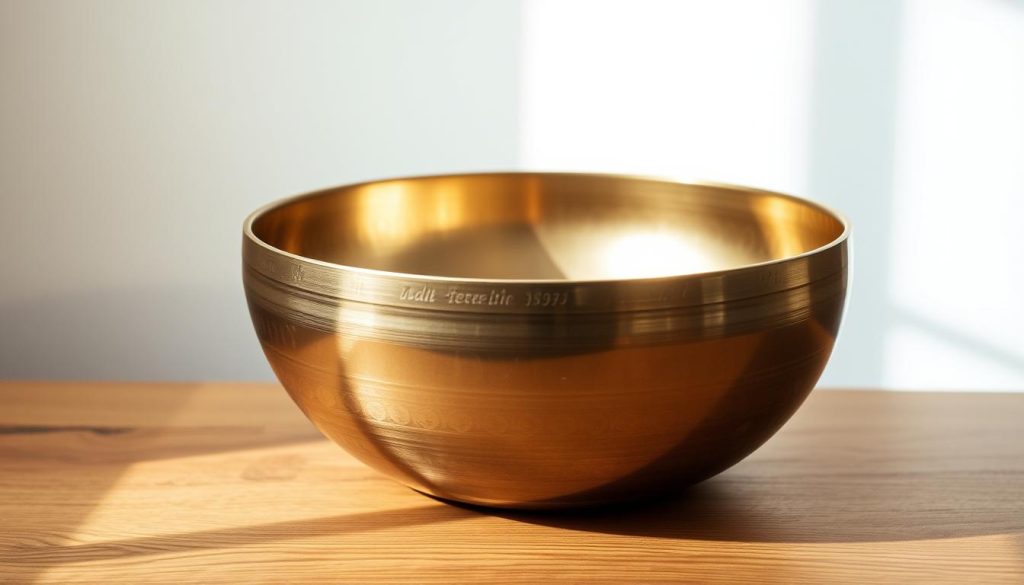
From small to large: energizing highs and grounding lows
Small diameters: lively sounds, ideal for energizing the start of a meditation. Medium diameters: versatile and suited to personal practice. Large diameters: deep low tones, excellent sustain, and an enveloping effect.
Weight, transport, and playing comfort
Weight rises sharply with diameter. A large bowl can weigh several kilograms and tire your hand. Practitioners who travel often favor compact models that balance volume and weight.
Choosing for sustain and room size
Sustain generally increases with size and adds to the perceived depth of sound. Choose a larger model to fill a big room. For an intimate space, choose a medium or small bowl.
| Use | Recommended diameter | Advantage |
|---|---|---|
| Energizing / start of meditation | 11 to 20 cm | High notes, quick attack |
| Personal practice / intimate space | 20 to 35 cm | Versatility and comfort |
| Sound baths / large rooms | 35 to 55 cm | Deep low tones, long sustain |
Notes, chakras, and frequencies: matching sound to your practice
The relationship between note and chakra can guide your choice of instrument for a particular practice.
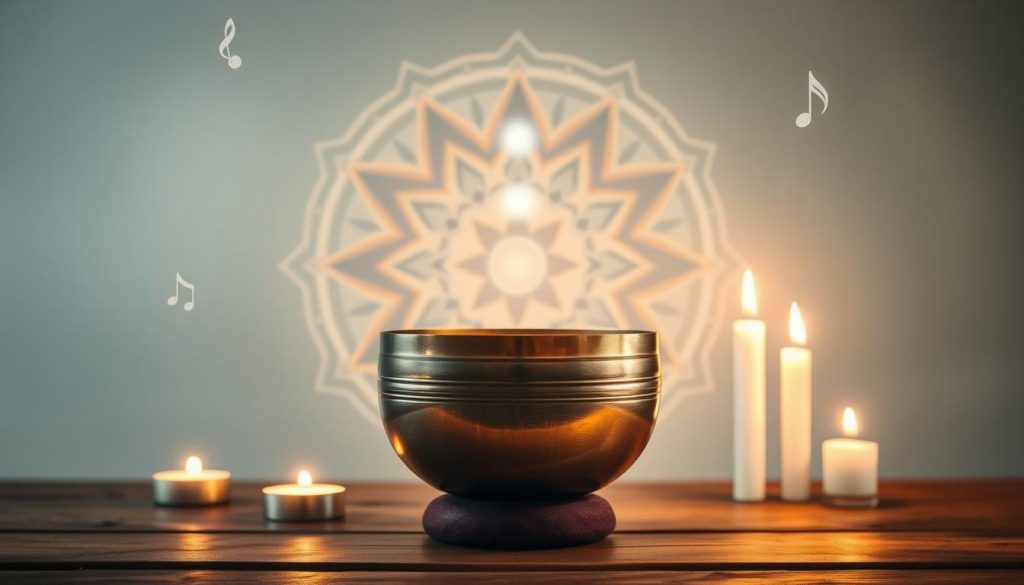
Common associations from C to B
These are common associations between notes and energy centers:
- C / C sharp: root chakra — grounding and stability.
- D / D sharp: sacral chakra — creativity and flow.
- E: solar plexus — willpower and confidence.
- F / F sharp: heart — openness and compassion.
- G / G sharp: throat — expression and communication.
- A / A sharp: third eye — intuition.
- B: crown — connection and transcendence.
Fundamental note, overtones, and accessories
The note listed by a seller is generally the fundamental. Every bowl also has overtones that enrich its sound.
A felt-covered mallet emphasizes the fundamental, making it useful for deep, enveloping sounds.
A hard or uncovered stick brings out the overtones and high notes. For focused work, try both ways of playing: striking and rubbing.
Specific frequencies: metal or crystal
For standardized frequencies (432, 440, or 528 Hz), crystal often offers more accurate tuning than metal. If the intended use is therapeutic, choose an instrument with a stable frequency.
Practical pointers:
- Focused chakra work → a precise note with good sustain.
- Sound bath → a broad range of overtones.
- Hands-on test → check the attack and sustain while holding the instrument in your hand.
Singing bowl prices: what affects the cost?
An instrument’s cost depends mainly on its size, alloy, and the time needed to make it.
Main price factors: diameter and weight come first. A large diameter requires more metal and work. Other factors include the type of alloy, the finish, engravings, and production time.
Why a hand-hammered bowl often costs more
Handcrafting requires repeated heating and hammering, sorting the finished pieces, and careful quality checks. This process raises the cost, as well as the instrument’s sonic value and quality.
Price guide
Small 11 cm metal models start at around €60. Large therapeutic models can cost about €2,200, depending on their diameter and weight.
The smallest crystal instruments often start at around €100.
Engravings and special finishes increase the price at a given diameter. Alloys containing more metals (seven-metal alloys) can call for a higher budget and may produce more prominent low tones.
- Set a budget based on whether your use will be occasional or professional.
- Choose between one large bowl and a set of complementary bowls.
- Compare sound recordings and warranties before buying.
“Spending according to how you will use the bowl helps avoid regrets: precision may be worth the cost for therapeutic practice.”
Quality, provenance, and artisans: recognizing a reliable bowl
Judge an instrument’s quality by listening first, then by checking the information available about its origin.
Provenance can affect manufacturing standards. Nepal is often associated with careful craftsmanship and thoughtful selection of alloys. Workshops in India offer ranges with varying degrees of industrial production.
Recognized makers include Full Moon (Santa Ratna Shakya), OM (Sajan Tapalyia), and PATAN (Kalyan Tamrakar). Their ranges are known for the quality of their alloys and finishes.

Assessing a recording
Listen for rich overtones, a stable note, and the absence of irregular beating.
| Criterion | What it reveals | What to look for |
|---|---|---|
| Sustain | How long the sound lasts | Long and even |
| Balance of fundamental and overtones | Sound texture | Audible overtones that do not dominate |
| Absence of beating | Pitch stability | Little or no fluctuation |
For older bowls, have an expert check authenticity and listen carefully. Appearance (patina and engravings) matters, but sound quality comes first.
Every bowl has its own character. Compare several recordings and ask about alloy composition and provenance before buying.
Hand-hammered or cast Tibetan singing bowl: which should you choose?
The right instrument suits your space, your body, and the way you play.
Quick summary: for rich textures and long sustain in meditation or sound baths, favor a hand-worked model. For a first purchase on a tight budget, a cast bowl offers a more uniform sound at an accessible price.
If you need a precise frequency (432, 440, or 528 Hz), consider a crystal instrument: its tuning is often more accurate.
- Size and diameter: large spaces → large models; travel → medium or small diameters.
- Alloy and quality: check pitch stability and overtone richness, whatever the manufacturing method.
- Hands-on test: check comfort during long sessions and how easily you can make the instrument vibrate.
A larger bowl is not necessarily better for your practice. Start with your main use (meditation, chakra work, or cleansing) and consider how its sound feels to you.
“Listen to several bowls and choose the one that fits your intention.”
To explore manufacturing differences further, read this detailed analysis.
Conclusion
After considering all these factors, the key is still how your body responds to the sound. First, define your purpose: meditation, chakra work, cleansing, or relaxation.
Recap: for a stable fundamental and precise note, favor a crystal model. For rich overtones and long sustain, hand hammering brings character and depth.
Size and shape affect vibrations, portability, and suitability for your space. Before buying, check that the seller provides clear information about alloy composition, provenance, and sound recordings.
Listen to several singing bowls, compare their recordings, and trust your own response. Appearance (engravings and patina) can add to the pleasure of daily use, but let your ear make the final decision.
Final tip: start simply and build your collection of bowls as your practice, budget, and experience with meditation and relaxation develop.