
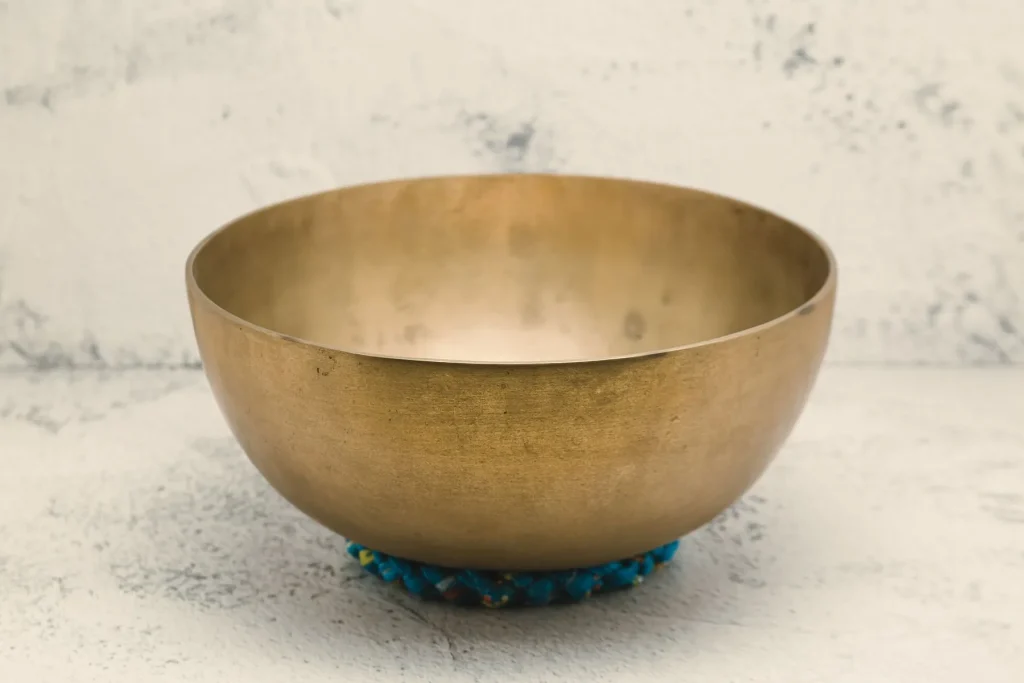
Understanding how the price is determined helps you choose an instrument that suits your budget and meditation needs.
The cost depends on objective factors: size (diameter and weight), alloy, manufacturing method, finish and origin. Subjective factors, such as rarity and product range, also play a part.
A hand-hammered bowl offers longer sustain than a cast model made from a common alloy. Within the same range, a bowl with more metal generally costs more as its weight increases.
Origin can affect manufacturing standards: workshops in Nepal often apply stricter standards than those in India. We will look at how these differences affect the French market.
This guide covers the market; the effects of size, diameter and weight; alloys and manufacturing; product ranges and finishes; and a practical price guide. For more advice on choosing and buying a bowl, read our complete guide.
Understanding the current market in France and what affects prices
The French market currently offers a wide range of prices, from affordable small bowls to very expensive rare pieces. Expect to pay around €30 to €50 for a small bowl. These basic models are sold without a cushion and have few or no engravings.
Most versatile singing bowls cost between €50 and €200. They are around 20 cm across, produce lower tones and sometimes have etched decorations. Above €200, prices rise quickly with diameter and weight; some bowls weigh more than 10 kg and cost several thousand euros.
Beware of this misleading example: a listing for a richly engraved, hand-hammered 20 cm bowl priced below €50 is unlikely to be credible. In recent years, prices have risen because of raw material and transport costs, as well as higher wages for artisans.
Origin affects quality. More demanding workmanship in Nepal may justify a higher price. Compare diameter, weight, finish, manufacturing method and origin to assess value for money and avoid a poor purchase.
Size, diameter and weight: their direct effect on price
The amount of metal, more than the apparent diameter, determines the actual cost.
Diameter and thickness: why a 16 cm bowl can cost less than a 15 cm bowl
Diameter alone can be misleading. Thickness determines weight and therefore the amount of metal. A thick 15 cm bowl weighs more and may cost more than a thin 16 cm bowl.
Weight and metal content: a key relationship
Here is a simple method: compare the price per kilogram within the same product range and finish. If a heavier model is unusually cheap, ask about its alloy and origin.
Low or high pitch: effects on the note, sound and sustain
The larger and heavier a singing bowl is, the lower its note tends to be. Its sound becomes deeper, and careful craftsmanship can lengthen its sustain.
For ease of use, a small instrument can be held in the hand, while a large one needs a stand and a suitable mallet. Choosing the right mallet preserves the vibrations and harmonic richness.
“Always compare price and weight within the same product range to see whether they are consistent.”

| Diameter | Approximate weight | Sound | Recommended use |
|---|---|---|---|
| 12 to 14 cm | 300 to 600 g | High pitch, short sustain | Solo meditation, travel |
| 15 to 18 cm | 600 to 1,400 g | Midrange sound, moderate sustain | Sound baths, yoga |
| 20 cm and above | 1.5 to 5 kg or more | Low pitch, long sustain | Sound massage, concerts |
Alloys, metals and manufacturing: from cast to hand-hammered
Metal composition directly shapes the tone and how long vibrations last. Understanding this relationship helps you choose according to your intended use and budget.
Seven-metal alloys, copper and tin: their effect on vibrations
Copper and tin in the alloy affect the bowl’s ability to vibrate. Tin contributes to longer sustain and rich harmonics.
The traditional seven metals (gold, silver, copper, brass, mercury, tin and iron) remain a reference point for the variety of overtones they produce.
Cast or hand-hammered construction
Cast bronze or brass models are poured into molds and then polished. They produce a smooth sound with short sustain.
Hand-hammered pieces take more time and skill to make. Hammering creates irregularities that add complexity to the sound.
Origin: Nepal or India and value for money
In Nepal, the supply chain is often more closely controlled. The metals are traceable, and manufacturing methods are rigorous.
In India, some workshops reuse reclaimed copper, which can lead to variations in the alloy’s composition.
“Listen to how the vibrations build, the clarity of the overtones and how long the sound lasts to judge the bowl’s actual quality.”
For a closer comparison of casting and hammering, read this specialist article: differences between casting and hammering.
Product ranges and finishes: from entry level to Full Moon
From quick polishing to hammering under the moon, each finish has its own sound characteristics. The choice affects the sound, the time needed to make the bowl and its price.
Shiny is the basic option: the quickest to produce and the most affordable. Polishing creates a smooth surface but requires less handwork.
Natural bowls receive an acid bath that gives them an aged patina. This process adds character and increases the cost because of the extra time it requires.
Engraved (etched) finishes involve wax, acid baths and lengthy finishing stages. Patterns and mantras require skill, making the result more artisanal and more expensive.

PATAN uses an optimized metal alloy and extensive polishing. Despite being hammered by hand, its surface remains very smooth. It produces rich harmonics, and its price reflects this level of workmanship.
Full Moon: these bowls are hammered on nights of the full moon and often contain more tin. Their rarity and sound quality account for their premium price.
OM SAJAN offers an alternative: nearly 80% of the Full Moon effect without the lunar timing requirement, at roughly half the price.
“Listen to how the vibrations build, last and remain steady to choose a bowl for your purpose: well-being, sound baths or contemplative practice.”
Tibetan singing bowl prices: a guide by size and quality
A considered purchase depends on listening to the sustain and harmonics, and checking that the price makes sense for the weight.
To choose a bowl, match its size to its purpose: mini bowls for sound signals, 12 to 16 cm bowls for short sessions, 18 to 22 cm bowls for comfortable meditation, and bowls over 24 cm for sound baths whose vibrations can be felt in the body.
Expect to pay less than €50 for small, simple models, €50 to €200 for a versatile instrument that may be engraved, and much more for heavy or rare pieces. The COVID pandemic raised costs in recent years.
Look for a good alloy (including its proportion of tin and whether it contains seven metals), and test the bowl with a stable cushion and a suitable mallet. Listen, compare and keep value for money in mind to make a lasting choice for meditation and well-being.