
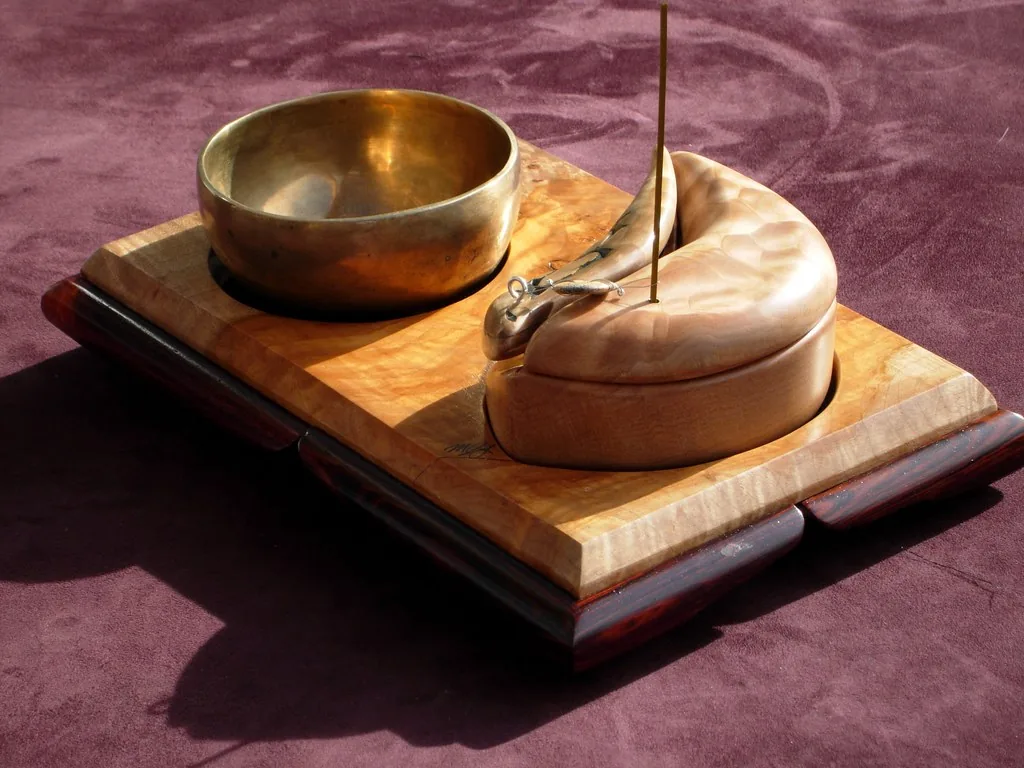
The Tibetan singing bowl is much more than a decorative object. It is an instrument that produces sound and helps many users focus.
No study has yet proven that it causes harmful side effects. However, several personal accounts report less stress and better attention.
Most problems arise from how it is used: unsuitable pressure, fingers touching the bowl’s wall, or the wrong mallet. Up to 85–93% of sound defects are linked to these techniques.
This complete guide aims to identify and correct these types of mistakes. You will find explanations of materials, striking and rim-playing techniques, and care advice.
Small adjustments to your technique can improve the clarity and duration of the sound. For practical tips, read our article on caring for Tibetan singing bowls.
Understand the instrument to avoid mistakes from the start
The choice of material and the shape directly influence the voice of this instrument.
A singing bowl is much more than an object: properties, vibrations, and sound clarity
Think of this bowl as an inverted bell. Its vibrational properties depend on its material, thickness, and diameter.
A clean surface and proper handling allow the overtones to ring clearly. Otherwise, dead spots appear and sound clarity declines.
Seven metals, alloys, and sound quality: what really changes
Traditionally made from an alloy, some bowls use an alloy of seven metals. This can enrich the overtones if the balance is right.
Handcrafting tends to stabilize the overtones and lengthen the resonance, while industrial production can create irregularities.
| Criterion | Physical impact | Perceived effect |
|---|---|---|
| Thickness | Low frequencies and stability | Resonance duration |
| Alloy (up to seven metals) | Richness of overtones | Clarity and timbre |
| Finish and machining | Evenness of the rim | No dead spots; clear sound |
Choosing a bowl for its intended use (meditation or personal practice) helps you avoid buying a decorative object that does not resonate like these instruments.
Tibetan singing bowl: common mistakes to avoid
Caution: there is no evidence that these bowls cure serious illnesses. Belief in their healing powers can delay medical care, especially in serious cases.
A useful practice, but a complementary one. A Tibetan singing bowl can be a useful relaxation tool, but it never replaces medical care. If in doubt, consult a healthcare professional.
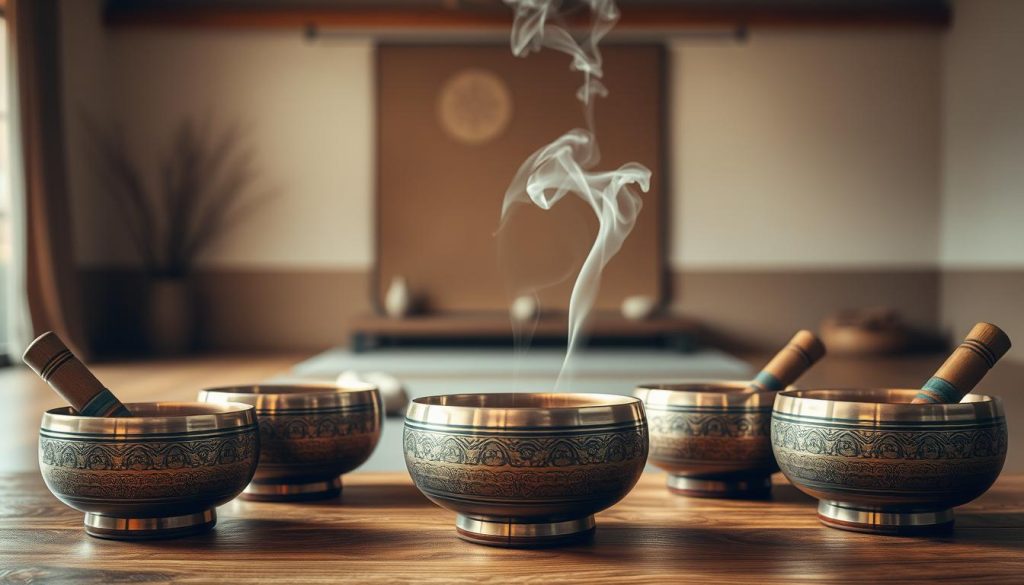
- Resting a hand against the wall of the bowl or using soft supports.
- Pressing too hard while rubbing the rim or striking for too long.
- Choosing a decorative object instead of a real instrument: its vibrations will be weak.
“A bowl should sing clearly: strike it briefly and listen for the overtones, without unwanted buzzing.”
Material quality: inexpensive products often have an imprecise alloy, rough edges, or uneven thickness. The timbre becomes unstable and the vibrations weaken.
A simple test: strike the bowl briefly and listen. If it buzzes, make a note of it and compare. To help you decide, read how to choose a suitable bowl and record your trials.
Contraindications and precautions: safety, health, and common sense
Before any session, it is helpful to know the limits of use and the body’s warning signs.
Nervous system conditions, migraines, and epilepsy
It is important to take nervous system conditions into account. If you have epilepsy, seek advice from a healthcare professional before using a bowl.
Long or intense sessions may trigger migraines. Choose short sessions and pay attention to how you feel.
Pregnancy and medical devices
During pregnancy, do not place the instrument on your abdomen and keep it at a reasonable distance, especially if the pregnancy is high risk.
For people with a pacemaker, there is no evidence of danger. Start with short sessions, increase their duration gradually, and consult a healthcare professional.
Allergies, recovery after surgery, and sensory conditions
If you have a known metal allergy, avoid prolonged skin contact. After surgery, do not apply vibrations near the surgical site without medical approval.
Sensory or mood conditions may make the experience uncomfortable for some users. Choose a calm setting and appropriate support.
- Situations requiring precautions: nervous system conditions, epilepsy, recurring migraines, and sensory conditions.
- Choose short, well-spaced sessions at a moderate intensity, and keep a session journal (duration, intensity, and how you felt).
- With children, use the instrument at a low intensity and under adult supervision.
“Meditation with singing bowls may benefit some people but feel uncomfortable for others: adapt your practice to how you feel.”
Striking technique: common mistakes that harm sound quality
Precise contact immediately determines the attack and overtones. With a Tibetan singing bowl, aim for a spot about 2 cm below the rim. This is where the note opens up best.
Strike location, duration, and the right mallet
Strike briefly: contact should last less than 0.3 seconds so you do not dampen the resonance. Use a suitable mallet (50–150 g, depending on the bowl’s diameter).
Speed, pressure, and supporting surface
A firm but controlled strike preserves sound quality. Avoid soft surfaces; wood gives better feedback and preserves the vibrations.
- Common mistakes: striking too close to the rim or too low, using an unsuitable angle, or leaving your hand against the bowl after striking it.
- Simple procedure: make three strikes with a pause between them, then listen to the overtones and how they fade.
- Practical test: try a different mallet to reduce unwanted vibrations, and adjust your choice to the bowl’s diameter.
| Parameter | Recommended value | Effect |
|---|---|---|
| Strike location | About 2 cm below the rim | Optimal development of overtones |
| Contact time | Less than 0.3 seconds | Preserves resonance |
| Mallet | 50–150 g (depending on size) | Controls attack and timbre |
| Surface | Wood or a hard platform | Accurate feedback, less absorption |
“A short, precise strike reveals the singing bowl’s true voice.”
Record your trials to observe how the vibrations change and improve your technique. A stable posture helps produce a consistent sound.
Rim-playing technique: movements to correct for a steady, harmonious tone
Precise movement around the rim is essential for a clean sound and long resonance. Holding the striker firmly limits shaking and lets you control the pressure.

Pressure, pace, and the spiral
Optimal pressure: aim for 300–500 g. This force directly influences grip and the activation of vibrations.
Pace: make about one circuit every two seconds. This rhythm produces a steady, predictable tone.
The “spiral” tip: start with small arcs, then gradually widen them. The spiral helps avoid jerks and squeaks.
Grip, angle, and routine
Maintain steady pressure. Too much pressure cuts off the vibrations; too little interrupts them.
Avoid touching the bowl’s wall with your fingers: they dampen the timbre and shorten the sound.
| Aspect | Recommendation | Effect |
|---|---|---|
| Pressure | 300–500 g | Activates overtones |
| Pace | One circuit every 2 seconds | Steady tone |
| Starting | Spiral technique | Smooth start |
| Routine | A few minutes a day | Lengthens the sound |
Complete quick guide: warm up your wrist, start gently, increase the pressure gradually, and record your sessions. Assessing your own playing helps you observe how consistent the volume and vibrations are.
“A slow, steady movement gives this instrument a purer, longer-lasting voice.”
Holding the bowl and mallet: small mistakes, big effects
How you hold the instrument radically changes its timbre and sound projection. A suitable grip brings out the overtones and avoids buzzing.

Open palm or closed grip
Open palm: rest the bowl lightly on your palm or on a palm cushion for a soft, warm sound. This grip encourages harmonious vibrations and suits quiet meditation.
Closed grip: keep your hand half closed to emphasize projection and attack. Choose this grip for sessions that call for greater sound reach.
Rings, fingers on the bowl, and posture
Remove your rings and avoid touching the bowl’s wall directly with your fingers: they dampen the bowl and create unwanted noise.
Adopt a stable posture: straight back, relaxed shoulders, and a presentation angle of 15°–30°. Warm up your wrists and shoulders before use.
- Vary your grip if you are left-handed or your wrist becomes tired.
- Choose suitable accessories and a mallet proportionate to the bowl’s diameter.
- Quick checks: listen to the overtones and make sure there is no buzzing.
“Try an open-palm grip, then a closed grip: you will immediately hear the difference in sound quality.”
Suitable accessories: which ones improve sound and which ones degrade it
Well-chosen accessories improve your instrument’s voice and lifespan. The right equipment improves sound quality and makes everyday use easier.

Mallet and striker: weight, diameter, and materials
Practical rule: the striker’s diameter should be about one-fifth of the bowl’s diameter. Mallets generally weigh 50–150 g, depending on the bowl’s size.
The covering (felt, leather, or wood) directly influences the attack and tone color. Test several combinations to find the right balance.
Cushions, surfaces, and storage
Choose wooden surfaces and firm cushions, which stabilize the bowl without dampening its vibrations.
Avoid supports that are too soft or slippery; they absorb energy and reduce perceived sound quality.
- Choose a mallet proportionate to the bowl’s diameter.
- Choose a striker with a diameter of about one-fifth of the bowl’s diameter for stable contact.
- Test different woods (oak, bamboo) and cushion densities.
| Accessory | Characteristic | Expected effect |
|---|---|---|
| Mallet | 50–150 g; felt, leather, or wood | Controls attack and timbre |
| Striker | Diameter about one-fifth of the bowl’s | Stable contact; activates overtones |
| Surface | Hard wood and a firm cushion | Longer resonance, less absorption |
“Test several setups: a good accessory reveals the instrument’s true voice.”
Quick checklist: check how balanced the equipment feels in your hand, look for rough edges, and make sure the mallet suits the Tibetan singing bowl; then store the equipment somewhere dry. To learn more, compare several trials and note the differences.
Amplify vibrations without distorting them
The surface beneath the instrument changes everything. A hard base such as wood prolongs vibrations and improves projection. Soft supports absorb energy and shorten the resonance.
Contact surface, wood, and longer resonance
Choose a firm surface (hard wood) and a firm cushion to stabilize the bowl without dampening the sound. The bowl’s orientation changes how the sound spreads and affects its quality.
Simple techniques for preserving sound clarity
Measure how the sound fades with different points of support to compare its duration. Move away resonant objects that could create beating effects.
- Test different woods and note their effect on the vibrations.
- Experiment with a “cascade”: arrange several bowls on suitable surfaces to avoid interference between them.
- Observe Chladni patterns or visualize how energy is distributed to understand where to place the support.
Practical note: record your observations (surface, orientation, duration, and quality) to refine your setup and preserve the Tibetan singing bowl’s sound clarity.
“A well-chosen base prolongs the instrument’s voice without distorting it.”
Metal or crystal bowls: mistakes to avoid when choosing for your intended use
Depending on your goal (meditation or sound therapy), the material shapes the sound and practical use.
Sound signature: metal instruments offer a warm sound rich in overtones. Many are made from an alloy, sometimes of seven metals, which broadens their range of timbres.
Crystal instruments often produce a purer, longer-lasting vibration. They project sound well in large spaces, but poorly made ones can sound harsh.
- Key points: metal offers warmth and complexity; crystal offers clarity and projection.
- Beware of inexpensive synthetic crystals: they may be fragile and produce a harsh timbre.
- Before buying, compare the sounds using the same mallet and the same surface.
| Criterion | Metal | Crystal |
|---|---|---|
| Timbre | Warm, rich in overtones | Pure, clear |
| Duration | Variable; can be adjusted through technique | Often longer |
| Recommended use | Individual meditation, harmonization | Sound baths, large rooms |
| Risks | Poor machining: dead spots | Poor quality: harsh sound |
“The right choice depends on the setting: your goal, the space, and your listeners’ sensitivity.”
Ultimately, a well-made metal Tibetan singing bowl is neither better nor worse than a crystal bowl. The balance between intended use, diameter, and weight remains decisive.
Maintenance, instrument care, and vibrational hygiene
A few daily steps are enough to preserve quality and resonance. Regular instrument care prevents oxidation and dead spots caused by moisture.
Soft cloth, mild soap, and thorough drying
Recommended routine: rinse with lukewarm water (35–40 °C), use mild soap, then dry immediately with a soft cloth or microfiber fabric. Dry every groove and engraving to preserve the instrument’s quality.
Products to avoid
Avoid bleach, ammonia, and chlorine: these products damage metals and alloy surfaces. Never put the bowl in a dishwasher or microwave.
You can gently polish unengraved areas with lemon and baking soda, after testing a discreet spot and limiting the contact time.
Storage and transport
Keep it in a dry place, ideally at 45–55% humidity. Residual moisture can accelerate oxidation within 30 minutes.
- Cover it with a clean cloth after use.
- Use a silk or linen cushion to limit scratches.
- When transporting it, use several layers of fabric, even pressure, and protection for the rim and engravings.
| Action | Temperature or threshold | Effect |
|---|---|---|
| Rinsing | 35–40 °C | Cleans without thermal shock |
| Drying | Immediately, with a soft cloth | Preserves quality and prevents corrosion |
| Storage | 45–55% humidity | Stability and lifespan |
| Transport | Fabric wrapping | Protects the rim and engravings |
“Regular instrument care is the best way to preserve a pure voice and long resonance.”
Conclusion
In short, informed practice turns a simple Tibetan singing bowl into a tool for relaxation and concentration. No study proves that it causes serious side effects, but remain critical of therapeutic promises.
Adjust the duration and intensity to your body and watch for signals from your nervous system. If you have epilepsy, have recently had surgery, are pregnant, or have concerns about a medical device, consult a healthcare professional.
To preserve their quality and vibrations, clean Tibetan singing bowls with mild soap, dry them immediately, and store them in a dry place. Protect their rims and avoid harsh products.
These instruments, often made from an alloy, sometimes of seven metals, call for listening and experimentation. For a complete guide and technical advice on striking and rim-playing techniques, continue reading dedicated resources to learn more and refine your choices.