

Goal: This short article offers a step-by-step method for a grounding session. The guide is for beginners and practitioners who want to give their practice structure and gain benefits for their well-being.
The practice involves standing barefoot inside a large singing bowl. The practitioner strikes the rim and moves a quarter turn between strikes. Done for 5 to 10 minutes or longer, this routine sends vibrations through the body and calms the mind.
Here, we cover the recommended bowl size, posture, striking rhythm, listening until the sound fades, and closing the session. We also explain the importance of quality equipment: a suitable bowl, a mallet, and a support that allows it to resonate.
You may experience deep relaxation, a massage-like sensation in your feet, relief from stress, and a steadier sense of energy afterward. The sections below cover equipment, preparation, the procedure, variations, and ways to include it in meditation.
Understanding grounding with a singing bowl and its aims
When the bowl is struck at a measured pace, its sound can create a sensation of support that rises from the soles of the feet. Grounding draws on this principle: the large bowl sends out vibrations that help steady the body and calm the mind.
The main aim is a connection to the earth’s energy and greater emotional stability. In practical terms, the resonance provides a vibration-based foot massage.
The rich sounds, with a fundamental frequency between 110 and 660 Hz and higher harmonics, are said to encourage alpha and theta states. They may slow breathing and calm the nervous system.
Visualizing a flow rising through the chakras (Muladhara → Sahasrara) can give the mental practice structure. The practitioner adjusts the pace and force of the strikes, as well as the choice of mallet, to build the effect gradually.
| Function | Energy-based approach | Practical approach | Main effects |
|---|---|---|---|
| Vibrations beneath the feet | Connection to the earth, flow of energy | Massage, muscle relaxation | Stability, relaxation, slower breathing |
| Harmonic sounds | Chakra alignment | Support for meditation | Less stress, alpha and theta states |
| Rhythm and intensity | Energy balance | Physical comfort for the recipient | A gradual, comfortable effect |
This article goes on to offer a clear method, from choosing equipment to carrying out the session. To learn more about the recommended equipment, see the grounding equipment guide.
Essential equipment for a grounding session
Your choice of equipment directly affects the sound and the comfort of the person’s feet. For grounding, choose a large bowl: 35 to 40 cm is the minimum for average-sized feet. A diameter of 50 to 60 cm offers more room, a fuller sound, and longer resonance.
Choose a bowl with a clear note and long resonance. Test each one by striking it gently, then moving the mallet around its rim to hear the range of harmonics.
To make a large bowl sing, choose a wide, dense, well-balanced mallet. Keep your grip relaxed and your wrist loose so you can control the angle and speed, especially with very large bowls.
Finally, protect the bowl: place it on a thick mat, circular cushion, or blanket. This steadies the vibrations, prevents scraping against rough surfaces, and improves sound projection. The bowl, mallet, and support need to work together for reliable use and an enveloping sensation.
Preparing the space and body for safe practice
Choosing a location: find a flat, stable, quiet area. Outdoors, place the Tibetan bowl directly on the ground after removing stones and debris. Indoors, put a mat or blanket between the bowl and a hard floor.
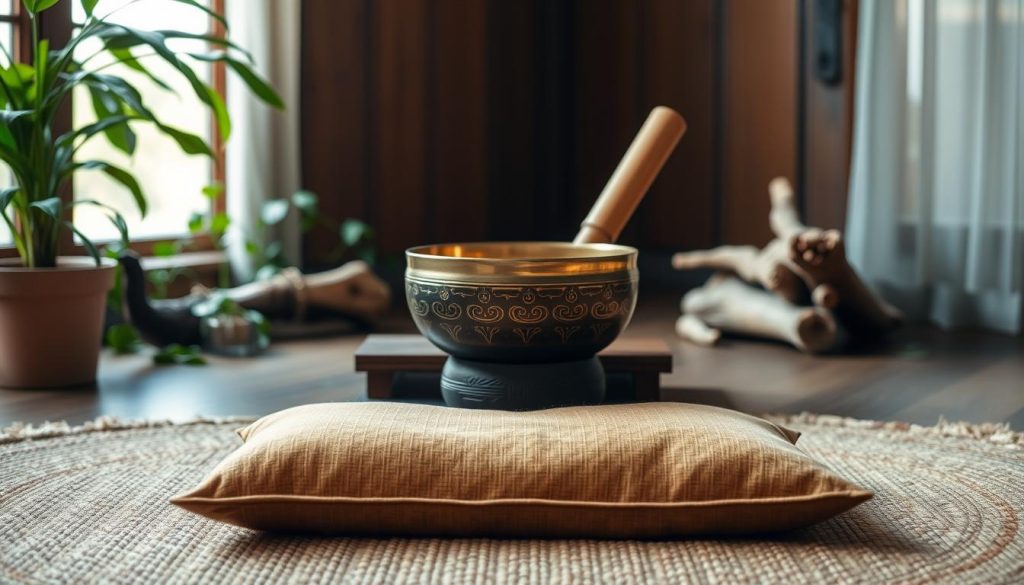
Setup and safety
Check that nothing obstructs the base of the bowl. Move objects that could tip over and make sure the bowl cannot slide during a longer session.
Posture, breathing, and mindset
The recipient stands barefoot in the bowl with an upright posture: head, back, and legs aligned. Their shoulders stay relaxed and their knees steady to help them keep their balance.
Invite them to take a few deep, even breaths to settle the mind. Set a simple intention to guide the practice and meditation.
- The practitioner holds the mallet in their dominant hand and tests a gentle strike.
- Avoid rooms with too much echo; add soft furnishings if needed.
- Keep a chair nearby, drink water, and remove watches or metal objects.
How to ground a session with a Tibetan singing bowl
Place the recipient barefoot in the bowl, with the soles of their feet directly against the metal. Invite them to stand upright, lower their gaze gently or close their eyes, then take a few deep breaths to settle in.
Positioning the recipient
A stable, centered position means relaxed knees and weight spread evenly. Check that the soles of both feet rest fully on the surface so vibrations can travel through the body.
Striking procedure
The practitioner uses the mallet to strike the rim with consistent force. After each strike, they wait for the sound to fade, then move a quarter turn clockwise before striking again.
Duration and responding to needs
Start with 5 to 10 minutes and adjust the length of the session to the recipient’s needs. Keep a steady pace, neither too fast nor too slow, so the vibrations can surround the body and help settle the mind.
Closing the session
Finish with one last strike while facing the recipient. Let the sound fade, invite them to take a full breath, then ask them to step slowly out of the bowl.
To explore the method further and choose suitable equipment, see the grounding equipment guide.
Practicing grounding alone or with a partner: methods and tips
Practicing alone calls for a different kind of discipline: you manage the sound while paying attention to your own experience. With a partner, the practitioner controls the pace and quality of the vibrations. Alone, coordinating the strikes with your attention takes more practice.
Tips for solo practice: prepare the bowl, check that it is stable, and find a comfortable mallet height. Choose a simple tempo and count silently between strikes.

Tips and techniques
- Practice short sequences and divide them into cycles, such as four circuits around the bowl.
- Adapt the session to your needs: reduce the number of cycles or the force of your strikes if the posture tires you.
- Take brief pauses to return your attention to your breathing and physical sensations.
- Choose a wide-headed mallet to reduce strain on your wrist.
“Consistency matters: short, frequent sessions help you listen more closely.”
| Format | Advantage | Limitation |
|---|---|---|
| With a partner | The practitioner manages the pace and sounds | Requires a partner |
| Solo | Greater independence and introspection | Requires more concentration |
| Mixed | Alternates learning with shared practice | Requires planning |
Practical guide: work with a partner when your goal calls for finer control of the sound or additional support. Record your progress so you can adapt the method to your needs.
Including grounding in meditation and yoga
Using the bowl’s sound during yoga turns each transition into a cue to refocus. This method can encourage calm, presence, and a sense of harmony between movement and breath.
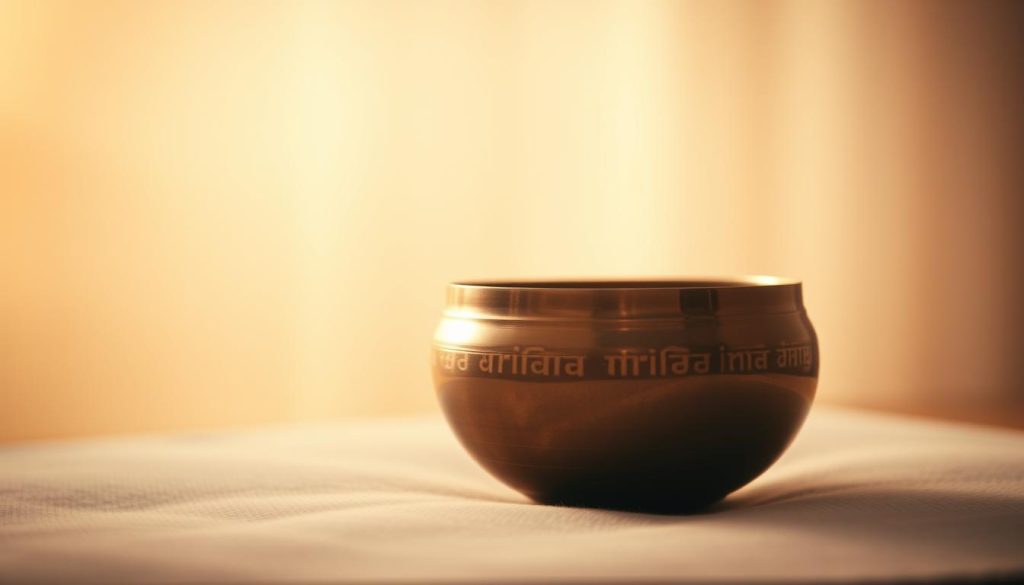
Opening the session: intention, opening tones, and breathing
Begin by setting a simple intention and sounding the bowl twice. Guide breathing by matching inhalation and exhalation to the bowl’s tone.
Marking transitions between poses
Use one clear strike to begin or end an asana. It gives the practice a rhythm and helps participants stay attentive throughout the session.
Deepening relaxation in Savasana and returning gently
For Savasana, use gentle rubbing near the body without excessive volume. Alternate sound and silence to give the nervous system time to settle.
- Adjust the note and volume to suit the style of yoga, whether Yin or Hatha.
- Use a few strikes to reinforce grounding and the alignment of the chakras.
- Close with a clear tone, then a period of silence and guided breathing.
“The best use of the bowl supports the group’s well-being and sense of calm.”
Benefits, effects, and sensations: energy-based and practical perspectives
The bowl’s harmonics invite the body to slow down and find a steadier inner footing. From an energy-based perspective, the practice supports a connection to the earth and the flow of energy along the chakras.
In practical terms, the vibrations massage the arches of the feet and ease tension. The sensation may even reach the hand when you hold the bowl.

Sensations and sound physiology
You may feel a pleasant heaviness in your legs, breathe more deeply, and experience greater mental clarity. The fundamental frequency, between 110 and 660 Hz, and its harmonics are said to encourage alpha and theta brainwave activity.
Relaxation, sleep, and emotional stability
Repeated sounds may reduce stress and make it easier to fall asleep. Regular practice can help steady your state of mind and improve everyday well-being.
| Perspective | Function | Main effect |
|---|---|---|
| Energy-based | Connection to the earth → chakras | Harmony, a sense of grounding |
| Practical | Mechanical vibrations in body tissues | Foot massage, muscle relaxation |
| Practice | Bowl size and striking force | Depth of vibration and duration of relaxation |
Every bowl feels slightly different; note what you experience to adjust the duration and intensity. To learn more about the equipment, read this guide: everything you need to know about singing bowls.
Conclusion
A short, regular routine can create a grounding experience. Follow the steps—strike the rim, move a quarter turn, practice for 5 to 10 minutes, and close while facing the recipient—to produce steady, enveloping sounds. A Tibetan singing bowl, mallet, and suitable support work together to create good resonance.
Over time, refine your technique, your choice of note, and your rhythm. These improvements may deepen relaxation, support sleep, and strengthen your sense of connection to the earth. Use the singing bowl to open, pace, and close your meditation or yoga practice.
Protect the bowl, check that it is stable, and avoid using it near the recipient’s head. Use a secure grip and measured movements to keep the session safe and comfortable.
Start today: choose a quiet place, set aside a few minutes regularly, and notice how the practice affects you from one session to the next.