
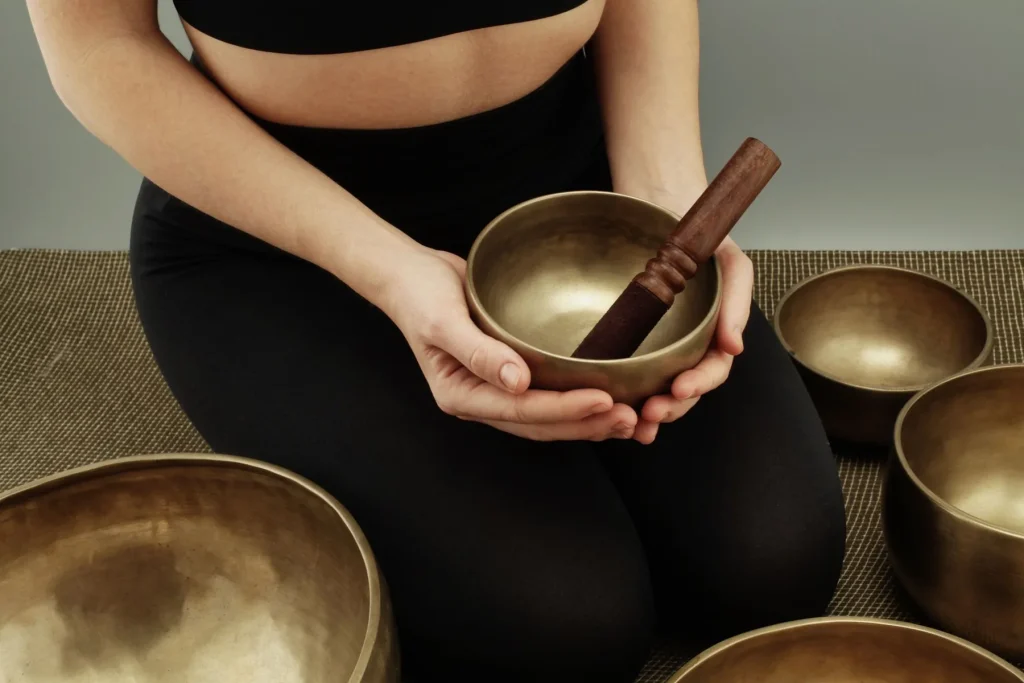
Choosing a bowl takes more than trusting your intuition. You need to understand how it is made, what it is made of and how you intend to use it.
Traditional models are hand-hammered in the Himalayas and remain the historical reference point. Ritual versions are forged on a full-moon night according to a specific rite, making them rare and often more expensive.
To make an informed purchase, consider the material, diameter, weight, note and sustain. These factors determine whether a bowl suits meditation, sound therapy, purification or charging stones.
If you are looking for practical, reliable information in France, this article compares craftsmanship, alloys, sound and budget. To learn how to identify ritual models, read our dedicated guide: how to recognize a Full Moon bowl.
Why compare seven-metal singing bowls and Full Moon bowls today?
The singing bowl market is changing, and interest in the full moon is driving demand. Many people want clear information to help them make a considered choice.
An enthusiast with more than ten years of experience notes that material, size, weight, note and frequency all guide a purchase. These factors help define the purpose: meditation, sound therapy, purification, vibrating water or charging stones.
Bowls made during a full moon remain rare and often cost more. The ritual adds symbolic meaning, but it does not tell you everything about everyday use.
Available information sometimes conflicts. This article brings together the more dependable points about craftsmanship, alloys and sizes to help you decide and avoid an impulse purchase.
- Set your budget and decide how you intend to use the bowl before buying.
- Compare authenticity and versatility to find a suitable musical instrument.
- Prioritize ease of use and a comfortable grip if you will play the bowl often.
| Criterion | Versatile model | Ritual model |
|---|---|---|
| Availability | Wide selection | Limited production |
| Price | Entry-level and mid-range | Often high |
| Typical use | Meditation, sound therapy, music | Rituals, symbolism, sacred practices |
| Main advantage | Versatility and authenticity | Ritual significance and rarity |
To learn how to identify ritual models, read our dedicated guide: how to recognize a Full Moon bowl.
Comparison: seven-metal Tibetan singing bowls vs. Full Moon bowls
Choosing between a bowl forged according to a lunar ritual and a traditional one means assessing their heritage and sound.
Tradition, ritual and rarity
Traditional instruments are often hand-hammered. They reflect long-established craftsmanship and come in a wide range of styles.
Bowls created during the full moon follow a specific ritual: hammering under a visible moon, the presence of a lama and the recitation of mantras. This practice limits production and increases their perceived value.
Alloys and material quality
Traditional alloys contain gold, copper, silver, mercury, lead, tin and iron. Some pieces use bronze or brass.
Lunar models aim for a premium selection. They often contain a higher proportion of silver and undergo closer quality control to ensure a consistent sound.

Vibrations, sustain and harmonic richness
A traditional singing bowl produces a deep, diffuse sound with broad harmonics.
A Full Moon bowl emphasizes power, stable vibrations and extended sustain. Its sound is considered richer and more precise.
Price, availability and value in France
The rarity created by the ritual means a higher price and limited availability on the French market.
For everyday use, a well-chosen Tibetan bowl is often enough. A lunar bowl may be worthwhile for professional sessions that require long sustain.
- Practical tip: choose sellers who are transparent about origin and sound testing.
- Use: a versatile instrument or a choice for demanding professional sessions.
| Criterion | Traditional | Lunar ritual |
|---|---|---|
| Alloy | Seven metals / bronze / brass | Premium selection, more silver |
| Sustain | Diffuse depth | Long and stable |
| Availability | Wide | Limited |
To learn more about identifying ritual bowls and checking evidence of their origin, read our guide: how to recognize a Full Moon bowl.
Craftsmanship and origin: from the Himalayas to the Kathmandu Valley
Making a bowl involves traditional techniques: gradual hammering, checking the sound by ear and adding engraved details. This craftwork gives each Tibetan bowl a unique sonic character.
Workshops across the Himalayan region, including the Kathmandu Valley in Patan, keep these skills alive. Experienced artisans oversee the shape and decoration.
Traditional techniques and engravings
Hammering determines the thickness and evenness of the walls. These features affect the bowl’s vibrato, sustain and tone.
The full-moon ritual
Bowls known as Full Moon bowls are forged at night, following purification and prayers with a lama. The mantra Om Som Somaya Namah is sometimes recited, and production depends on clear skies.
Alloys and variations
Common compositions include copper, tin, zinc, iron, lead, gold and silver. Bronze, an alloy of copper and tin, and brass offer different hardness and tonal qualities.
- Key point: the alloy and the working of the metal determine durability and tone.
- Santa Ratna Shakya of Patan is sometimes named in connection with these bowls, but official evidence is lacking.
Sound, frequencies and musical notes: what suits your practice?
Choosing the right note starts with listening, not reading a specification sheet. Your choice of sound depends on your intention: grounding, energizing or relaxing.
Notes and chakras
In the tradition, each note is linked to a chakra. For example, C is often associated with the root chakra and grounding.
Depending on the intention and the part of the body in question, the bowl’s sound may be used to focus on an energy center.
440 Hz vs. 432 Hz / 528 Hz tuning
The modern reference is 440 Hz, while some practitioners favor 432 Hz or 528 Hz.
In practice, achieving the precision of a quartz bowl with a metal Tibetan bowl is almost impossible. Other singing bowls, such as crystal bowls, can offer more precise tuning.
Sound textures: crystalline vs. low-pitched
A metal singing bowl favors expansive low tones and a rich halo of harmonics.
Crystal bowls produce a more crystalline, higher-pitched and focused sound.
- Practical tip: pay more attention to what you hear, how the bowl responds to the mallet and how it feels in your body than to the specification sheet alone.
- Gentle meditation and sound baths benefit from generous sustain.
- More energetic work benefits from a clear attack and higher tones.
| Criterion | Metal bowl | Crystal bowl |
|---|---|---|
| Frequency precision | Moderate, difficult to guarantee | High, more stable |
| Texture | Low-pitched, rich in harmonics | Bright, crystalline |
| Suggested use | Meditation, sound baths, sound therapy | Work focused on a particular frequency, precise therapy |
Remember: the musical instrument is only a tool. Regular practice and intention play the leading role. To learn more, read our guide to everything you need to know about the Tibetan singing bowl.
Uses, benefits and listening experiences
A bowl creates a soundscape for your practice. It can accompany meditation, yoga, sound therapy and music therapy.
For meditation and relaxation, choose a Tibetan singing bowl with a low, enveloping tone. Many people find it grounding and stress relieving.
In sound therapy, musical instruments with long sustain allow a note to linger. Ritual versions are often chosen for sound baths.

Method and specific practices
For yoga, use the bowl at the start of a session to help the group settle, then at the end to help them absorb the experience. Adjust the volume to the size of the group and each person’s sensitivity.
Experimental practices include vibrating water, purifying a space and charging stones. These uses often take place in a calm, ritual setting.
- A simple approach: strike gently, rub the rim in circles and pause to let the resonance develop.
- Useful accessories: a striker, a padded mallet and a cushion to stabilize and protect the instrument.
- A suitable environment: a quiet room, a comfortable posture and slow breathing.
| Use | Suggested type of bowl | Expected benefits |
|---|---|---|
| Meditation & relaxation | Low-pitched, enveloping | Grounding, stress reduction |
| Sound therapy / music therapy | Long sustain, stable response | Working with tension, emotional integration |
| Rituals: purification, stones, water | Ritual or carefully tested version | Sensory and symbolic experience |
Key point: reported benefits depend on regular practice, intention and the quality of listening. If you are sensitive to sound, comparing several instruments before buying remains a good approach.
Size, diameter, weight and handling
A bowl’s size directly affects its tone and volume.
Effect of diameter: as diameter increases, the pitch drops toward deeper lows and the vibrations become more intense. Conversely, a smaller diameter produces more prominent highs and a lively attack.
Transport and playing by hand
Weight often increases faster than diameter. This makes the bowl harder to carry and more tiring to hold out in your hands.
If you travel with your bowl, consider the total weight of the kit. An overly heavy set limits how long you can play while holding it and makes moving around during workshops harder.
Accessories and grip
To hold the bowl, keep your palm open and your fingers relaxed so you do not dampen the vibrations. Adjust your technique to the type of singing bowl to produce a clear sound.
Useful accessories: a cushion for stability, a striker for steady rubbing and a padded mallet for controlled strikes. These improve the quality and consistency of the sound.
| Criterion | Effect | Advice |
|---|---|---|
| Diameter | Determines the pitch range (low ↔ high) | Choose a medium size for versatility |
| Weight | Affects transport and handling | Try holding the bowl before buying |
| Accessories | Improve stability and tone | Choose a complete kit (striker, padded mallet, cushion) |

Distinctive signs, quality and counterfeits: identifying a genuine “Full Moon” bowl
Examining the patina, engravings and acoustic response can help you assess an instrument’s origin. Bowls said to be forged under a full moon often have recognizable signs, but these provide only partial evidence.
Common engravings
Common signs: the mantra “Aum mani padme Hum” and the Shou Lotus symbol. These markings decorate the inside or outside of the bowl and add symbolic value.
Be careful: engravings can be copied. Their presence does not automatically prove that the bowl was made according to the ritual.
Evidence, limitations and choosing a seller
You cannot verify from a distance that a bowl was forged under the moon. Only being at the workshop on the night itself would provide reliable proof.
“Traceability and uncompressed audio recordings are your best tools for judging quality.”
- Compare it with other singing bowls to put its tone in context.
- Ask about the composition of the metals and the proportion of silver: these are useful clues, though not guarantees.
- Request workshop photos, a production history and a returns policy.
Counterfeits exist in Nepal, India and China. For greater confidence, choose reputable shops and read our guide to learn how to recognize a Full Moon bowl.

Budget and value for money in France
Consider price an indicator, not a guarantee. Think about how you will use the bowl: personal practice, workshops or professional sessions. The purchase price can hide other costs, such as transport, maintenance and accessories.
Entry-level metal vs. the “emperor” range: what to expect
In France, a metal bowl can cost less than €50. Crystal models start at around €100. Rare ritual bowls, made only occasionally, cost considerably more.
The price rises with size, engravings, the quality of the alloy and the selection of artisans. A simple instrument is enough for personal meditation. The so-called “emperor” range aims to offer long sustain, consistent sound and careful hand finishing.
When to pay more: ritual, materials, sustain and professional use
A higher price may be justified if you need a controlled alloy, documented craftsmanship or long sustain for professional work. Practitioners who travel should account for weight and transport costs.
Consider the total cost of ownership: the instrument, mallets, cushion, maintenance and possible resale. Favor well-balanced instruments over purely decorative features.
“A careful listening test is worth more than a label alone.”
- Tip: decide how often you will use the bowl before choosing one.
- For professional use, invest in one reliable piece instead of several low-end models.
- Be wary of very large discounts: they may conceal poor workmanship or unclear provenance.
Conclusion
Ultimately, listening is the best way to choose a Tibetan singing bowl. First decide on your purpose: meditation, sound therapy, yoga or ritual.
How bowls are made and the craftwork carried out in Kathmandu help explain their individual sounds. The alloy, including copper and tin, the consistency of the wall thickness and the artisan’s skill determine sustain and vibrations.
Do not base your decision on engravings alone. Test how the bowl feels, how stable its frequencies are and how it sits in your hands. Compare several instruments and check the seller’s traceability information.
A bowl forged under the full moon often offers long sustain and a strong presence, but a well-made Tibetan bowl is enough for most people. Choose with confidence: your experience and years of listening will guide you.