
Accordions are versatile musical instruments used in many genres. In this article, we explore the different types of accordions, highlighting their features and specific uses.
The diatonic accordion was the first form of accordion, created in the early nineteenth century. It consists of a small box fitted with metal reeds and a bellows. It has five keys, each of which can play two different chords depending on whether the bellows is pulled or pushed.
The melodeon is a variant of the diatonic accordion with a ten-button melody keyboard and an accompaniment keyboard. It is used in Cajun music in Louisiana, as well as in Quebec and Ireland.
The chromatic accordion emerged during the nineteenth century thanks to technical advances. It uses a unisonoric system rather than a push-pull system and can play in every key. There are two types of chromatic accordion: the piano accordion and the chromatic button accordion.
Finally, the concert accordion is designed for musicians who want to play more complex and varied music. Its accompaniment keyboard has preset chords, offering more musical possibilities.
In summary, the different types of accordions are the diatonic accordion, the melodeon, the chromatic accordion and the concert accordion. Each has its own features and uses, and all are played in musical genres around the world.
Diatonic accordions: features and uses
Diatonic accordions were the first types of accordion developed. Their metal reeds produce different chords depending on whether the bellows is pulled or pushed. These instruments have a long history and are used in many cultures around the world. The diatonic accordion is often associated with folk and traditional music, particularly in regions such as Brittany, Ireland and North America.
A popular variant of the diatonic accordion is the melodeon. This model has a ten-button melody keyboard and an accompaniment keyboard. It is often used in Cajun music in Louisiana, as well as in Quebec and Ireland. The melodeon gives musicians considerable flexibility to play complex melodies with harmonic accompaniment.
To better understand the features of diatonic accordions, the following table summarizes the main differences between diatonic accordions and other types:
| Features | Diatonic accordion | Chromatic accordion | Concert accordion |
|---|---|---|---|
| Number of keys | 5 | 120 or more | 120 or more |
| Chord playing | Limited | Extensive | Extensive |
| Flexibility | Limited | Extensive | Extensive |
Diatonic accordions appeal to musicians who want to explore folk and traditional music. Their distinctive sound and ease of use make them appealing to beginners and experienced musicians alike.
Chromatic accordions: features and uses
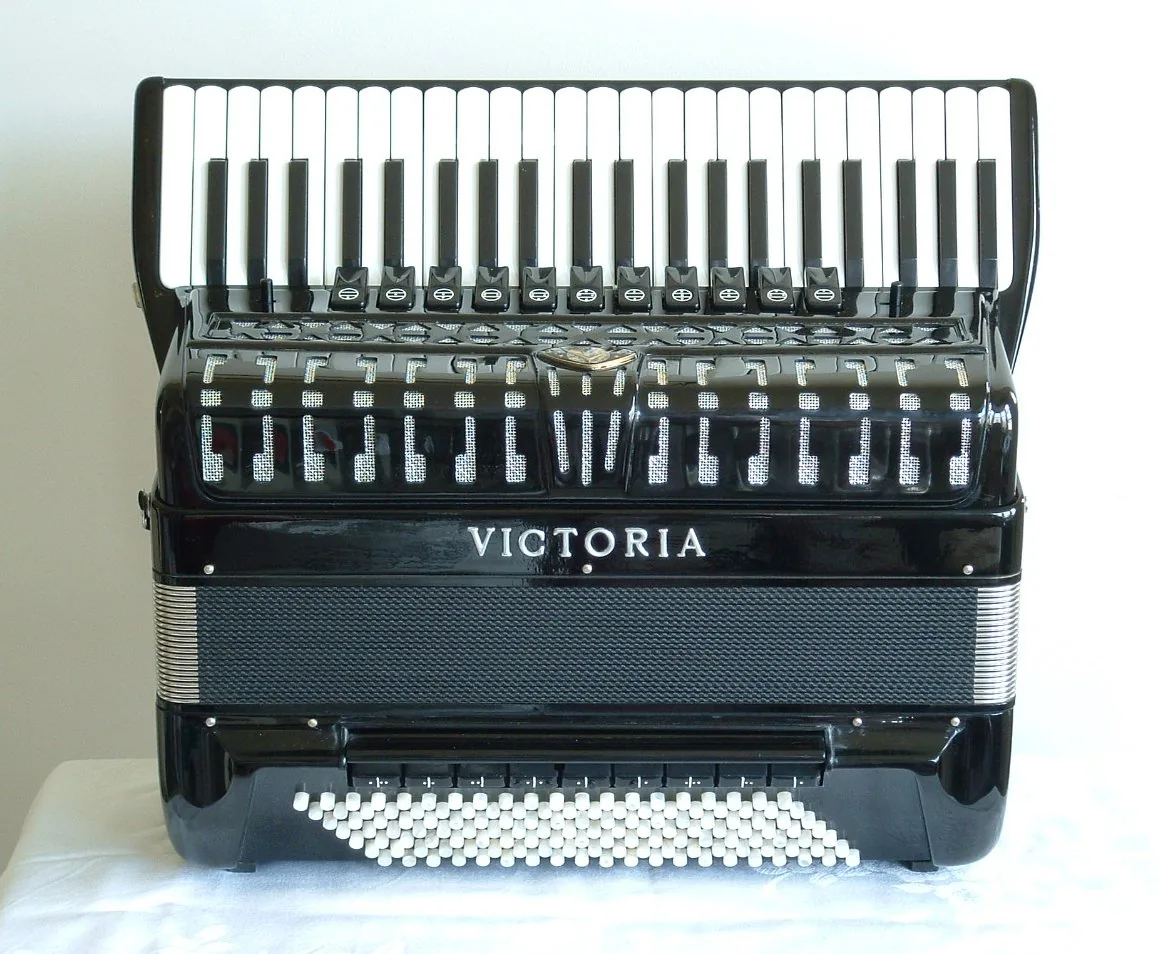
Chromatic accordions are more advanced instruments that can play in every key thanks to a unisonoric system. They come in two main forms: piano accordions and chromatic button accordions.
Piano chromatic accordions are popular with professional musicians and offer a wide range of notes. They have a piano-style keyboard that allows melodies to be played smoothly and precisely. Because the keys are arranged like those of a piano, pianists can become familiar with the instrument more easily.
Chromatic button accordions, meanwhile, are popular with traditional musicians and folk music enthusiasts. Their buttons are often arranged diagonally, providing considerable flexibility when playing notes. These accordions are often used in genres such as Celtic music, folk music and tango.
In conclusion, chromatic accordions are versatile instruments that let musicians play in every key. Whether they have piano keys or buttons, they offer a rich and varied range of sounds. Chromatic accordions are enjoyed by musicians around the world, both professionally and recreationally.
Concert accordions: features and uses
Concert accordions are designed for musicians who want to explore a wide range of musical possibilities. With an accompaniment keyboard that provides preset chords, they offer a great variety of sounds.
| Features | Uses |
|---|---|
| Accompaniment keyboard with preset chords | Allows complex, harmonious accompaniment |
| Number of registers | Allows exploration of different sounds and textures |
| Wide range | Suited to performing a variety of musical works |
Concert accordions are highly valued by professional musicians because they offer greater flexibility and expressiveness. Their accompaniment keyboard makes it possible to add complex, harmonious chords to melodies, creating a richer and more varied sound.
“Concert accordions are instruments of choice for composers and performers seeking to push the boundaries of their musical creativity.” — Renowned master accordionist
Example of a famous piece played on a concert accordion
- “La Valse d’Amélie” by Yann Tiersen
In conclusion, concert accordions have features that allow musicians to express themselves in more complex and varied ways. Their wide range of sounds and musical flexibility make them highly valued in professional music.
Folk and jazz accordions: features and uses
Besides the types already mentioned, some accordions are associated with particular musical traditions, such as folk accordions used in traditional music and jazz accordions used in modern jazz.
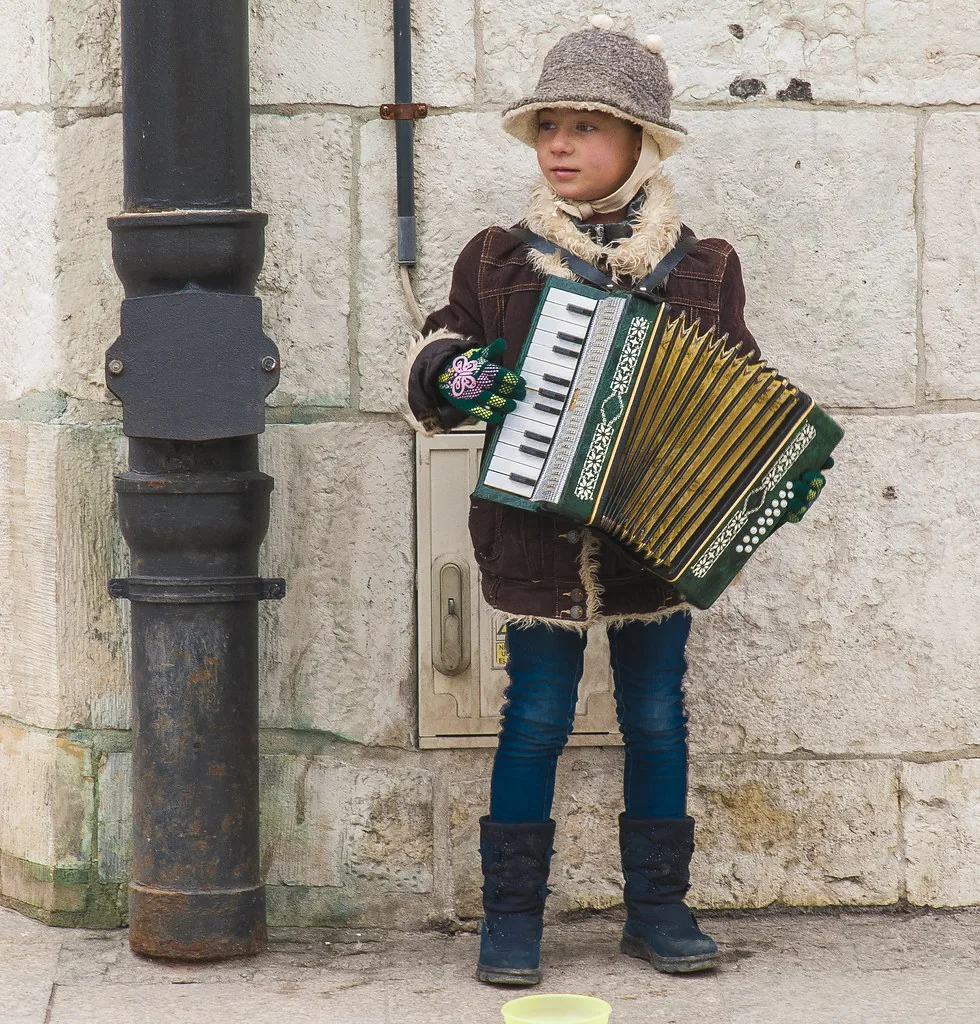
Folk accordions have developed in different parts of the world to accompany traditional dances and songs. They are often brightly colored, decorated with traditional patterns and carefully handmade. These accordions are used in folk genres including Celtic music, Latin American music and traditional Eastern European music.
Jazz accordions, meanwhile, have a distinct sound and style that make them particularly well suited to modern jazz. They are often lighter and more compact than other types of accordion, allowing musicians to move easily on stage. Jazz accordionists use particular techniques to create glissando, articulation and ornamentation effects, giving jazz distinctive sounds.
Example table: features of folk and jazz accordions
| Type of accordion | Features | Uses |
|---|---|---|
| Folk accordions | Decorated with traditional patterns Handmade Sounds suited to folk dances and songs |
Celtic music Latin American music Traditional Eastern European music |
| Jazz accordions | Lightweight and compact Glissando, articulation and ornamentation effects Sounds suited to modern jazz |
Modern jazz Jazz ensembles Jazz soloists |
In summary, folk and jazz accordions are associated with particular musical traditions. Folk accordions are used in traditional music and offer a wide variety of sounds suited to folk dances and songs around the world. Jazz accordions are lightweight and compact, with a distinctive sound that makes them well suited to modern jazz. They allow musicians to create particular effects and express their creativity in this dynamic genre.
In conclusion, accordions offer many musical possibilities through their different types, from diatonic and chromatic accordions to concert, folk and jazz accordions. Each type has its own features and uses, allowing musicians to explore a wide variety of musical genres.
The diatonic accordion, the original form of the instrument, consists of a small box with metal reeds and a bellows. Its five keys can each play two different chords depending on whether the bellows is pulled or pushed. The melodeon, a variant of the diatonic accordion, is used in genres such as Cajun, Quebecois and Irish music.
The chromatic accordion emerged in the nineteenth century thanks to technical advances. It uses a unisonoric system and can play in every key. There are two types of chromatic accordion: the piano accordion and the chromatic button accordion. Finally, the concert accordion is designed for musicians who want to express themselves in more complex and varied ways, thanks to an accompaniment keyboard with preset chords.
Diatonic, chromatic, concert, folk and jazz accordions therefore give musicians many ways to express themselves across musical genres. Each type has its own characteristics and can create a unique musical experience.
FAQ
What are the different types of accordion?
The different types of accordion are the diatonic accordion, the melodeon, the chromatic accordion and the concert accordion.
What are the features of a diatonic accordion?
A diatonic accordion consists of a small box fitted with metal reeds and a bellows. It has five keys, each of which can play two different chords depending on whether the bellows is pulled or pushed.
How is a diatonic accordion used?
The diatonic accordion is used in various musical genres, particularly Cajun music in Louisiana and music in Quebec and Ireland.
What are the features of chromatic accordions?
Chromatic accordions use a unisonoric system and can play in every key. There are two types of chromatic accordion: the piano accordion and the chromatic button accordion.
How are chromatic accordions used?
Chromatic accordions are used in various musical genres and offer more possibilities because they can play in every key.
What are the features of a concert accordion?
The concert accordion is designed for musicians who want to express themselves in more complex and varied ways. It has an accompaniment keyboard with preset chords, offering more musical possibilities.
How is a concert accordion used?
The concert accordion is used by musicians who want to play more complex and varied music. It therefore offers more musical possibilities.
What are the features of folk and jazz accordions?
Folk and jazz accordions have features suited to the musical genres in which they are used.
How are folk and jazz accordions used?
Folk accordions are used in traditional and folk music, while jazz accordions are used in jazz compositions and performances.
What distinguishes the different types of accordion?
Each type of accordion has its own features and uses, making it suited to different musical styles and musicians’ needs.