
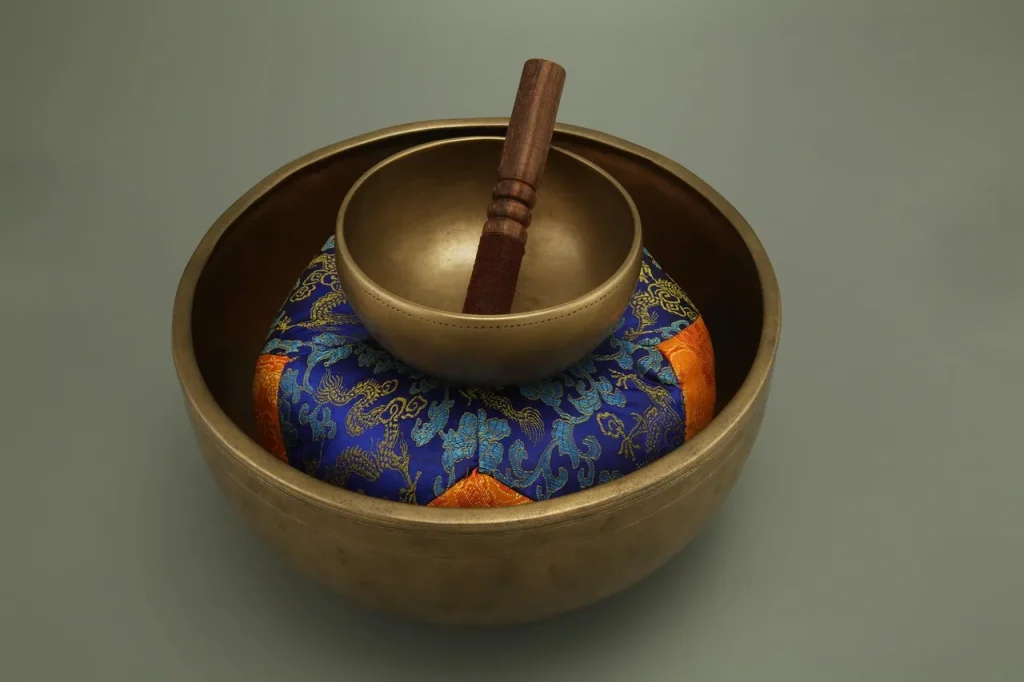
Let’s set the scene. Here, we define what a deep sound is and explain how size affects tone. The bowl’s width helps determine how it is used and the experience you seek.
Aim of this guide: to help you choose a bowl based on your practice, its appearance, and the sound you expect. No jargon, just practical guidelines.
We will cover three groups: small, medium, and large bowls. Larger diameters produce deeper sounds, useful for grounding and relaxation.
Size is not the only factor. Thickness, material, and playing technique also shape the note. These factors affect how comfortably you can hold the bowl, how far its sound carries, and how stable that sound is.
Coming up: size thresholds, example diameters, and practical advice for testing a singing bowl. These guidelines can help you choose with greater confidence.
Understanding the relationship between size, frequency, and resonance in singing bowls
A bowl’s size directly affects the pitch of its note and how long it resonates.
As the instrument gets wider, its frequency generally falls. Large Tibetan singing bowls (≥ 25 cm) offer low frequencies and long resonance, making them suitable for grounding and relaxation.
How size affects the fundamental note and resonance time
The relationship is straightforward: a larger diameter generally means a lower frequency. This creates enveloping bass tones and vibrations you can feel, even at a low volume.
Thickness and mass stabilize the vibration. A thicker wall can prolong resonance and strengthen the fundamental tone.
Low, middle, and high tones: what your ear actually hears
An instrument produces a fundamental tone and several overtones. These partials enrich the sound and explain why a single bowl can have a complex tone.
- Large bowls, ≥ 25 cm: lasting low tones and sound baths.
- Medium bowls, 15 to 24 cm: a balance suited to meditation and energy work.
- Small bowls, < 15 cm: distinct high tones, quick attacks, and purification rituals.
The composition and hand hammering can encourage natural overtones. Cast bowls sometimes have a flatter resonance.
Finally, technique matters: rubbing the rim in a circle brings out the fundamental, while striking emphasizes the attack. Listen to how the sound fades to judge the stability and quality of the vibration. For more technical detail, see tones and frequencies.
What Diameter Tibetan Singing Bowl Produces a Deep Sound?
Large bowls begin to produce vibrations you can feel in your body and throughout the surrounding space.
Key thresholds: aim for 25 cm or more for low tones and a truly deep vibration. At the same diameter, greater mass and thickness can strengthen the fundamental tone.
Thickness and weight: why they matter
A thicker wall stabilizes the sound as it fades and gives it more presence. A heavier instrument often produces a denser low tone and a steadier vibration.
Practical examples and uses
- 23 cm: already useful for working with the lower body and encouraging a sense of grounding.
- 25 to 27 cm: a useful balance of power and ease of handling for meditation and relaxation.
- 30 cm and above: an immersive sound for a room, broad projection, and deep sound baths.
Quality: look for hand-hammered bowls made from a traditional metal alloy if you want rich overtones without overwhelming the fundamental tone.
Test how long the sound lasts after a strike and how clear the low tones are. For buying advice and size guidelines, see our dedicated page: singing bowl sizes and guidelines.
Choosing a Tibetan singing bowl for your intended use
How you plan to use the bowl guides your choice: meditation, bodywork, or travel.
Meditation and deep relaxation: 20 to 30 cm and above
Recommendation: aim for 20 to 30 cm or more for enveloping low tones.
These bowls can support breathing exercises and create an immersive meditation experience.
Energy work and sessions on the body: 15 to 24 cm
Bowls measuring 15 to 24 cm offer a useful balance. They are easy to handle and position.
They suit practitioners who move the instrument around the chakras.
Travel and rituals: 10 to 15 cm
Small bowls are light and can be used to open or close a session.
They produce clear overtones and are convenient to carry.
“Match the size to your needs: portability, projection, and depth should work together.”
- Base your choice on how you will use the bowl (stationary practice, sound baths, or mobile sessions).
- Combine several sizes to create a changing soundscape.
- Test the combination of mallet and bowl size before buying.
| Use | Size range | Advantage | Practical tip |
|---|---|---|---|
| Immersive meditation | 20 to 30 cm and above | Enveloping low tones and long sustain | Choose a heavy bowl with thick walls |
| Bodywork | 15 to 24 cm | Easy to handle, with a balanced tone | Test the bowl while it rests on the skin |
| Travel and rituals | 10 to 15 cm | Clear sound and easy transport | Prioritize a light bowl |

To refine your choice, read our guide to choosing a Tibetan singing bowl and test several sizes in realistic conditions.
Size, chakras, and vibrational goals
Size affects how far the vibration travels and the energy center you may focus on while playing.
Large bowls (≥ 25 cm): these instruments are often used in practices focused on the lower chakras, particularly the root and sometimes the solar plexus. Their low sound supports a sense of grounding and physical stability.
Medium bowls (15 to 24 cm): these are especially suited to practices focused on the heart and throat chakras. Their balanced tone can support emotional openness and verbal expression.
Small bowls (< 15 cm): their higher frequencies are often associated with the upper chakras, such as the third eye and crown. They may be chosen for mental clarity and intuition.
Combining several sizes allows you to work gradually from lower to upper areas. Listen, notice where you feel the vibration, and adjust the Tibetan bowl’s position according to the area you want to focus on.
| Size | Energy center | Suggested use |
|---|---|---|
| ≥ 25 cm | Root, solar plexus | Grounding, sound baths |
| 15 to 24 cm | Heart, throat | Emotional balance, expression |
| < 15 cm | Third eye, crown | Clarity, concentration |
These associations are guidelines: let your ear and your own experience guide your choice.
Materials, alloy, and thickness: how they affect the sound
The metal composition directly affects the tone and richness of the overtones. The traditional seven-metal alloy (gold, silver, copper, tin, lead, iron, and mercury) is associated with a dense range of overtones. This variety can create steady projection and rich partials for meditation and bodywork.

Traditional alloy and rich overtones
Why the alloy matters: each metal contributes its own timbre. Together, they can produce a more complex sound than some modern compositions.
Hand hammered or cast: quality and authenticity
Hand-hammered bowls have visible marks and slight irregularities. These variations contribute to their overtones and give each piece a distinctive character.
Cast bowls are more regular and uniform. They can offer a steadier note, though sometimes with less depth and richness.
Thickness: power, stability, and sustain
A thicker wall can support the fundamental tone and help it last longer. At the same diameter, a thick-walled instrument may produce a firmer low tone and longer sustain.
To assess quality, compare two bowls of the same size but different thicknesses. Listen for a coherent sound: a lack of harshness and a balance between the fundamental and partials are useful signs of good composition and careful quality control.
Value for money: handcrafted pieces from India, Nepal, or Tibet often cost more, but the extra expense can bring greater durability, tuning stability, and a richer sound.
Guide: choosing the right note
Accessories that make a difference: mallets and playing technique
The mallet and your technique shape a bowl’s tone and sustain.
Types of mallet:
- Leather: a gentle, controlled, softer attack for a warm sound.
- Felt: a rounded tone and cushioned attack, ideal for an even sound.
- Striking mallet: bare or lightly covered wood for a gong-like projection.

Rubbing the rim or striking the bowl
Rubbing the rim in a circle keeps the wall moving continuously. This sustains the fundamental tone and prolongs the vibration.
Striking brings out the initial attack, short-lived sounds, and certain overtones. It can mark a transition or add energy to a session.
- Tip: match the hardness of the mallet to the bowl’s diameter to avoid overly strong high tones or a muffled sound.
- Control pressure and speed: pressing too hard changes the timbre, while too light a touch may fail to start the vibration.
- Vary the angle and striking point to change the overtones without losing the low tones.
Try the same instrument with several mallets: it is the best way to find a balance that suits your practice.
To explore the subject further and choose a suitable accessory, read our guide to choosing your mallet.
How to test and assess a bowl before buying
Before buying, learn to assess the sound and feel the vibrations so you know what to expect.
Listen to the resonance: note how long the sound lasts and how steady the dominant note remains. Check for beating or harsh tones that tire your ears.
Feel the vibrations: bring the instrument close to your body. If the vibration feels comfortable and calming, the bowl may suit your practice.
- Check the balance between the fundamental tone and the partials.
- Look for signs of craftsmanship: hammer marks and visible irregularities often indicate hand production.
- Try several mallets to hear how they affect the low tones.
Buying online: favor sellers who provide recordings or videos for each item. Look for detailed descriptions stating how the bowl was made (hammered or cast) and what guarantees apply.
Price and quality: a very low price with little information is a warning sign. Note your impressions and confirm that the instrument suits your intended use (meditation, bodywork, or ritual).

Common mistakes to avoid and signs of good value
The most common buying mistakes come from failing to listen closely, rather than overlooking the bowl’s appearance.
Be wary of offers that seem too cheap. Very low-quality pieces are often cast, harsh sounding, and fragile. A low price may conceal industrial production and an alloy of uncertain quality.
Consider hand-hammered bowls from India, Nepal, or Tibet. Visible irregularities and hammer marks can be positive signs of craftsmanship.
- Do not choose by appearance alone: test the sound.
- Ask for recordings and measurements (weight and approximate diameter).
- Compare several bowls to check that the fundamental tone is steady and the sound is not harsh.
“A fair price reflects the materials, labor, and care taken in selecting the bowl.”
| Criterion | Indicator | Advice |
|---|---|---|
| Origin | India/Nepal/Tibet | Favor hand hammering |
| Sound | Steady, without harshness | Test with several mallets |
| Service | Returns & advice | Choose a transparent seller |
In short: judge value for money by durability, richness of sound, and intended use. A good choice depends on careful listening as well as appearance.
Conclusion
The essentials: aim for large bowls (≥ 25 cm) for relaxation and grounding, 15 to 24 cm bowls for bodywork and the heart chakra, and small bowls for portability. Favor a bowl hammered by hand and made from a traditional alloy for rich overtones.
Match your choice to your needs and how you will use the bowl: sessions on the body, meditation, or rituals while traveling. Before buying, test the resonance, feel the vibration against the body, and check that the low tones are steady.
Practical tip: record each bowl’s size, weight, and composition so you can compare models. Every bowl is distinct: choose your mallet and technique carefully, and match your purchase to the sound you want and your budget.