
Introduction — This article takes a measured look at the effects of sound. It explains what is meant by Tibetan singing bowls: real benefits and limitations to help distinguish scientific evidence from cultural traditions.
Associated with Tibet, Nepal and South Asia, this instrument is handmade in family workshops. Today, it has a place in yoga studios, meditation centers and private homes.
Several studies report reduced stress, improved mood and sleep, and possible support in managing pain. These effects are generally complementary and may sometimes be related to the placebo effect.
Limitations — A bowl does not replace medical care. Some claims about chakras or purification stem from beliefs about energy that have not been scientifically validated.
For a documented overview, read a reference article on sound therapy and its effects.
– A clear distinction between evidence and beliefs.
– Artisanal origins and modern adoption.
– Plausible benefits: stress, mood, sleep and pain.
– No substitute for medicine; a measured approach is advisable.
Why Tibetan Singing Bowls Fascinate People in France Today
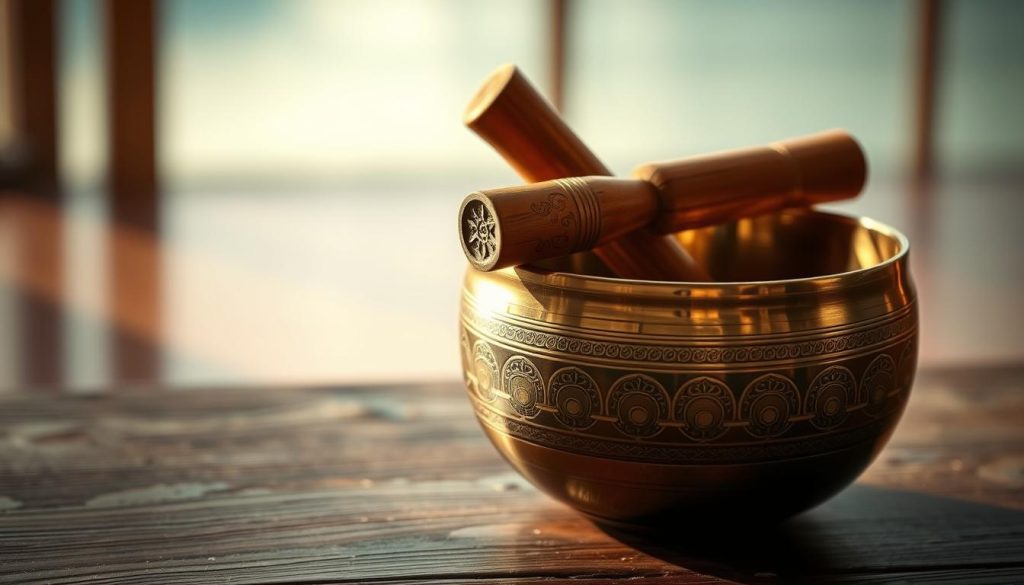
In many French studios and wellness centers, these instruments have become a key sensory feature. Their handcrafted appearance — a metal bowl resting on a cushion, with engraved decoration — first draws the eye. But the quality of their sounds and vibrations is what holds people’s attention.
The practice involves moving a mallet around the rim to produce a continuous sound. Users describe an immersive experience: vibrations they can feel, a lingering echo and a sense of calm. These effects encourage relaxation and help focus the mind during meditation.
Versatile bowls accompany yoga classes, wellness breaks and personal rituals. They are also used by vibrational therapy practitioners seeking physical and emotional relaxation.
This fascination blends Asian heritage with the modern self-care trend. The user’s intention, attentive listening and ease of use contribute to a subjective experience that many people seek.
To place this phenomenon in a broader cultural context, explore a critical view of how practices spread worldwide in this article.
Origins, Manufacture and Mechanism of Tibetan Singing Bowls
South Asian craftsmanship continues to shape the distinctive sound of these instruments.
Alloys and craftsmanship
Workshops in Tibet, Nepal, India and Japan have produced bowls for centuries. Many use alloys containing up to seven metals. The exact composition often remains a family secret. Casting followed by hot hammering gives the rim visible irregularities.

Handmade or machine-made
Hand-hammered bowls have a lively tone shaped by irregularities in the rim. Machine-made pieces are more uniform and are often decorated.
Vibrations, sound and resonance
Rubbing the rim produces a continuous sound; striking it produces an initial tone followed by sustained harmonic resonance. The bowl’s shape, thickness and metals determine its harmonics and how long it resonates.
Practical use
Vary the force, rubbing speed and points of impact to discover the bowl’s distinctive sound. Vibrations travel through the air and through contact, creating sensations that some people find soothing.
Benefits Supported by Research: What Can Reasonably Be Expected
Several controlled studies suggest that sound meditation has measurable effects on tension and mood. Their protocols involve dozens of participants and include measurements before and after a session.
Stress, anxiety and tension
Research conducted at the University of San Diego in 2016 with 62 people found a significant reduction in tension after a singing bowl session. A 2014 analysis involving 51 people reported a similar effect compared with a session without an instrument.
Sleep and relaxation
Listening to relaxing sounds for a few minutes before bed may help people fall asleep and reduce nighttime awakenings. This simple ritual can help steady breathing and lower alertness.
Mood, well-being and pain
Studies indicate an immediate improvement in mood after a session. Clinical literature on music also reports reduced pain, including in a 2008 German study, possibly through the release of endorphins and a shift in attention.
Points to bear in mind: small samples, varied protocols and the possibility of a placebo effect. Sound therapy is a complementary practice, not a medical treatment.
- Practical tip: include gentle, regular use in your meditation practice.
Benefits Often Claimed but Still Debated
Many users associate metal-alloy bowls with balancing energy centers. This idea comes mainly from traditions and personal accounts, without strong scientific validation.
Balancing chakras and harmonizing energy
Some practitioners associate Tibetan singing bowls with individual chakras in an effort to achieve energetic alignment. These associations are cultural; modern research has not demonstrated the objective existence of chakras.
Purifying a Space and Offering Protection
Purification involves sounding a small bowl in the four corners of a room. It is a symbolic ritual that may change how those present perceive the atmosphere, without evidence of a measurable effect on the physical environment.
Immune System, Addiction and Meditative State: What Personal Experience Suggests
Personal accounts mention improved immunity or support with addiction, but these are subjective observations. Reduced stress could indirectly contribute to such changes.
Practical tip: if these uses fit your practice, record your sessions in a journal to track your emotional state and physical sensations. This can help distinguish coincidences from useful patterns.
Limitations, Possible Adverse Effects and Contraindications
Sound practices may help with relaxation, but they are not a cure for serious illnesses. They do not replace medical care for conditions such as cancer or Alzheimer’s disease.
For some people, excessive or overly intense use causes overstimulation.
Overstimulation and symptoms
Reported symptoms include headaches, agitation, sleep problems, increased fatigue and confusion. If these signs appear, stop using the bowl and monitor how the symptoms develop.
When to exercise caution
Precautions: pregnancy, a pacemaker, neurological conditions sensitive to stimuli (epilepsy and some autism spectrum conditions), mood disorders or sensory hypersensitivity.
If you are unsure or have a pre-existing medical condition, consult a healthcare professional before adding these practices to your routine.
| Risk | Possible symptoms | Practical advice |
|---|---|---|
| Sound overstimulation | Headaches, nervousness, insomnia | Reduce the volume and duration; take a break and reassess |
| Medical concerns | Issues involving a pacemaker, neurological reactions | Consult a doctor before use |
| Emotional reactions | Agitation, worsening mood symptoms | Increase use gradually; seek professional support if needed |
- Reminder: a Tibetan singing bowl is a complementary aid, not a treatment.
- Use it with care: keep the volume moderate, sessions brief and surroundings calm.
- If symptoms persist, consult a healthcare professional or your doctor.
How to Use a Singing Bowl to Get the Most from It
Adopt a short routine and build up gradually. Start in a quiet place, sitting or lying down, and pay attention to how your body responds.
Getting started: duration, frequency and intensity
Starting routine: 5 to 10 minutes, 3 to 4 times a week. Close your eyes, breathe slowly and note how your body and mind feel after each session.
Key techniques
Alternate gentle strikes, which produce a clear initial tone, with the continuous sound made by moving the mallet around the rim to vary the vibrations. To explore the sound further, pour a few centimeters of water into the bowl and observe the ripples.
Sound massage involves placing the bowl near the body, without contact if you are a beginner. Proceed gradually and keep the volume moderate.
A short bedtime ritual: play the singing bowl for 3 to 5 minutes, breathe slowly through your nose and focus on the sounds to help you fall asleep.
“Quality matters more than quantity: shorten the session as soon as the sound becomes uncomfortable.”
| Goal | Recommended duration | Practical advice |
|---|---|---|
| Getting started | 5 to 10 minutes | Moderate volume, eyes closed |
| Relaxation before sleep | 3 to 5 minutes | Slow breathing, attention to the tone |
| Sound massage | 10 to 20 minutes | Keep the bowl nearby without contact; adjust according to your reactions |
If you have questions about safety or contraindications, read the dedicated page on contraindications.
Tibetan Singing Bowls: Real Benefits and Limitations — Pros and Cons at a Glance
Here is a clear, practical summary to help weigh the benefits and precautions associated with using a singing bowl.
Main advantages:
- Relaxation and stress management: a few minutes are often enough to ease tension and anxiety.
- Mood support: many people report feeling better emotionally after a session.
- Support with pain: relaxation may improve pain tolerance for some people.
Points to watch:
- Use the bowl in moderation: start with short sessions and adjust their length according to your body’s reactions.
- Possible overstimulation: shorten sessions if headaches, sleep problems or agitation occur.
- Special circumstances: pregnancy, medical devices or chronic illnesses call for professional advice.
In short, a Tibetan singing bowl may offer everyday benefits when used with care. Consider it a support for well-being, not a substitute for medical treatment.

| Aspect | Observed benefits | Practical advice |
|---|---|---|
| Relaxation | Rapid reduction in tension | 3 to 10 minutes at moderate volume |
| Mood | Temporary improvement | Include it in a regular routine |
| Pain | Possible relief | Use alongside medical care |
| Safety | Risk of overstimulation | Stop if uncomfortable; seek advice if necessary |
Conclusion
This article shows that the available evidence points to effects on stress, tension and mood during sound meditation sessions.
A Tibetan singing bowl may help people seeking relaxation feel calmer quickly. Its vibrations can encourage present-moment awareness and a sense of connection to the body.
Claims about energy are matters of personal experience. To learn more about frequencies used in practice, read about sacred frequencies.
In summary: practice in moderation, pay attention to your reactions and consult a professional if health problems persist. This article encourages using the instrument to support well-being, rather than as a sole therapy.