
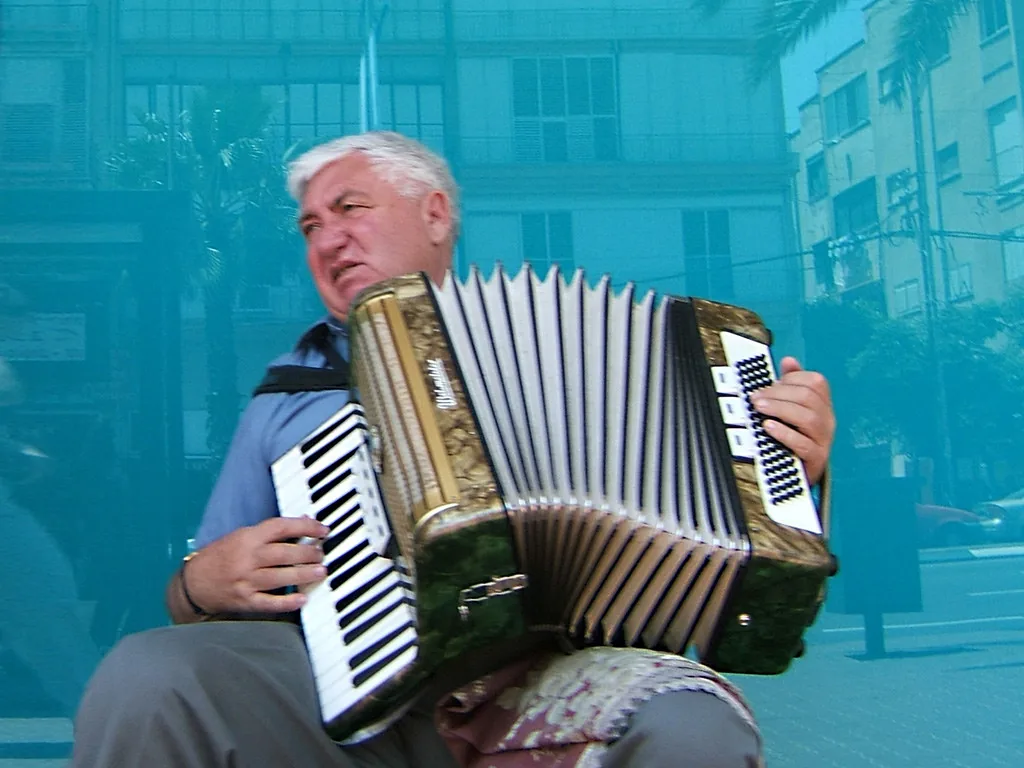
André Verchuren, born on December 28, 1920, is an iconic figure in French music. Nicknamed the king of musette, he touched the hearts of millions with his music. Over his career, he sold more than 70 million records, making him the best-selling accordionist of all time.
He died on July 10, 2013, at the age of 92, after suffering a sudden cardiac arrest while having dinner. Behind this legendary artist was a rich family life filled with joys and challenges.
In this article, we explore André’s personal life, his wives and his sons. We also look at his musical legacy and the recognition he received after his death. His contribution to 20th-century popular culture is undeniable and deserves to be told.
Family origins and early influences
Music ran through André Verchuren’s life, shaped by the influence of his ancestors. His grandfather, Petrus Verschuere, born in 1865, was a talented accordionist and a jewelry seller. He left Belgium to work in the mines and settled in Pont-à-Vendin, where he passed on his passion for music.
André’s father, Raymond Verschuere, born in 1894, also followed in his father’s footsteps. A professional accordionist, he met Marie-Clémence Massez, a seamstress from Uny-Saint-Georges, while visiting an uncle in Neuilly-sous-Clermont. That meeting proved decisive: they married and settled in the Oise region.
André began learning the accordion at the age of 4 under his father’s watchful eye. His mother, Marie-Clémence, strengthened this family tradition by encouraging him and accompanying him to his first performances. At just 6 years old, he earned his first fee playing at a dance in Ponchon, marking the start of his musical career.
In 1936, at the age of 16, he won the prestigious Soignies international accordion competition. Playing the overture to Les Saltimbanques while standing, he impressed the judges and distinguished himself by boldly defying the conventions of the time.
These early years were crucial to the development of his distinctive style. André combined the tradition of the bal musette with a modern stage presence that would characterize his entire career. The passion for music passed down by his ancestors became the foundation of his success.
André Verchuren’s family: wife, children and private life
André Verchuren’s personal life was marked by significant relationships and tragic events. Each stage of his life shaped his path, both personally and professionally.
André Verchuren’s wives and major life events
André Verchuren first married Mireille Roux in 1946. Although their marriage began with hope, it ended in divorce in 1950. For the accordionist, it was a time of youth and learning.
Later, in 1953, he married Micheline Butot. This second marriage was a defining part of his life. Micheline became the love of his life and stood by him during the early years of his flourishing musical career.
The couple had two sons. Their eldest, Harry Williams, was named in honor of a paratrooper his father had helped during the war. Harry chose a career in music as a producer, carrying on the family’s musical legacy. Their younger son, André Verchuren Junior, also found his own path, different from his father’s.
The children: passing on a musical legacy
Tragedy struck André’s family on July 10, 1974. Micheline Butot died in a car accident in Normandy while André was driving. Although he suffered only minor injuries, the event had lasting consequences for his life.
André received a three-month suspended prison sentence for involuntary manslaughter. The tragedy profoundly affected his private life and left him with a grief that never faded. He never remarried, remaining devoted to the memory of his wife.
Despite these hardships, André Verchuren’s musical legacy lives on through his sons. Harry, as a producer, and André Junior each continue in their own way to keep this passion for music alive. “Music is a universal language that unites generations,” he often said.
André Verchuren’s musical legacy and recognition
André Verchuren’s career represents an extraordinary success in the world of music. His influence on bal musette left its mark on generations. From the beginning, he captivated audiences with his exceptional talent on the accordion.
In 1950, he appeared on the Radio Luxembourg program Swing contre musette. This pivotal moment brought him to the attention of a wider audience. In a contest at the Moulin-Rouge, he won the votes of ten million listeners. That victory opened the door to the Decca record label and marked the beginning of his rapid rise to fame.
An exceptional career devoted to bal musette
André Verchuren brought bal musette to national prominence. In 1956, he became the first accordionist to perform at the Olympia, a milestone in his career. He also hosted programs on RTL for seventeen years and on Europe 1 for thirteen years, reaching millions of listeners.
Over his career, he gave an average of 150 shows a year. That adds up to more than 10,000 performances before 40 million spectators around the world. His demanding schedule reflected his passion for music and his dedication to his audience.
Awards, honors and cultural legacy
André Verchuren received numerous honors during his lifetime. He was made an Officer of the Legion of Honor and a Commander of the National Order of Merit. He was also awarded the Military Medal and the Volunteer Combatant’s Cross of the Resistance. These awards reflect his achievements and the recognition he received.
He died on July 10, 2013, leaving behind an invaluable musical legacy. His songs, such as “Les Fiancés d’Auvergne,” continue to get people of all generations dancing. André Verchuren is remembered as the king of bal musette, and his influence endures in the hearts of music lovers.
His funeral brought together figures from the music world, including Yvette Horner, as well as hundreds of members of the public. Their presence showed how much he was loved. His remarkable career remains a source of inspiration for future accordionists and musicians.
Conclusion
André Verchuren made his mark on the music world through his extraordinary career. His life, devoted to the accordion and bal musette, took that direction when he was just 4 years old. Every note he played reflected his deep passion for performing.
His family played a crucial role in his life, influencing his art and his character. The musical legacy passed down from generation to generation lives on through his sons.
He died on July 10, 2013, at the age of 92, after suffering a cardiac arrest. Buried in Bourillon Cemetery in Chantilly, he rests beside his wife Micheline. His famous remark, “As soon as I put on the accordion straps, I become a different man,” captures the passion that drove him.
His success, with more than 70 million records sold, speaks to his lasting influence on French popular culture. The accordion continues to sound at dances, keeping his memory alive.