

The iconic song Les fiancés d’Auvergne is accordionist André Verchuren‘s masterpiece. Released in 1961 and written by Guy Favereau, it left its mark on the golden age of musette music, when the style captured the hearts of French audiences. With more than 50 million records sold, Verchuren got millions of couples dancing around the world.
The song tells the moving story of a young man who leaves his native Auvergne to find work in the city. He leaves his heart behind, a symbol of his attachment to home. Its lyrics explore enduring love and the courage needed to build a future.
In this article, we explore the song’s poetic world through its lyrics and the social and historical context of its success. Its melody still resonates today.
1. Introducing “Les fiancés d’Auvergne” and its musical context
Les fiancés d’Auvergne is a symbol of its era and embodies the spirit of French popular music. It was performed by accordion master André Verchuren, whose remarkable career touched generations.
Affectionately known as “Verchu,” André Verchuren captivated audiences with his exceptional talent. Over his 85-year career, he recorded 775 albums. His performances took him seven million kilometers by car and one million by plane, a measure of his extraordinary success.
Released in 1961, the song became Verchuren’s biggest hit. It captures the golden age of musette music, a period lasting from 1955 to 1975. Popular dances were central to musical culture then, with the accordion taking pride of place.
Jean-Claude Petit, chair of the Sacem board of directors, paid tribute to Verchuren, saying:
“The popular dance was, and remains, an essential way for great songs to reach the public. Through his accordion, André Verchuren was its unmistakable symbol.”
The lyrics, written by Guy Favereau, tell of a man who leaves his region for the big city while his heart remains in Auvergne. Rooted in everyday French life, the story evokes the challenges of city living and the hope of returning home. The song movingly reflects the hopes and struggles of its time.
André Verchuren, who died in 2013, left a lasting legacy in French music. His work continues to influence artists and move listeners, reminding us of music’s place in our lives.
To learn more about this iconic song, see this article about Les fiancés d’Auvergne.
2. Lyrics of “Les fiancés d’Auvergne”: What is the song about?
The song explores the emotions of being far from home. In the first verse, the narrator expresses his anguish after leaving his native region. He has left his heart in his beautiful Auvergne, among woods, mountains, valleys and flowers. Every day, he thinks of the woman waiting for him. Their wedding, planned for the following spring, becomes a symbol of hope and renewal.
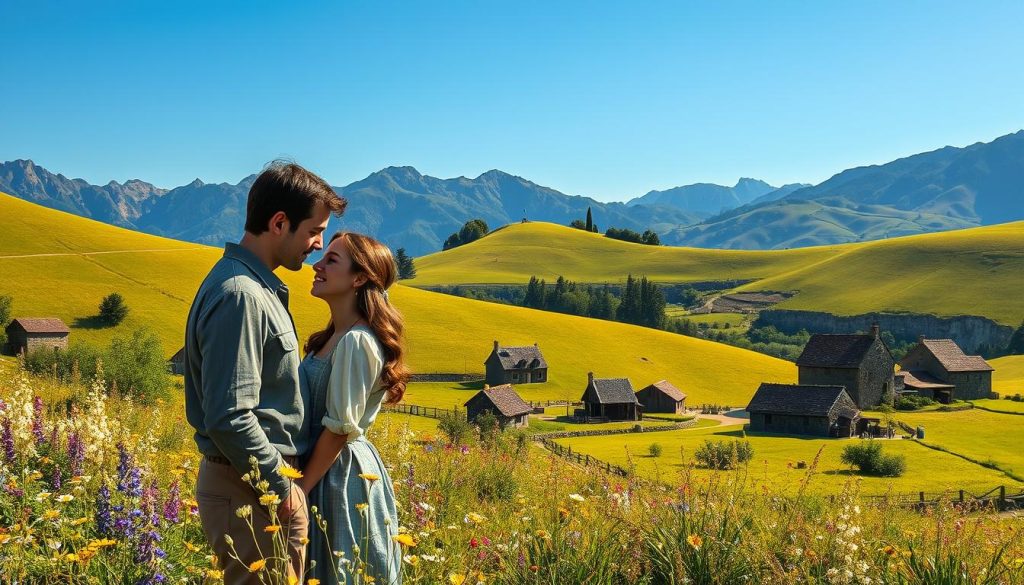
The second verse reveals the couple’s difficult reality: hope alone is not enough to live on. The narrator speaks of bearing his share of hardship and says that he set off without knowing where life would take him. Making a life far from home is not easy. It takes courage and determination to find a place in the big city. This passage highlights the strength of character needed to build a home.
In the third verse, the narrator feels the distance separating him from his beloved. He thinks of her every day and counts the time until his long-awaited return. The emotion of that wait makes the pain of separation tangible.
The fourth verse addresses doubts about faithfulness. His fiancée may believe that his heart is fickle. Yet he insists that, of all the women he has seen, his fiancée is the most beautiful. The passage underscores the depth of his love and his commitment to her.
Finally, in the fifth verse, he reveals that he left his heart in his beloved’s eyes. He dreams of returning to beautiful Auvergne with her to find tenderness and happiness there. The song ends on a hopeful note: he wants them to spend the rest of their lives together where their love began.
For a closer look at this iconic song, see this article about Les fiancés d’Auvergne.
3. Themes and deeper meanings
The song explores a range of themes that resonate with listeners. Attachment to one’s homeland, represented by Auvergne, is central to it. Its mountains, woods, valleys and flowers evoke a landscape dear to the narrator’s heart.
3.1. Attachment to Auvergne’s land, mountains, woods, valleys and flowers
The narrator’s deep attachment to his homeland is palpable. Descriptions of the Auvergne landscape bring to life what he has left behind. Each part of the natural world becomes a symbol of his identity and roots.
3.2. Faithful love and the promise of return
Faithful love runs through the entire song. Despite the distance, the narrator keeps his heart for his fiancée. His promise to return in spring embodies hope and renewal. That date gives the lovers something to look forward to.
3.3. Courage, determination and sacrifice in building a future
Courage and determination are essential for anyone who must leave their beloved homeland. Sacrifices are unavoidable, but the desire to build a better future gives them purpose. This search for success reflects the challenges many young people face.
3.4. The social and historical context of internal migration in France
The song belongs to the era of internal migration in France during the Trente Glorieuses, the decades of rapid postwar growth. Many young people left their regions to seek work in cities. Shared by thousands of French people, this experience echoes the sacrifices made to build a better life.
By exploring universal themes, the song remains relevant today. It reminds us of the importance of our roots and the bonds we maintain, even across great distances.
4. Conclusion
André Verchuren’s iconic hit continues to resonate across generations. Les fiancés d’Auvergne evokes deep attachment to beautiful Auvergne, its woods and valleys, alongside faithful love and the courage needed to face the hardships of life.
Reflecting an era marked by internal migration, the song shows how important musette music was in everyday French life. André Verchuren and Guy Favereau created a timeless work that still moves new listeners today.
Listen to the song again with fresh ears to discover the richness of its lyrics. To learn more about French popular music, explore other articles on the subject.
The universal message of “Les fiancés d’Auvergne”—love, sacrifice and hope for a better future—continues to touch hearts over time.