
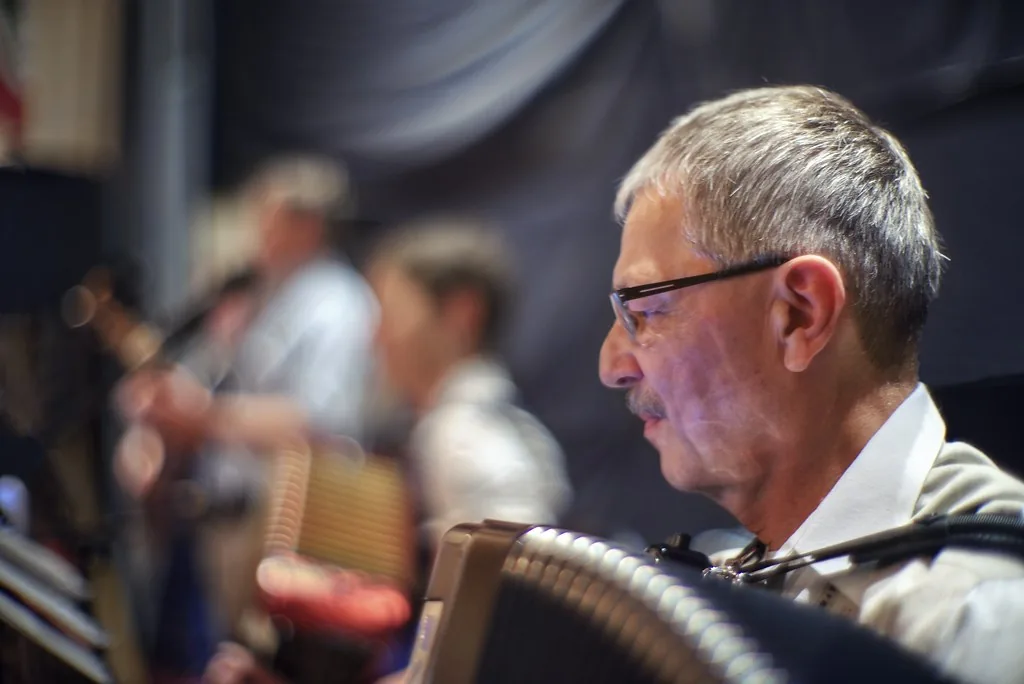
André Verchuren, nicknamed “Verchu,” is an iconic figure in French music. Born on December 28, 1920, he revolutionized the musette dance hall. This accordionist sold more than 70 million records during his extraordinary career.
His musical journey began in childhood. At just six years old, he was already playing at dances and captivating audiences with his talent. Verchuren made his mark in the 1950s and 1960s, becoming the king of musette. His unparalleled success made him a living legend.
Alongside his musical career, he was a popular radio host for thirty years. His musical legacy endures, and his signature piece remains essential listening. Discover the fascinating world of an artist whose influence continues to inspire many musicians.
André Verchuren’s origins and youth: the beginnings of a legendary accordionist
Born into a family of accordionists, André Verchuren grew up surrounded by music. He was born on December 28, 1920, in Neuilly-sous-Clermont, in the Oise department of France. His family came from Knesselare, Belgium, where his grandfather, Petrus Verschuere, was an accordionist and jewelry seller.
Petrus moved to Pas-de-Calais to work in the mines, laying the foundations of a musical dynasty. His son, Raymond Verschuere, born in 1894, followed in his footsteps and became a professional accordionist. Raymond settled in Neuilly-sous-Clermont and married Marie-Clémence Massez, a seamstress. André was born to the couple.
Young André began playing the accordion at the age of four under his father’s guidance. At six, he earned his first fee by playing at a dance in Ponchon, accompanied by his mother on drums. This early experience became a springboard for his musical career.
In 1936, at just sixteen, he won the prestigious international accordion competition in Soignies. He played the overture to Les Saltimbanques standing up, defying the conventions of the time. King Leopold III of Belgium presented him with the trophy, marking a turning point in his life.
That same year, he took part in the International Accordion Competition at the Moulin de la Galette in Paris, where he placed eighth. These early successes showed his exceptional talent and heralded a career that would make him the king of musette.
These experiences and his family’s musical heritage helped earn him the title “king of musette,” which he proudly carried throughout his life.
Heroic service during the Second World War
During the Second World War, the young and daring André Verchuren chose to fight for freedom by joining the Resistance. He risked his life to help downed Allied airmen hide in his region. This act of bravery marked the beginning of a heroic journey.
Resistance and aid to Allied airmen
Verchuren did not hesitate to stand up to the occupying forces. By hiding airmen, he showed exceptional courage and a remarkable determination to protect those fighting for freedom.
Arrest, torture and deportation to Dachau
In June 1944, his commitment came at a heavy cost. After being denounced, he was arrested by the Gestapo and tortured before being deported to Dachau aboard the notorious “Death Train” on July 2, 1944.
At Dachau, he was assigned to the crematorium ovens. On July 14, 1944, he defied the SS by singing La Marseillaise with his fellow prisoners. This act of defiance marked his imprisonment.
Survival and return to music after the war
After several months of horror, he was transferred to Neckarelz, a subcamp of KL Natzweiler. After his release, rehabilitating his hands took years. His fingers, damaged by the ordeal, required extensive work to regain their agility.
His heroism was recognized by American President Dwight D. Eisenhower, who sent him a certificate of appreciation. In France, he received prestigious honors, including the Legion of Honor and the Military Medal.
| Honors | Year |
|---|---|
| Legion of Honor (Knight) | 1986 |
| Legion of Honor (Officer) | 1997 |
| Military Medal | Not specified |
| Commander of the National Order of Merit | 2006 |
This painful wartime experience shaped André Verchuren’s character. His renewed passion for music after surviving it marked the start of a new chapter in his career.
André Verchuren’s “Au plaisir des bois”: the history and secrets of his extraordinary career
André Verchuren’s career took a decisive turn in 1950. Entered by his colleague Tony Murena in the program Swing contre musette on Radio Luxembourg, he won over ten million listeners. This contest at the Moulin-Rouge launched his national career and brought him to prominence on the French music scene.
The start of a national career thanks to Swing contre musette
This landmark program pitted musette against jazz. The decisive moment led “Verchu” to sign with Decca through Louis Merlin. The success paved the way for years of triumph and established him as an essential figure in French music.
Phenomenal success: record sales and gala tours
André Verchuren sold more than 70 million records during his career. With 777 albums recorded and more than ten thousand gala performances before 40 million spectators, he set impressive records. His innovative “dance hall music hall” format revolutionized dances and enabled him to give an average of 150 gala performances a year.
An extensive discography and notable collaborations
Among his signature pieces is “Les Fiancés d’Auvergne.” It topped the sales charts for eleven months and sold more than ten million copies. His discography also includes hits such as “Le Petit Chapeau tyrolien” and “Ah ! si j’étais resté célibataire,” reflecting his versatility and talent.
Honors, recognition and musical legacy
Over the years, Verchuren received numerous awards, including an Académie Charles-Cros prize and Sacem’s grand prize for popular instrumental music. His musical legacy endures: he influences many artists and holds a place in the history of French music.
Personal life and final days
In his personal life, André married twice, first to Mireille Roux and then to Micheline Butot. He had two sons, Harry Williams and André Verchuren Junior. Micheline died in a car accident in 1974. André Verchuren died on July 10, 2013, at the age of 92, leaving behind an invaluable musical legacy.
His funeral took place on July 17, 2013, at the Church of Notre-Dame-de-l’Assomption in Chantilly. His outlook on life is captured in this famous quote:
“Dances, music, the road: they are all drugs to me.”
Conclusion: André Verchuren’s enduring legacy in French music
André Verchuren’s musical legacy continues to resonate across generations. With more than 70 million albums sold and 777 recordings, he is the most prolific accordionist in history. His “dance hall music hall” format transformed France’s musette dance scene and inspired many artists.
His extraordinary career spanned several decades. It began when he was six and included a concert in 2007 celebrating his 80 years on stage. Signature pieces such as “Les Fiancés d’Auvergne” continue to delight audiences and testify to his passion for music.
Verchuren, awarded the Legion of Honor and the National Order of Merit, left an invaluable legacy. He remains a timeless figure who devoted his life to music and his audience.