
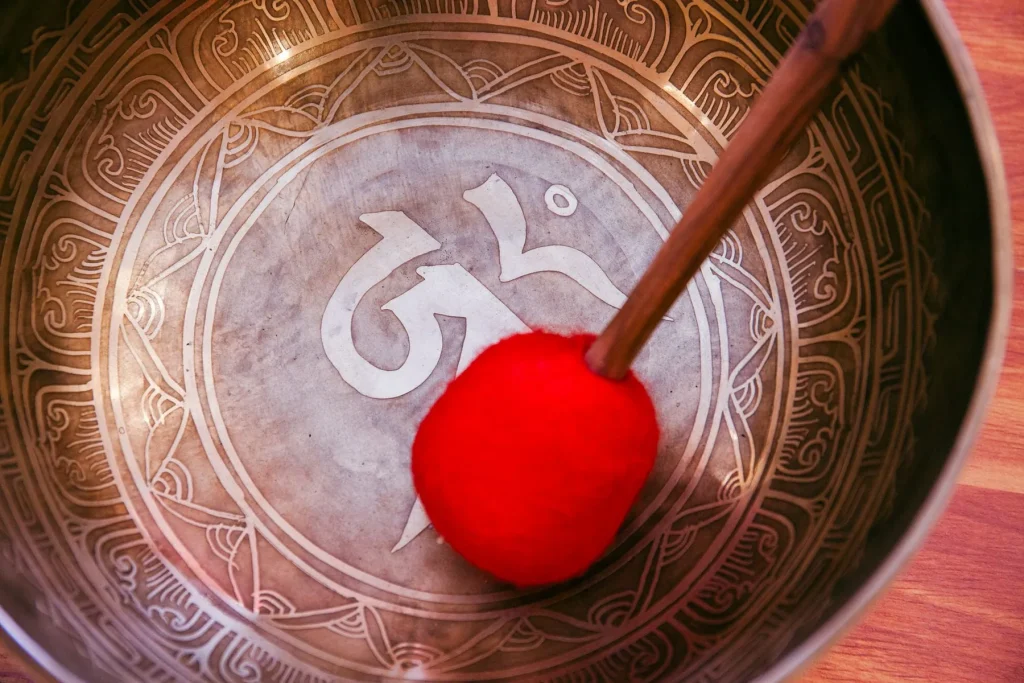
This article explains how combining singing bowls and Reiki may support well-being and health.
This Japanese energy practice aims to bring body and mind together through “universal energy.” It is often performed by placing the hands on or above a person to encourage harmony and relaxation.
These Himalayan instruments, made from a metal alloy, produce rich harmonics. Singing bowls are used in meditation and sound therapy to reduce stress.
This guide offers practical pointers, session examples, and precautions for use in France. The approach remains complementary: it supports natural processes without replacing medical care.
Here you will find guidance on creating a calm setting for a session, assessing reported benefits—relaxation, grounding, and greater self-awareness—and getting started.
To learn more about how sessions work and how sound can be combined with hands-on care, see this practical guide.
Definitions and origins: from Tibet to Japan, traditions and life energy
The roots of energy healing bring together Japanese accounts and Himalayan traditions, each with its own view of maintaining balance.
Reiki: Rei and Ki, the Usui lineage
Rei means “universal,” while Ki refers to life energy. Developed in the early twentieth century by Mikao Usui and later structured by Chujiro Hayashi, this system is passed on through initiation. Its approach is holistic: the practitioner channels a force believed to support the recipient’s capacity for self-regulation.
Singing bowls: Himalayan culture and metal alloys
The bowls come from the Himalayan region, including Tibet, Nepal, and India. They are fashioned from an alloy of several metals, often said to number seven, and produce rich harmonics when rubbed or struck.
Life force, vibrations, and controversy
The concept of Qi or Ki illustrates a point of connection: sound and energy are used to encourage breathing, awareness, and relaxation. However, these concepts have not been validated by biomedical research and remain outside conventional science.
For a historical overview and source material, see texts about Usui.
How sessions work: hands, sounds, and vibrations for well-being
A session combines hand positions with sound to support a sense of balance. It has two distinct but complementary elements, which the practitioner adapts to the person’s needs.
Reiki in practice
A session takes place on a treatment table, with the person remaining fully clothed. After a welcome and a discussion of their needs, the practitioner places their hands on or above about twenty areas of the body.
Each position generally lasts 2 to 4 minutes. A full session lasts 30 to 90 minutes. Trained professionals sometimes offer remote sessions.
Singing bowl therapy
The participant lies down. Depending on the aim, bowls may be placed on the body, positioned around it, or distributed throughout the room.
The practitioner strikes a singing bowl with a mallet or rubs the mallet around its rim to create harmonics and an enveloping field of sound and vibration. The intensity increases gradually and remains moderate for the person’s comfort.

| Element | Duration | Purpose |
|---|---|---|
| Hand positions | 2 to 4 minutes per area | Channel energy to encourage relaxation |
| Full session | 30 to 90 minutes | Promote calm and support natural processes |
| Use of bowls | Variable duration, gradually increasing intensity | Create vibrations and a field of sound |
The practitioner’s role: listen, adapt continuously, and respect the person’s pace. For a detailed procedure, see this practical guide.
Tibetan singing bowls and Reiki: complementary practices
Starting with a short sound massage can encourage grounding and a greater sense of presence.
Combining the practices in a session
There are three common points at which to combine them.
- Before: prepare the person and invite them to listen through a 10-to-15-minute sound massage.
- During: use sound gently to help the person let go and remain relaxed.
- After: encourage grounding, help the experience settle, and support a gradual return to ordinary activity.
The interplay of sound, vibration, and Ki
Vibrations create a sound environment that can make breathing and relaxation easier. They are used to bring mind and body together and encourage a greater sense of balance.
“A carefully controlled sound environment may reduce stress and encourage a sense of alignment.”
The practitioner’s role and the person’s experience
The practitioner leads the session with a clear intention. They adjust the volume and placement of the bowls to suit the person’s sensitivity.
Listening and adapting throughout are essential to a positive experience.
Example procedures and variations
A typical procedure begins with 10 to 15 minutes of sound massage focused on the solar plexus and lower abdomen, followed by 30 to 45 minutes of hands-on or hands-above-body work on priority areas.
Variations include using low tones for grounding before focusing the hand positions on the head and shoulders, or starting with hands-on work and finishing with a sustained layer of sound.
| Stage | Approximate duration | Intended effect |
|---|---|---|
| Before | 10 to 15 minutes | Attentive listening and initial relaxation |
| During | Variable | Deeper relaxation |
| After | 5 to 10 minutes | Grounding and a gradual return |
Always adjust the volume and frequency to avoid discomfort, particularly for people who are sensitive to noise or prone to migraines.
Note: this practice remains a supportive approach. For a detailed procedure, see this practical guide.
Benefits, limitations, and precautions in France
Reported effects: many personal accounts describe rapid relaxation, emotional calm, and subjectively better sleep after a session.
Some studies suggest a possible reduction in stress, sometimes accompanied by lower cortisol levels and general relaxation associated with sounds and vibrations.
A possible increase in endorphins has also been proposed as an explanation for improved mood and relief from perceived pain.
- Frequently reported benefits: relaxation, calm, better sleep, and reduced tension.
- Proposed physiological effects: lower cortisol and possibly higher endorphin levels after some sessions.
- Scientific limitations: there is no evidence that these approaches cure cancer or diabetic neuropathy; they do not replace medical care.

Responsible practice in France
In France, these activities are considered complementary therapies. The profession is not regulated, and training depends on individual organizations or teachers.
It is essential to distinguish support for natural healing processes from medical treatment. Never stop treatment prescribed by a doctor.
“These methods may improve well-being, but they must not replace medical care.”
Practical precautions
- Tell the practitioner about migraines, sensitivity to sound, pregnancy, or any medical devices you use.
- Ask for the sound level and session length to be adjusted if needed.
- Choose practitioners whose qualifications you can check, and ask for feedback from previous clients before booking.
To learn more about the approach and its limitations, consult a reliable health and well-being resource: practical health guide.
Conclusion
In summary, combining vibration and touch may help people relax and regain a sense of balance.
This approach brings together Japanese and Himalayan traditions to encourage relaxation, reduce stress, and develop greater awareness of body and mind.
Choose a trained practitioner, begin with short sessions, and adapt the intensity, type of bowl, and its placement to the person. Note your reactions in the days after each session.
These methods can be included alongside other forms of support, but they do not replace medical care. To explore bowl options, consult a resource dedicated to Tibetan singing bowls.